
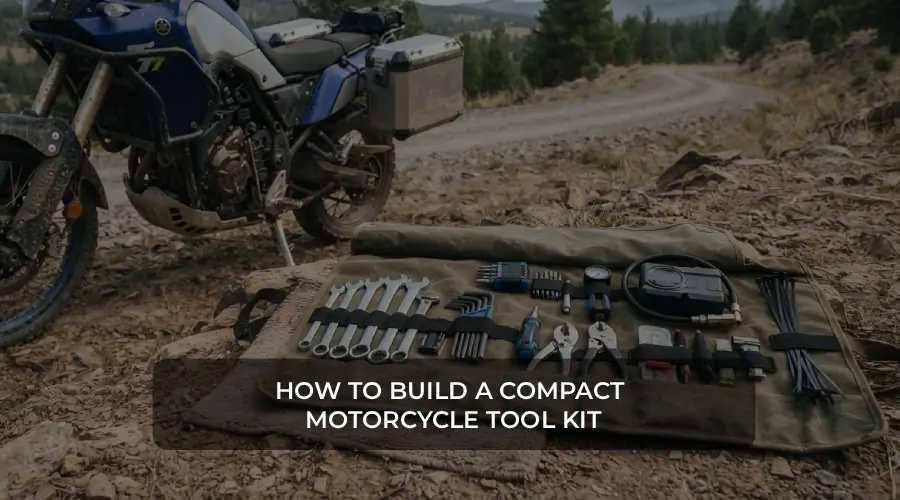
A bike tool kit does not have to resemble a mini garage. Riding to work, going on a weekend trip or want to do a long-distance tour, then having a couple of tools would allow you to handle most typical issues without filling your luggage with heaviness. The trick lies in creating a small bike tool kit based on your bike. The equipment required in a sportbike can be different compared to that needed in an adventure motorcycle or a cruiser. Begin with the fittings and parts with which you are most likely to have to deal, and then add some emergency essentials, such as tyre-repair equipment and electrical supplies. A good motorcycle toolkit should help with basic adjustments and temporary roadside repairs while remaining small enough to carry comfortably. Why Build Your Own Motorcycle Tool Kit? Most of the bicycle motorcycles have a simple factory toolkit, though this might have nothing extravagant. It may not contain all that you need to have to fix a puncture, loose fastener or small electrical issue. Assembling your own kit will give you an opportunity to strip out the tools that you do not need and add the possibility of tools that really fit your motorcycle. It also implies that you can preview all the tools prior to traveling. It would be useless to have such a tool in the road unless it fits your bike, and you know how to use it. 1. Start With Your Motorcycle’s Factory Toolkit Before buying anything, take out the toolkit supplied with your motorcycle. List the tools to be used and what they are targeting to take away or change. Then apply those tools when it comes to performing regular maintenance at home. This provides you with realistic starting point of gap identification. Your owner’s manual is also important. It has data regarding suggested maintenance practices, fastener types and parts that might need particular tools. After knowing what is missing, create around what you need as opposed to buying a one-size-fits-all 50 or 100-piece set. 2. Choose a Compact Tool Roll Even a tool roll, a small roll, is more convenient when travelling on a motorcycle than a hard toolbox. It secures metal tools in one place, does not rattle about, and can be crammed into a pannier, saddlebag, or luggage compartment. Select a roll that is made of a durable, waterproof material and has separate pockets. This will help locate a specific wrench or screwdriver without having to take out the entire kit. Make the roll small enough to not entice you to stuff in extra space with tools you will barely need. 3. Carry the Right Wrenches A few combination wrenches can handle many basic motorcycle adjustments. Don’t carry every available size. Check your motorcycle and identify the sizes used for: Mirrors Levers Foot controls Battery terminals Body panels Chain adjustment Other frequently accessed fasteners A compact adjustable wrench can provide additional flexibility, but it should not replace correctly sized tools for critical fasteners. 4. Add Hex and Torx Keys A lot of modern motorcycles utilize either hex or Torx fittings in the bodywork, controls, and other portions of the machine. A folding hex-key collection can be kept small and a small Torx could come in handy given your motorcycle has these fasteners. Once more, inspect your bike. It is pointless to carry ten sizes when you can do with three. 5. Pack a Multi-Bit Screwdriver A compact screwdriver with interchangeable bits can replace several individual screwdrivers. At minimum, identify whether your motorcycle uses Phillips, flat-head or other screw types. Some motorcycles also use fasteners that require a JIS-compatible driver. A magnetic bit holder can be convenient for preventing small bits from disappearing while you’re working. 6. Build Around Puncture Repair For many riders, a puncture kit is more valuable on the road than a large collection of mechanical tools. If your motorcycle has tubeless tyres, consider carrying: Tyre plugs Reaming tool Plug insertion tool Spare plugs Compact tyre-pressure gauge Portable inflator or pump If your motorcycle uses tube-type tyres, the equipment is different. You may need tyre levers, patches or a spare tube. FAQs 1. How do I choose a tool kit? Choose a tool kit based on your motorcycle’s specific fasteners, maintenance requirements and riding conditions. 2. What tools do I need to build my bike? If you’re talking about building or assembling a motorcycle, the tools required will be much more extensive than a roadside kit. You may need a socket and wrench set, torque wrench, screwdrivers, hex and Torx keys, pliers, electrical testing equipment, and specialised tools for brakes, suspension, wheels, and engine components. 3. What basic bike tools do I need? For basic motorcycle maintenance, start with combination wrenches, sockets, hex keys, screwdrivers, pliers, a tyre-pressure gauge and a torque wrench for workshop use. 4. What tools are needed for motorcycle maintenance? Basic motorcycle maintenance can require different tools depending on the task. A useful home toolkit may include a socket set, combination wrenches, screwdrivers, hex and Torx keys, pliers, torque wrench, tyre-pressure gauge and chain-maintenance tools. Choose a tool kit based on your motorcycle’s specific fasteners, maintenance requirements and riding conditions. If you’re talking about building or assembling a motorcycle, the tools required will be much more extensive than a roadside kit. You may need a socket and wrench set, torque wrench, screwdrivers, hex and Torx keys, pliers, electrical testing equipment, and specialised tools for brakes, suspension, wheels, and engine components. For basic motorcycle maintenance, start with combination wrenches, sockets, hex keys, screwdrivers, pliers, a tyre-pressure gauge and a torque wrench for workshop use. Basic motorcycle maintenance can require different tools depending on the task. A useful home toolkit may include a socket set, combination wrenches, screwdrivers, hex and Torx keys, pliers, torque wrench, tyre-pressure gauge and chain-maintenance tools. Assembling a small motorcycle tool kit is more a matter of choice than a matter of size. Begin with the tools that the motorcycle really needs and get