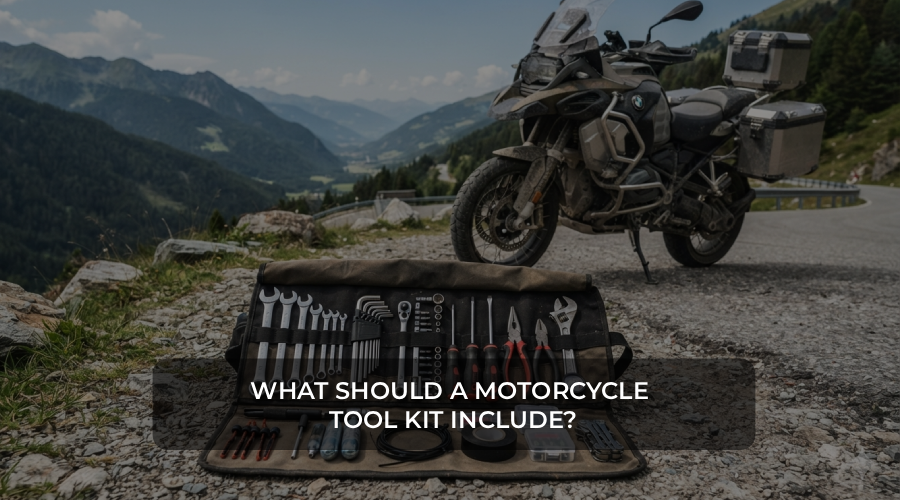
Motorcycle tool kit is one of them, something you don’t even want to think about until should need it. Something as small as a loose mirror, a small electrical bit, a chain adjustment or a puncture can suddenly turn into a huge inconvenience when you are miles out of a workshop. The bright side is that you do not have to leave a garage behind on your bike. Even small, carefully designed toolkit, comprising of tools precisely suited to your bike, can cope with most roadside adjustments, and with some quick emergency fixes. Most motorcycle maintenance guides suggest structuring the kit using the fasteners present on your motorcycle and probable roadside issues instead of that entire set of tools that you may end up not using at all. For a useful overview of the basics, you can also refer to this motorcycle tool kit guide. Why Should You Carry a Motorcycle Tool Kit? Contemporary motorcycles are mostly reliable; nevertheless, minor issues may occur when one is riding. A lug nut can become loose, a lever strut can require a readjustment, a fuse can be blown, or a tyre can lose pressure. The simple toolkit will enable you to handle simple issues without necessarily having to seek roadside assistance. It may be applicable in regular changes also when on longer tours. What matters is to ensure the kit is small, bike-specific, and functional. Having a massive luggage of tools that do not fit your bike serves no purpose; rather, it is a weight. 1. Combination Wrenches One of the versatile tools in a motorcycle toolkit is the combination wrench. They come with an open end and a box end, and you can work with various types of fasteners. The size required is based on your motorcycle size; hence, the owner’s manual is a good starting point or use the tools that come along with the motorcycle. Most bikes have metric fasteners, although some have Torx or other types. 2. Allen Keys or Hex Keys Hex bolts are common on motorcycles, particularly around bodywork, controls, brackets, and other components. A compact set of metric Allen keys can handle many basic adjustments. Individual L-shaped keys generally provide better leverage, while folding sets are convenient when storage space is limited. 3. Screwdrivers Bring along a fairly powerful screwdriver of different sizes, like Philips and flat-head ones. They may be applicable to body panels, battery terminals, clamps,and other small fasteners. When your motorcycle uses JIS screws, a JIS screwdriver is a smart consideration as it is geared towards that kind of speed-buckler and can help you lessen the chances of breaking the screw head. 4. Pliers A pair of compact pliers can solve surprisingly many roadside problems. They can help with gripping small components, holding nuts, pulling wires, removing clips, and cutting zip ties. Needle-nose pliers are particularly useful for reaching into tight spaces. A multitool with integrated pliers can be a convenient alternative for riders who want to keep their toolkit small. 5. Ratchet and Socket Set A ratchet with the right fittings is highly compact, and tightening or loosening bolts will be far simpler using a ratchet as compared to an individual spanner. You do not always require an entire workshop socket set in the road. Select sockets appropriately to the fasteners employed on your motorcycle, and a short extension may be necessary. 6. Torque Wrench for Home Maintenance A torque wrench is less practical for a tiny roadside kit but extremely useful in a home motorcycle toolkit. A torque wrench helps you follow the manufacturer’s specifications for important fasteners. It is particularly useful for maintenance work involving components such as axle fasteners and brake-related hardware. For roadside emergencies, follow your motorcycle manufacturer’s instructions rather than guessing how tightly a critical fastener should be secured. What Should You Carry on a Long Motorcycle Trip? Your toolkit should become more comprehensive as your distance from home and access to repair shops increases. For a short city commute, you may only need the motorcycle’s OEM toolkit, tyre-pressure equipment and a few emergency supplies. For a long tour, consider adding: Tubeless puncture kit or tube-repair equipment Tyre inflator Extra fuses More comprehensive hand tools Spare fasteners Electrical tape Zip ties Basic emergency spares Adventure and off-road riders may need an even more extensive setup because punctures and falls can occur far from conventional roadside assistance. FAQs 1. What are 10 must-have motorcycle accessories? Ten useful motorcycle accessories can include a helmet, riding gloves, motorcycle jacket, protective boots, phone mount, luggage or tank bag, motorcycle cover, disc lock, tyre repair kit and compact tool kit. 2. What does 2 fingers down mean on a motorcycle? Two fingers pointed downward from the left hand are commonly used as a friendly acknowledgement between motorcyclists. It is often interpreted as a gesture of respect, camaraderie, or a wish to keep two wheels on the road. 3. Is it cheaper to build or buy a bike? For most riders, buying a complete motorcycle is generally simpler and more predictable than building one from individual components. Building a motorcycle can become expensive because the cost includes the engine, frame, suspension, wheels, electrical system, controls, brakes, and numerous smaller components. 4. What does it mean when a motorcyclist taps his helmet three times? A motorcyclist tapping the top of their helmet is commonly used to warn other riders about police or speed enforcement ahead, particularly during group rides. When riding in a group, it’s safer to follow established communication signals agreed upon before the ride rather than assuming every gesture has the same meaning. Ten useful motorcycle accessories can include a helmet, riding gloves, motorcycle jacket, protective boots, phone mount, luggage or tank bag, motorcycle cover, disc lock, tyre repair kit and compact tool kit. Two fingers pointed downward from the left hand are commonly used as a friendly acknowledgement between motorcyclists. It is often interpreted as a gesture of respect, camaraderie, or a wish to keep two wheels on the road.