

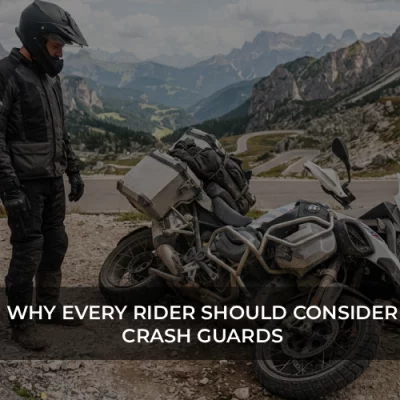
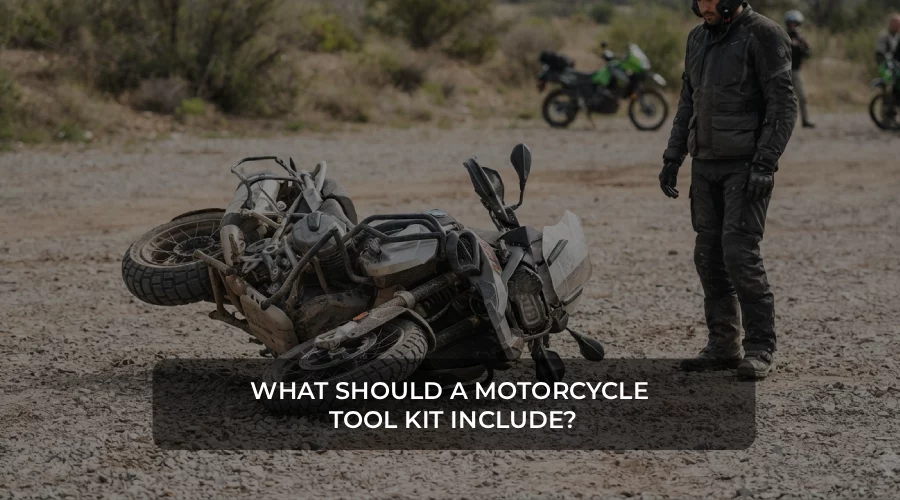
In a few seconds, a motorbike may turn over into the ground. Slipping, a low-speed turn with a slippy surface, and/or uneven parking space or loss of balance may lead to a drop, which may harm the engine, fairings, exhaust or other exposed parts.
This is where a motorcycle crash guard can offer an added safety measure. Neither is it a metal bar stuck to the bike to look good. The shape, material, mounting points and position of the motorcycle are designed to affect the way the motorcycle will affect the ground during specific fall types.
The science behind motorcycle crash guards comes down to managing impact forces, creating clearance and protecting vulnerable parts.
What is a Motorcycle Crash Guard?
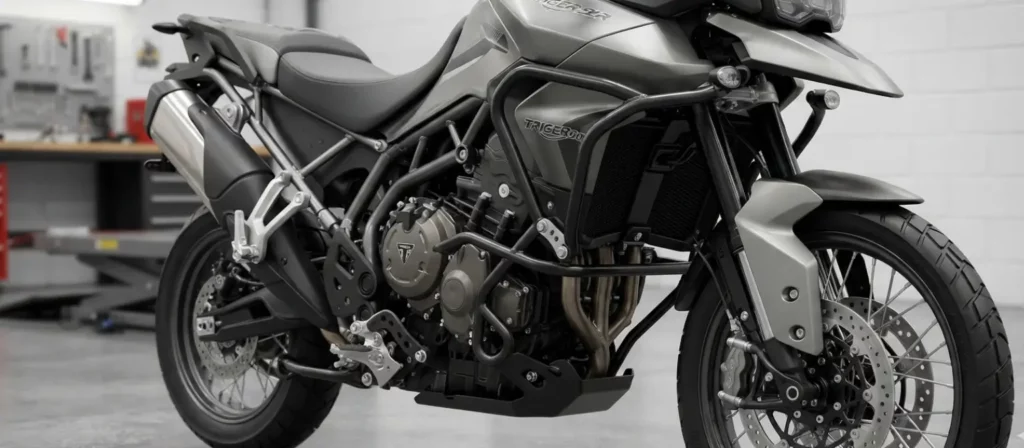
A crash guard or crash bar (also known as crash guard or engine guard) is a protective device that is mounted on certain mounting plates on the motorcycle. It is usually located around the engine, frame or lower bodywork.
The motorbike may fall over and, in the process, make the guard a point of contact between the bike and the ground. The guard will be able to share some of the impact, rather than having the engine casing or panel to bear all of it, using its structure and mounting points.
How Do Crash Guards Actually Work?
The basic principle is force management.
The movement of a motorcycle causes a kinetic energy when it falls. That power must be consumed, diverted or given up elsewhere. A crash guard offers extra framework that may have an effect on the interaction of the motorcycle with the ground.
A well-designed guard may:
- Create clearance around the engine and bodywork
- Spread impact forces through multiple mounting points
- Deform or bend under sufficient force rather than transferring all the load to one component
- Reduce direct contact between the road and vulnerable motorcycle parts
- Help keep parts such as the engine casing away from the ground
Why Mounting Points Matter
The crash bar alone is not the only element in the protection system. The position of its attachment to the motorcycle may also matter.
When a fall takes place, the resulting force on the guard is passed through its mounting points. When this kind of points is correctly placed on motorcycle parts that are strong, it will be able to distribute its load more efficiently.
Badly designed or improperly fitted guards may act in different ways. Overly stiff structures or inappropriate locations of mounts can impose large forces upon the frame or other elements.
This explains the trend in favour of a model-specific crash guard over a homemade general-purpose arrangement.
How Crash Guards Protect the Motorcycle
One of the biggest advantages of crash guards is protecting expensive motorcycle components from direct contact with the ground. Depending on the design, they may help protect:
Engine Casing
Tilted motorcycle covers are especially susceptible to coming down. An accessory can be used to create space between the casing and the road, using a crash bar.
Fairings and Body Panels
A guard can minimize scratches, cracks, or other damage to the bodywork on motorcycles, which feature either bare or partially covered bodywork in the event of a tip-over.
Exhaust Components
Some crash-bar designs extend around areas close to the exhaust and may help reduce direct ground contact.
Fuel Tank and Upper Bodywork
Adventure motorcycles may use upper crash bars to provide additional protection around higher bodywork and the fuel tank.
Why Bigger Crash Guards Aren't Always Better
One can simply expect that a bigger, heavier crash guard should be more protective. That’s not necessarily true.
A large guard may introduce undue weight or alter the ground clearance or redistribution of forces during an impact. An over-sticking-out guard can also snag on the environment when there are obstacles in the ride-through.
Good crash-bar design is not necessarily more and more metal, but is a matter of placement, geometry, and controlled forces.
The best guard must offer convenient clearance and coverage without compromising on the motorcycle frame and the regular riding features.
How to Protect a Motorcycle from Drops

Crash guards are only one part of a broader protection strategy.
- Apply frame sliders where necessary. They can offer targeted coverage around the frame and fairings on other motorcycles they support.
- Fit a skid plate in case of off-road riding. It is able to cushion the lower part of the engine against rocks and other impediments.
- Use handguards. They are able to assist in safeguarding levers and controls against some falls.
- Select appropriate car parks. Unstable ground, like uneven or slippery ground, makes a tip-over more probable.
- Practise slow-speed control. Fluid clutch, throttle and brake inputs may be used to avoid most low-speed falls.
- Inspect protection hardware. Finding loose bolts or broken crash bars might not work as expected in another fall.
FAQs
1. Do crash bars actually help?
Yes, crash bars can help reduce damage during certain low-speed falls, tip-overs and side impacts. They can create clearance between the motorcycle and ground and help protect components such as the engine casing, exhaust and bodywork.
2. How do I protect a motorcycle from drops?
Start with a combination of appropriate protective accessories and good riding habits. Crash bars or frame sliders can help protect vulnerable motorcycle components, while skid plates are useful for off-road riding and handguards can protect controls.
3. Does dropping a motorcycle damage it?
It can, but the extent of damage varies. A stationary tip-over may only result in scratches or bent controls, while a faster fall can damage the engine casing, fairings, exhaust, handlebars, wheels or frame.
4. What type of motorcycle gets stolen the most?
There isn’t one universal motorcycle model or category that can be described as the most stolen everywhere. Theft patterns vary by country, region, motorcycle popularity, availability of parts and local demand.
Crash guards work by adding a protective structure between the motorcycle and the ground and by influencing how impact forces are transferred during certain falls. Their effectiveness comes from the combination of material, geometry, mounting points and placement, rather than simply the amount of metal used.
Combine it with appropriate riding gear and other protection accessories where necessary and treat crash guards as one part of a broader motorcycle safety strategy.