

Your car took a crash on the road, something got hit under the hood, it started releasing fire and…. boom! It exploded like a balloon and filled the air with black smoke all over. Really? Do cars on fire explode the way they are shown in the movies? There is a potential danger when a car is on fire but instances of explosion are close to nil. Yes, there are some causes that can lead a car on fire to minor explosions but not to the extent of taking lives. It is important to be aware of the risks associated with a burning car and what are the causes that lead to explosions and this is what you will find in this post. In practicality, cars on fire never explode like a bomb unless someone actually put a bomb inside the car to make it explode. However, fire incidents occurring due to overheating, electrical malfunctions, and battery failures can create a messy situation. If the fire is not attended to quickly, below are the causes that can result in the spreading of fire to an extent of small bursts without explosion: Such scenarios can increase the intensity of fire turning your car into a fireball. Let’s assess these points one by one and see if it leads to an explosion! If a car wants to explode it will need help from its fuel tank which is not made to withstand the extreme pressure of heat. Yes, whenever the fire breaks out it is the fuel tank that is most vulnerable to heat. If this fuel tank is tightly sealed, and made of solid metal that is hard to melt the heat pressure inside begins to build up and can reach extreme levels causing an explosion. The level of an explosion could be moderate to low depending on the extremeness. However, the reality of the fuel tank’s capability is quite the opposite of what we have said. It is illogical for any car manufacturer to create such type of a fuel tank that can explode in fire situations. The fuel tanks are made of metal and plastic. The density of metal used in creating a fuel tank is less thick than the standard metal broadness. The purpose of using such metal is to surrender the pressure created by excessive heat. In such a scenario, the fuel tank with continuous heat tends to crack slowly which does not allow the heat to build pressure. As a result, it continues to burn but does not burst. On the other hand, plastic-made fuel tanks which are a common trend now can easily melt under the pressure of extreme heat allowing the fuel/gas to disperse. Again, it will keep burning but never explodes. Needless to say, there is no need to panic about your car getting exploded unless you have a specially modified fuel tank with immense power to absorb heat. Tires remain highly pressured vessels in a motorcar. They have all the right to explode if they are overly inflated. In a scenario where a car fire has reached the level of tires, these rubber units start to burn and melt and gradually begin to release air. The problem starts when the tires have excess air pumped in and during the fire if this excess air is heated up inside it could make the tires burst like a bomb. Overinflated tires are usually risky. Driving with such tires under extremely hot conditions with fiery speed could make them blow up. It is always a best practice to monitor the tire pressure and fill them with balance air to avoid explosive situations. This is another reason you may witness a certain explosion sound during a car fire. Running a car on low gas does not necessarily create an explosion however, it does make the fuel pump overheat. Now overheating is definitely a cause for concern in car fires. Secondly, a tank with low gas has the potential amount of air that makes it an air-fuel bomb. The liquid form of gasoline keeps combusting and turns into vapor quickly. The deadly combination of vapor, air, and external heat is enough to cause an explosion. A certain example is pumping stations. You will always find precautionary signboards on turning off your vehicle while pumping the gas, getting out of it, not smoking, etc. Why are all these precautions necessary when your vehicle is low on gas? Now you know the answer. Airbags are designed to provide safety in response to a collision or a crash. By no means it is harmful except in a fire situation. Airbags contain sodium azide which is a combustible chemical. This chemical is susceptible to fire and when the fire intensifies it can ignite the chemical to create a much larger explosion. The destruction caused by an airbag explosion could be worse as it forces shrapnels (metal nuts) to fly around in the car. To be honest, airbags are the only reason to give you explosion goosebumps. But we are looking at an out-of-control situation where no effort has been initiated to stop the fire in the first stage. No, it’s not about only Tesla but any car that runs on battery. A majority of electric cars are equipped with lithium-ion batteries. Normally, these types of batteries are safe unless exposed to a car fire or severe heat. With cobalt oxide chemicals in the base, lithium-ion batteries tend to react explosively owing to accidents, fires, or electrical malfunctioning. Improper maintenance of electric cars is another reason for battery explosions. Whatever the reason, the explosion is not life-threatening until it reacts with other heating elements of a car. Do cars explode when they are upside down? It is not necessary for a car to explode when it turns upside down unless you are watching a movie. The extent of an explosion is only possible when some of its vulnerable parts such as gas tanks, tires, airbags, etc. are exposed to extreme heat
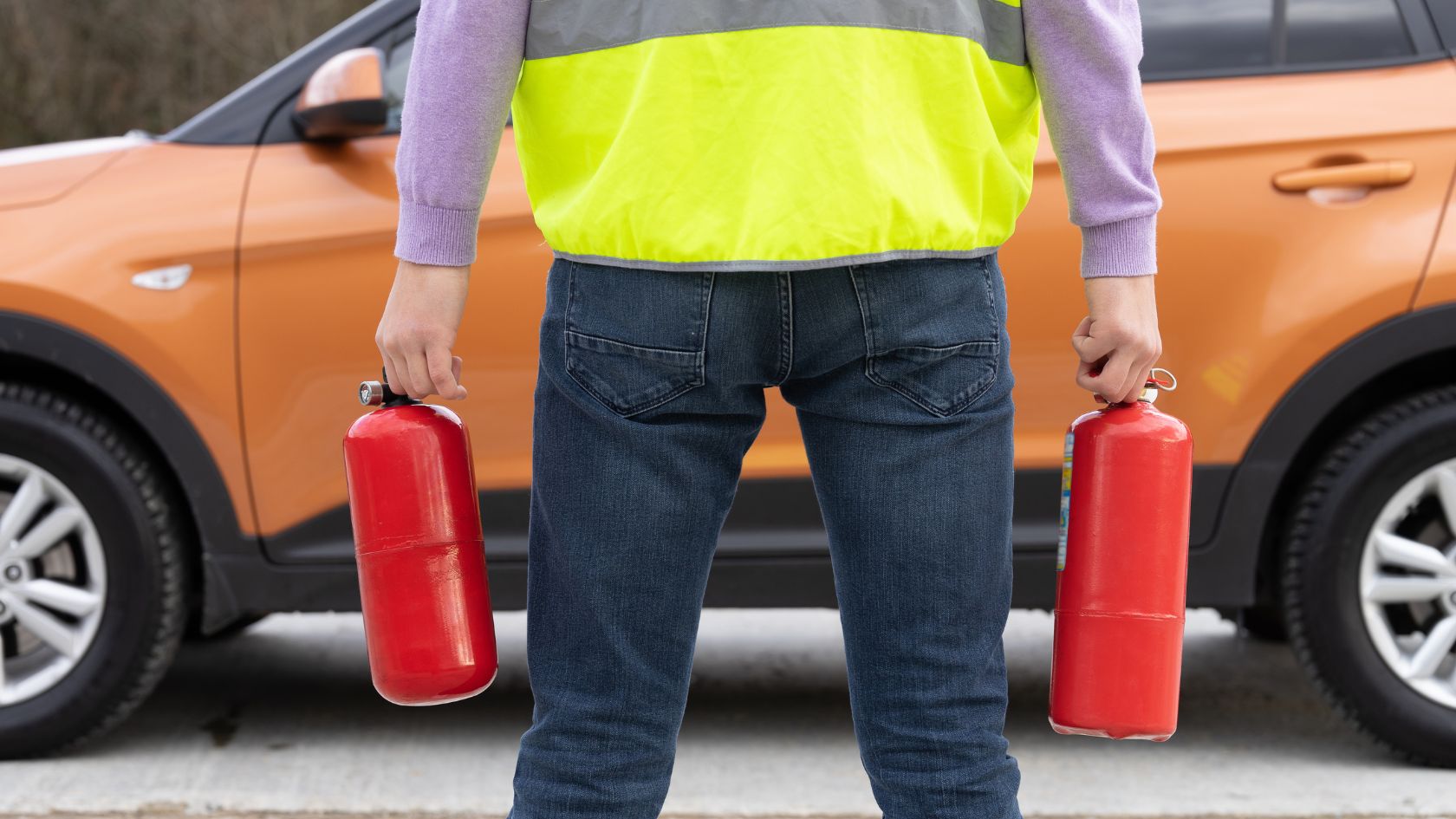
Is it safe to keep a fire extinguisher in the car? Find 6 reasons to do so!
So, you bought a new fire extinguisher or are planning to buy one but wondering ‘is it safe to keep a fire extinguisher in the car’? The answer is yes and no. Fire extinguishers are beneficial safety units for a car. In unexpected and dangerous fire circumstances, this is one metal object that every car owner should possess. Fire extinguishers are very much safe however, lack of regular maintenance, improper installation, and the wrong type of fire extinguishers can be hazardous. In this post, we will see the causes and find out if the fire extinguisher is really safe to keep in a car. Fire extinguishers are absolutely safe to keep in a car provided you follow certain processes and precautions. First of all, it is important to carry a fire extinguisher that is lightweight so that it is easily movable. Secondly, the size of a fire extinguisher matters to keep it in the right place. Next, a fire extinguisher should be installed in a safe, and secure place. Always follow the guidelines and instructions to get familiar with the usage of fire extinguishers. Last but not least, fire extinguishers need timely maintenance in terms of refilling and insulation to avoid explosions and damage. Abiding by the above factors, there is no doubt you can keep yourself and the fire extinguisher completely safe in a car. The safety of fire extinguishers is also prone to accidents and the condition of your vehicle. Let’s elaborate on all the factors to get a clear picture of keeping a fire extinguisher in the car! Fire extinguishers come in different types to handle different levels of fire. Normally, a car fire does not cross the limits of a powder/foam-based fire extinguisher which should be an ideal choice. Such extinguishers are capable of handling type A/B/C fires which cover almost everything including plastic, wood, paper, gasoline, and electrical fires. Carrying bigger fire extinguisher vessels demand larger space. Such units are a burden in small and compact cars. If the type of fire extinguisher is over-qualified for small car fires it becomes difficult to carry and install them. A wrong type of fire extinguisher may increase the problems rather than solve them. It may also pose safety hazards in the long run. Similar to the type, fire extinguishers also come in different sizes. The sizes vary from 2.5 to 5 and go up to 10 pounds or more. No surprise that a fire extinguisher weighing 2.5 pounds is enough to douse small car fires. You can also consider 5 and 10 pounds but it depends on the size of your vehicle. Normally, heavier fire extinguishers are appropriate for heavy vehicles. It should be noted that heavier/bigger fire extinguishers contain carbon dioxide which can have adverse effects on small fires. So, instead of preventing the fire, it can further damage your vehicle putting your safety in danger. Improper installation is another factor that poses a safety risk. Some people completely deny the process of installation and rather believe in just carrying the fire extinguisher and placing it anywhere in the car. This should not be the case. Fire extinguishers are filled with chemical liquids and gases that can self-explode in case of mishandling or misuse. It may not bode well with your car’s security if you have a fire vessel rolling or moving in the car abundantly. Such movement can result in physical contact or mishaps with other elements of your vehicle. If by accident, the seal of the pin gets unlocked or broken it may begin discharging the chemicals which could affect your health. It is therefore a best practice to install a fire extinguisher properly in the right place. While choosing an installation place, make sure the area is not susceptible to outside weather conditions such as excessive heat or cold. This can cause the extinguisher to malfunction creating safety hazards. Lastly, always use the mounting bracket to install a fire extinguisher. The brackets are useful in keeping the fire extinguisher fixed, balanced, and unmovable which improves safety. Fire extinguishers have a limit to survival. Although, fire extinguishers carry an expiry date it doesn’t mean you have to completely replace the unit. The metal tank never expires. What it needs is proper inspection and testing depending on its usage. In other words, you have to take care of the maintenance a fire extinguisher requires. Fire extinguishers, if not used for a long time need special attention. This is because A/B/C extinguishers contain powder/foam that tends to freeze or gather at the bottom of the tank. If this is not properly maintained, the pressure in the fire extinguisher could lead to a dangerous explosion. Try shaking the tank upside down, if you hear the powder noise it’s good to go otherwise, take it to a licensed professional for proper inspection. Secondly, every fire extinguisher is required to go through periodic hydro testing in order to keep it defect-free. Lastly, refilling or recharging is necessary to keep the fire extinguisher ready for the next use. These are the factors you must always consider while keeping a fire extinguisher. Any negligence in periodical inspection and timely maintenance can make the equipment defective which could lead to potential hazards. Just keeping the fire extinguisher in a car is useless if you don’t know how to use it. While the usage is not very complicated, rough handling and misuse could make a fire extinguisher vulnerable to defects and defective pieces are always dangerous. Aim for a fire extinguisher that is easy to access and use. It usually works in four steps- pulling the pin, aiming the fire location, releasing the retardant by squeezing the handle, and sweeping every side to douse the fire. Usage is the reason you must oblige to the type, size, and maintenance of a fire extinguisher. Fire is a panicky situation where people tend to overreact in a haste. Using the wrong type of fire extinguishers to control small fires, and misdirecting the target of
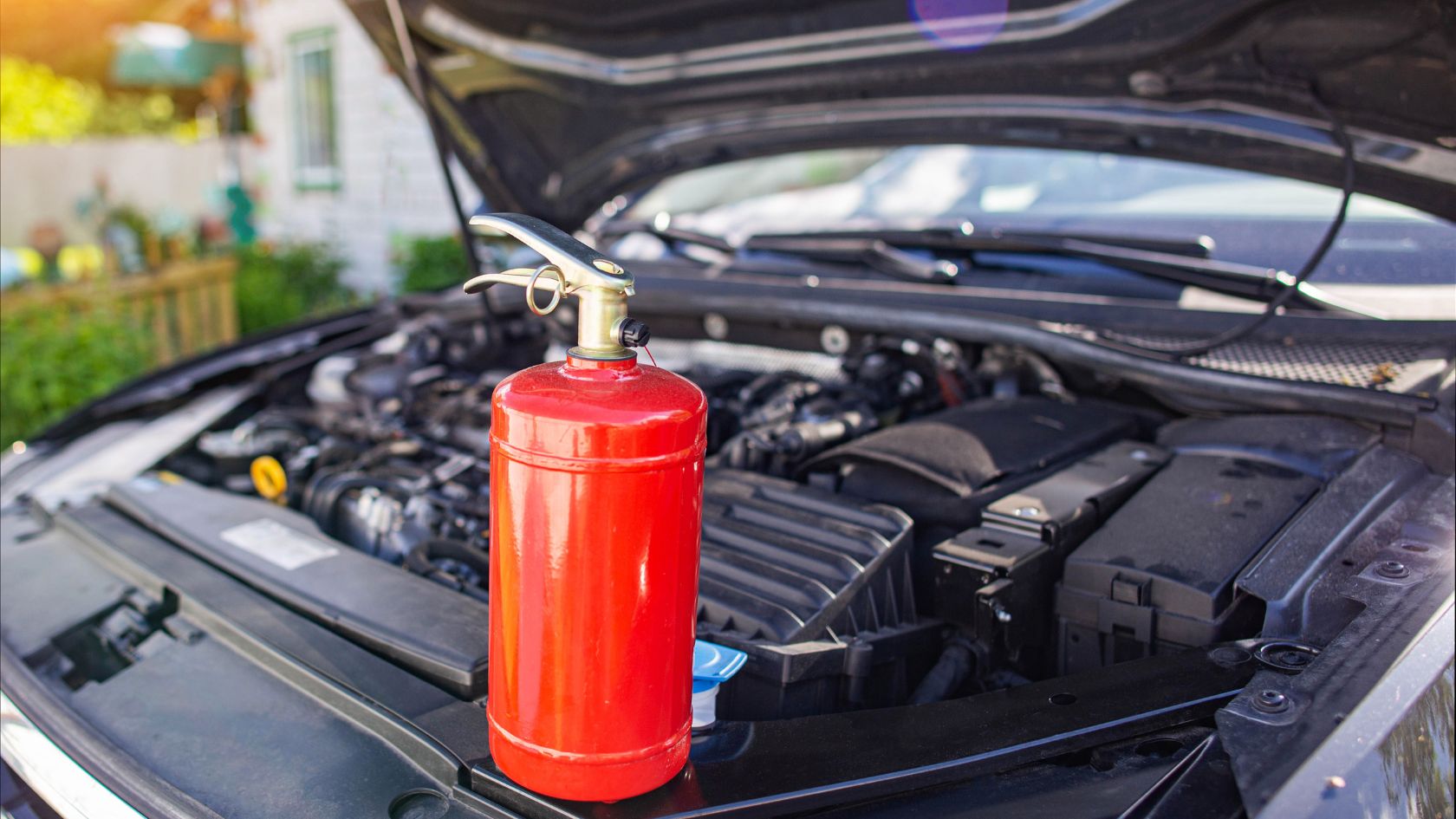
Where to install a fire extinguisher in the car? 5 extinguisher-based places
We are going to talk about where to install a fire extinguisher in the car in this post. It is easy to search for and buy a fire extinguisher but installing it in the right place is of utmost importance. Fire extinguishers are handy life-saving units that help reduce the intensity of the fire and in some cases may douse the blazes completely. The installation also depends on the type and size of fire extinguisher you want to use. So, if you bought one and looking to find an appropriate place to install it in your car then here is the list to follow. The best place to install a fire extinguisher in a car is the one from where it is ‘easily accessible’. This is what most of the experts say but I would rather rephrase it to ‘safely accessible’. In my opinion and experience, a safely accessible place is your car’s trunk. This is after considering the fact that most car fires take place from the front that is the surrounding parts of the engine. In such a scenario, it makes sense to get out of the car first, go to the trunk and remove the fire extinguisher and use it in full flow to control the flames. Some of the other places to consider are below the driver or front passenger seats, large glove boxes, and an appropriate place in the rear passenger compartment. Let’s deep dive further into these car places to install a fire extinguisher! A car trunk is always the best, easiest, and most safely accessible place to install a fire extinguisher. Why so? There are numerous reasons. One of them is accessibility. As mentioned earlier the trunk is very much accessible from any door of your car. It is also one of the safest places to store the extinguisher as it does not come in contact with co-passengers or any other car material. Secondly, a car trunk is a least-used space in your daily routine unless you are traveling a long distance with a big chunk of luggage. It is not only the safest from an accessibility perspective but also keeps the extinguisher tank secure from internal heat, direct sunlight, and local weather conditions. Many drivers think that the car trunk is too far away to access the fire extinguisher. Remember, the first thing you need to do is get out of the car immediately as soon as it catches fire. Obviously, you don’t want to enter the car till the fire is controlled. Engine bay, battery failure, and electrical malfunctions are some of the common causes to catch fires. All these parts sit under the front hood and when the fire starts to spread, its effects can reach the dashboard quickly. Such a situation won’t be ideal to remove the extinguisher from driver/co-passenger seats. So, the best place to store, retrieve and use a fire extinguisher should be the car trunk. There are many cars that don’t have specific large trunks such as 7-seater SUVs. Such vehicles offer limited boot spaces that can be used for fire extinguisher installation. Instead of placing it on the boot carpet select the right or left side and install the unit on top of the boot space behind the rear seats. I have mine sitting on the right-side pillar of the boot space. The same process should be followed for large trunks. Never fix the extinguisher in the middle of the trunk as it may create trouble placing the luggage. This is the second-best option to keep a fire extinguisher. Although, not very feasible as it attracts some push-ups to remove the extinguisher tank. A seat adjustment process is a must and the driver has to bend forward in removing the fire extinguisher from the installed bracket. But this is what you can call an easily accessible place. There are two spots here. One just below the seat in front and the second behind the seat. Wherever you want to put it the choice is yours. However, it should be installed properly so that it doesn’t come in contact with your feet while driving or getting inside the car. Make sure to use installation brackets which keep the extinguishers unmoved. Rear passengers should also feel comfortable placing their feet around if you are installing it behind the seat. The advantage of installing a fire extinguisher below the driver’s seat is its low adjustment frequency. It becomes easier to remove and use it. The drawback is it may get exposed to direct sunlight, and remains slightly visible to anyone for misuse. Co-passenger seat is another easily accessible place to install a fire extinguisher. I would say it is also one of the safest places after the trunk. This is the second place where a driver can reach, remove, and use a fire extinguisher in no time. Unlike the driver’s seat, the fire extinguisher should be installed at the front end of the passenger seat. This improves the chances of accessing the unit quickly. Not to mention the process to be followed for installing a fire extinguisher should remain the same that is installing a mounting bracket, and then using it. The installation part is more important here because this place isn’t completely controlled by the driver. There are many passengers who like to adjust this seat very often. Regular movement makes the fire extinguisher vulnerable to physical contact, and direct sunlight. It can receive soft damage on the tank as well as hurt the passenger feet constantly. It is a good practice to keep insulating the fire extinguisher to protect it from heat and physical movement. When I say rear passenger seats it does not mean installing the extinguisher below the seats. Instead, you can use the side pillar behind the driver’s seat for installation. This place is perfect for mounting a bracket and placing a fire extinguisher in it for easy accessibility and usage. Another benefit of installing it on the pillar is its position.
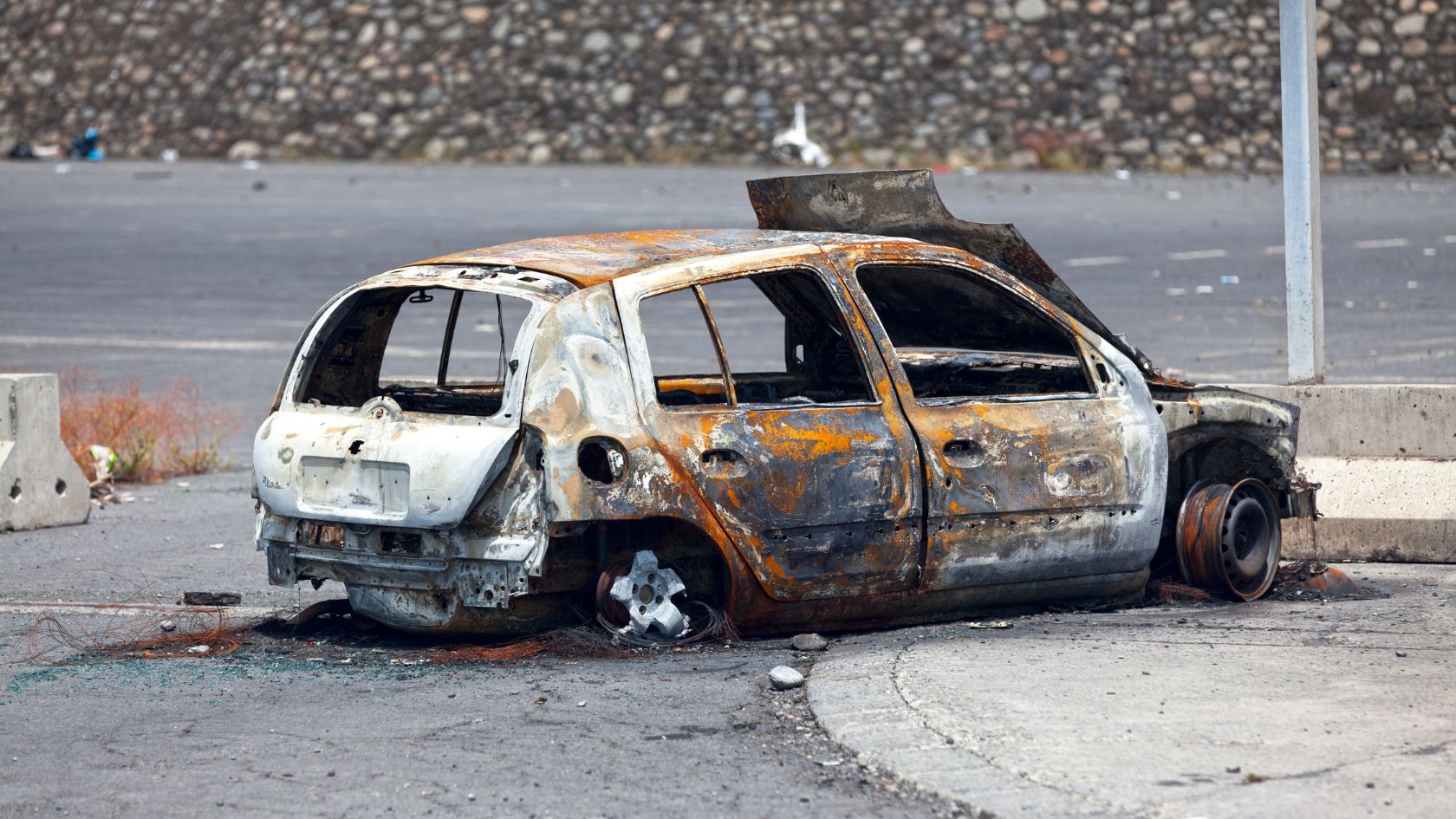
How to tell if a car fire is arson? 6 signs to identify
Arson is one of the most common causes of car fires. But, how to tell if a car fire is arson? Arson can be performed by damaging public property including automobiles that are a soft target and easily visible. It is a criminal act carried by individuals/groups during public processions, rioting, violence, etc., and also due to personal agony or jealousy. Such people/groups do follow a certain process to execute their plans and this is what we will find out in this post. There are primarily 6 signs that prove if a car fire is an arson. The most common signs are burning patterns and the use of accelerants. If a burned vehicle showcases a particular pattern from where the fire originated and if the location of the fire consists of accelerants, then it could be arson. Similarly, the location and condition of the burned vehicle, missing accessories, circumstances, and the condition of the ignition switch, key, and lock also play a major role in detecting arson. Detecting Arson is best left to the investigating team as they are fully trained to handle such cases. These people work on some signs and evidences that help them identify if the car fire was caused by Arson. Assuming your car is damaged by fire but not charred completely there is a possibility of recovering the events that happened before the fire. The first sign is – According to the US Washington department, if a vehicle is found in a deserted area some kilometers away from its original location this is the first sign of arson. Someone (neighbor/rival) who doesn’t like you as a person, can take revenge on your car by sparking it to flames somewhere far. Though a possibility of a car owner taking the car to a long distance and then setting it on fire cannot be ruled out the location is always taken into consideration while investigating the matter further. There are instances where people try to get insurance claims by burning the car themselves and disguising the insurance authorities creating an arson situation. A location is also a determining factor to investigate the circumstances under which arson was reported. For example, reporting an arson at odd hours from the incident location. If the car is found far away from the actual location with suspicious skid marks, or stolen objects an arson investigation can be initiated. Some of the other signs include forced entry into the car (if the key is still with the owner), missing or tampered car components, etc. The political stability of a country, frequent protests, public unrest, and repeated patterns are also taken into consideration in the circumstances list. The condition of the vehicle is important to scrutinize and gather evidence. Arsonists tend to tamper with car parts that are vulnerable to fire. Fuel tanks, batteries, electrical supplies, etc. are targeted to make the fire look technical. As an example, fire spreading due to fuel leakage is a technical malfunction however, on a closer look if there are signs of tool marks that means the tank has been tampered with to create fire. You can also look for any physical damage done to your vehicle. Damages like dents on the doors, broken glasses, etc. which obviously won’t take place if the car caught fire on its own. The damage inspection is only possible if the car remains in an investigating condition. Taking the example of accelerants, not all car parts are equally affected by the burning substance. This reduces the extent of fire to moderate levels. Such scenarios are helpful in determining the origination of fire by examining the intensity and burning patterns from unaffected areas. Fuel leakage, battery failure, electrical short circuits, and accidents are the major causes of fire other than arson. Any of these causes create a burning pattern. For example, an electrical malfunction arising due to overheating of the engine will start the spark from one point of origin i.e the engine bay itself. This part is responsible to spread the fire to the other parts of the vehicle. If this pattern of fire is breached or if there are multiple origins of fire found, the chances of arson cannot be neglected. The intensity of fire to the extent where nothing is possible to retrieve is usually left with the ‘cause undetermined’ status. In some cases, they do lead to suspicion of defrauding the insurance companies by the car owners. Still, such instances remain inconclusive. Robbery and theft cannot be avoided in arson cases. Burglars tend to remove premium accessories and some important parts from the car and then set it on fire to cover up their act. Along similar lines, car owners can also remove the accessories before setting the vehicle ablaze. In order to avoid the payment on repairs, some car owners file first information reports of missing cars and then put them on fire to collect the money through insurance. Missing components, and accessories from the burned car are signs that arson was performed for a stealing cause or defrauding the insurance company. Miscreants do use accelerants to ignite the fire. This is the most common factor in all types of Arson cases. The presence of gasoline is not conclusive evidence since the liquid is part of many cars. However, depending on the parts where it is found, the extent of fire to the passenger compartment and the intensity of burns on the carpet and combustible areas form the crux of arson investigation. Other accelerants like kerosene are definitely a source of the deliberate fire. It generates a unique smell due to the chemical used which is a hint of foul play. For example, the extent to which windows are melted in the burned car. A typical car fire generates heat enough to melt the windows subsequently. A fire created using accelerants is more powerful and intense to melt the windows. There are many instances of car fires where some of the spots remained untouched by fire

What can cause a parked car to catch fire? 7 reasons you cannot avoid
So, what can cause a parked car to catch fire? You must have witnessed several vehicles catching fire on the road which is understandable. But… in the parking lot or under the hood that isn’t easy to accept. You think your car is parked so it is safe and secure. Not necessary. Here are the causes that can make your car vulnerable to fire in a parking space. The most common cause could be a fuel leakage or an electrical short circuit arising due to poor maintenance. This could happen if you just left your car from a long drive into parking without actually noticing the leakage which combined with faulty electrical wires can cause a fire. Some of the other causes could be overheating, harsh weather conditions, vehicle recalls, and arson. Let’s elaborate on these causes further! Your car is a running bomb with the quantity of fuel and associated components it contains which are enough to explode. Fire and plastic are the two most common friends. When they unite you can imagine the mess left behind. And surely, you have leather and metal to support the firing cause. However, it doesn’t happen on its own. Usually, the cars are safe unless the fuel or any other flammable liquid starts to leak. When it comes to leakage this can happen due to multiple factors. But the most common reason is poor maintenance. A majority of the fire incidents in vehicles were reported because of the non-adherence to timely maintenance. Such negligence can lead to broken or cracked parts, loose wire connections, and leakage in the gas tank. This leakage when clashed with electrical properties in your vehicle can lead to wiring failures causing dangerous sparks. It doesn’t matter if your car is in a running position or parked. What matters is your presence of mind and smelling ability to identify the leakage. Make sure to glance through the hood and below your vehicle to find the smoke or drips especially after returning from a long journey. If you smell anything bad in gasoline it’s time to take action. Electrical wires should be well-connected within your vehicle. These wires occupy 80% of the space including the main engine bay, below the carpet, through the doors, and other channels. Faulty or loose wiring could produce a spark. A more dangerous situation could arise if any of the faulty wires are close to the engine or battery. Since the cooling process takes some time after you have parked the car the electrical malfunctions can create havoc if they come in connection with the hot parts. Some of the other reasons for faulty wires could be the entrance of water during a casual car wash or if it was standing in the rain for a long time. If you have an older version of the car it may have rusty plug connectors. Casually installed aftermarket accessories such as a fancy audio system, and small accidents where proper maintenance was avoided can also result in fires. If you are wondering how to identify electrical malfunctions then there are two ways to do it. One is the typical burning smell of wires. Secondly, most cars now are equipped with odometers that efficiently alert the drivers by giving malfunction indicators. As and when it pops up it is time to take your car to the nearest service center. Did you notice and ignored the overheating signs while driving? If not then obviously you won’t take risk of parking your car anywhere. Instead, you should take it for immediate repairs. But… If you really parked it then be ready to witness the fire. Overheating instances can take place with engines and catalytic converters. The engine is prone to overheating due to a lack of coolant liquid in the radiator. This increases the temperature and the fluids start to spill all over the engine bay and other parts of your vehicle resulting in fire. Spilling can also lead to electrical short circuits. Catalytic converters work like kidneys for your car. They are instrumental in supporting your vehicle’s engine to perform efficiently by burning off the pollutants in the exhaust system. This is the reason catalytic converters are one of the hottest parts in every vehicle. If for any reason the engine gets corrupted it increases the pressure on these converters making them a fireball. The heat generated by catalytic converters is enough to damage the surrounding parts of your vehicle that can ignite the fire. Ensure that you do not avoid any overheating signs and take the necessary steps to control them immediately. Everything comes down to this crucial factor of maintaining your car regularly. Like every ‘body’ that needs to breathe properly with timely fitness sessions, your car needs it too. As we have seen above, all the causes covered till now are somehow related to maintenance (and negligence). Non-maintenance especially for a long time leaves your vehicle vulnerable to different calamities. Fire is just one of them. Keep your vehicle’s maintenance schedule up to date especially when you are planning to restart your car after a long hiatus (parking). The chances of catching fire are not instant however, depending on the weather and surrounding conditions there could be battery issues, arcing of wires by rodents, and even unnoticed arson incidents. It is always a best practice to tow your car for a complete analysis and maintenance before commencing your journey after a long parking stay. Nature has its own role to play with man-made metal. Yes, it is often due to the weather conditions of the region/country you live in that can attract fire. Extremely hot summers in the gulf and African countries are responsible for numerous vehicle fire incidents. If you are a resident of such countries make sure to park your car under the hood or use the underground parking space. It also depends on the number of hours you have driven your vehicle before parking. Rising temperature is instrumental in boiling the
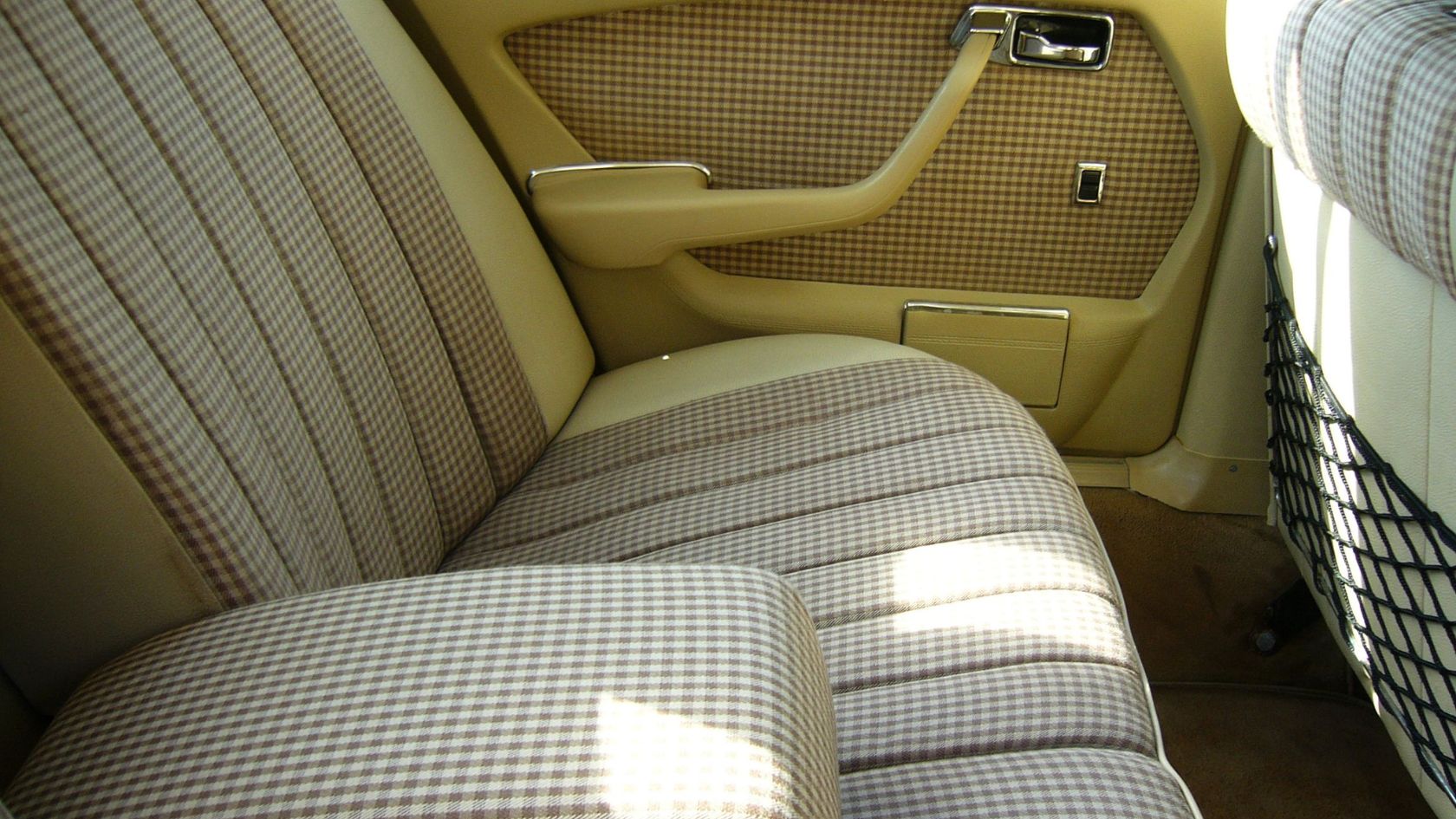
Do Seat Covers Damage Cloth Seats: Challenges and Strategies
You’ve probably heard the debate – do seat covers damage cloth seats or serve as their ultimate protector? To understand this, let’s break down the protective benefits that seat covers bring to the table. Cloth seats, while comfy, are not invincible. Daily use can lead to wear and tear, affecting the fabric’s integrity. There are several reasons you should use seat covers on cloth seats. Generally speaking, well-fitting seat covers made of quality materials shouldn’t damage your car’s cloth seats. In fact, they’re designed to do the opposite: protect them from wear and tear, spills, and fading. Having said this, there are a few things you should keep in mind while using seat covers for cloth seats. If the seat covers are loose or ill-fitting they can bunch up and rub against the cloth seats, causing pilling, abrasion, and even tears. It is important to choose covers specifically designed for your car model and ensure a snug fit. Some materials, like vinyl or leather, can trap moisture and heat, creating a breeding ground for mold and mildew. This can damage the cloth underneath. Breathable fabrics like cotton or natural fibers are better choices. Cheap seat covers may use harsh dyes that bleed onto your cloth seats or contain rough textures that scratch the fabric. Opt for reputable brands and materials known for being gentle on upholstery. Lastly, ensure your seat covers are airbag-compatible and don’t interfere with their deployment. Preservation is the goal, but achieving it without compromising fit can be tricky. Seat covers provide a buffer, but how do you strike the perfect balance? One size does not fit all. Ill-fitting seat covers can lead to frustration. Imagine this: You’ve just installed your brand-new, snazzy seat covers. They look great… at first. But after a few weeks of regular driving, you start to notice some unwanted changes. The fabric around the headrests bunches up, creating unsightly wrinkles. The seat bottoms bag and sag, leaving behind a pool of excess material that feels uncomfortable and looks sloppy. This bunching and sagging isn’t just a cosmetic issue. As your car bumps along the road, those loose folds rub against your delicate cloth seats. This constant friction is like sandpaper on your upholstery, leading to: So, what’s the solution? It’s all about choosing the right fit. Think of it like buying a well-tailored suit. You want the seat covers to hug your seat’s curves, not hang off them like ill-fitting drapes. Here’s how to ensure that snug fit: Remember, a snug fit isn’t just about aesthetics. It’s an investment in the longevity and value of your car’s interior. While vinyl and leather might seem like sleek and durable material options for seat covers, they can harbor a hidden enemy – moisture. Unlike breathable fabrics like cotton or natural fibers, vinyl and leather trap sweat, spills, and even the natural humidity in the air. This creates a warm, dark, and damp environment – the perfect breeding ground for mold and mildew. If you face a scenario where you’ve just finished a hot and sweaty workout and hop in your car, the vinyl seat cover, already warm from the sun, clings uncomfortably to your skin. As you drive, more sweat transfers to the cover, creating a little oasis for mold spores. Over time, these spores flourish, forming fuzzy patches and emitting that unmistakable musty odor. But the damage doesn’t stop there. The mold and mildew can actually eat away at the cloth seats underneath, causing discoloration, weakening the fabric, and even leading to permanent tears. It’s like a silent saboteur, slowly destroying your car’s interior from within. So, how do you avoid this moldy fate? Choose breathable fabrics for your seat covers! Cotton, wool, and even some synthetic blends allow air to circulate and moisture to evaporate, preventing that damp, mold-loving environment. Think of it like this: cotton is like a light, airy t-shirt, while vinyl is a heavy, plastic raincoat. Both might protect you from the elements, but only the T-shirt lets your skin breathe and stay comfortable. Here are some additional tips for keeping your seats mold-free: Airbag Compatibility: A Crucial Safety Factor Airbags are an essential safety feature in modern cars, designed to protect occupants in the event of a collision. However, when installing seat covers, it’s crucial to ensure they’re compatible with airbags and don’t interfere with their deployment. Airbags deploy with tremendous force, and even a small obstruction can hinder their effectiveness. Seat covers that are too tight or have thick, bulky materials can restrict the airbag’s movement, potentially causing injuries instead of preventing them. Avoid seat covers that are made from thick, bulky materials like leather, as these may restrict airbag deployment. Opt for breathable fabrics like cotton or natural fibers, which allow the airbag to inflate freely. To ensure your seat covers are airbag-compatible, look for openings or designated areas in the seat covers specifically designed for the airbag sensor and inflator to pass through. The stitching around the airbag openings should be reinforced to withstand the force of airbag deployment. Such seat covers are usually certified by the Automotive Occupant Restraints Council (AORC) or the Federal Motor Vehicle Safety Administration (NHTSA) for airbag compatibility. Universal seat covers are known to fit all car models and these are also cost-effective. However, they rarely conform to the specific contours of your car’s seats. Custom-made or model-specific covers designed for your vehicle’s unique shape are better choices to ensure a snug fit. Yes, seat covers can damage leather seats if they are of low quality. Such seat covers have abrasive surfaces that may harm leather seats over time. It’s crucial to choose high-quality, non-abrasive material seat covers to safeguard your car’s leather upholstery. Cleaning seat covers is a breeze. Most can be removed and tossed in the washer. However, always check the manufacturer’s instructions for specific care guidelines. For stubborn stains, spot cleaning with a mild detergent or upholstery cleaner is recommended. Seat covers do not damage cloth seats or ruin car