





Vehicle safety is a top priority for drivers, and rear and side mirrors play a crucial role in providing visibility. However, the question remains: Do rear and side mirrors eliminate all blind spots?
While mirrors are indispensable tools, they have limitations influenced by factors such as adjustment, vehicle design, and dynamic blind spots.
In this blog exploration, we will delve into the functionality of rear and side mirrors, examining their capabilities, inherent constraints, and the importance of driver awareness.
Do Rear and Side Mirrors Eliminate All Blind Spots?
No, rear and side mirrors do not eliminate all blind spots. While rear and side mirrors are essential for providing visibility, certain areas remain hidden from your direct view.
Factors like mirror adjustment, vehicle design, dynamic blind spots, and the limited field of view contribute to areas around the vehicle that may remain unseen.
To improve blind spot visibility, drivers should follow best practices, including proper mirror adjustment, regular checks of mirrors and blind spots, and consideration of vehicle design.
Also, utilizing technologies like blind-spot monitoring systems and accessories like blind-spot mirrors can enhance safety.

Blind Spots Not Covered by Rear and Side Mirrors
Even with rear and side mirrors acting as your trusty eyes in the back, sneaky blind spots can lurk around your vehicles.
Your rearview mirror does a stellar job of showcasing what’s directly behind you. But things get tricky in the areas where your side mirrors meet the front and rear of your car. These spots remain blind, forming invisible triangles on either side.
Imagine cruising down the highway, and a motorcycle wants to pass you in the left lane. You check your mirrors which seems clear.
But as you initiate the lane change, oops! The motorcycle, hidden in your blind spot, is forced to slam on brakes, narrowly avoiding a nasty collision.
Similarly, mirrors are perched high up. So, things like bicycles, motorcycles, or even playful children near the ground can easily disappear into your blind spot.
One practical example is related to parking. You’re pulling out of a parking lot, and a child playing with a ball rolls right next to your front tire.
Unaware of their presence due to the blind spot, you start reversing, creating a heart-stopping moment for everyone involved.
How to Adjust Car Mirrors to Avoid Blind Spots
To minimize blind spots and enhance overall visibility on the road adjusting rear and side mirrors properly is crucial, especially for inexperienced drivers. Here’s a step-by-step guide:
Start with the Driver’s Seat Position
Before adjusting mirrors, ensure your seating position is comfortable and provides a clear view of the road. To do this, sit up straight and make sure you can easily reach the steering wheel and pedals.
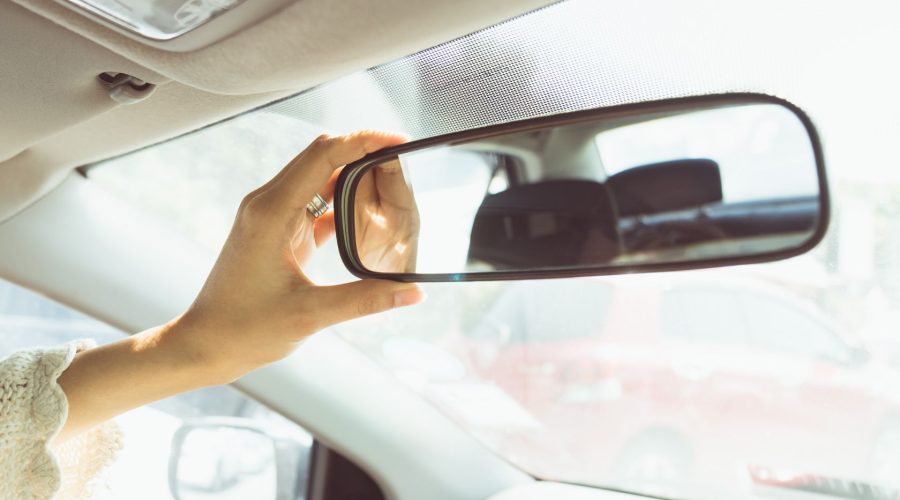
Adjust the Rearview Mirror
The first line of defense is proper mirror adjustment. The purpose of the rearview mirror primarily focuses on the view directly behind your car.
For proper adjustment, tilt the mirror until you can see the entire rear window without moving your head. Ensure the rear window is the main focus.
Adjust the Driver’s Side Mirror
The driver’s side mirror should cover the area to the left and slightly behind your car.
Lean your head towards the left window and adjust the mirror outward until the side of your car is just out of view.
Make sure there is a minimal overlap with the rearview mirror to reduce redundancy.
This eliminates the blind spot right next to your car. Remember, you shouldn’t see your own car in the mirrors – they should show the lanes beside you.
Adjust the Passenger’s Side Mirror
The passenger’s side mirror should cover the area to the right and slightly behind your car.
Tilt towards the car’s center and adjust the mirror outward until the side of your car is barely visible.
Ensure the overlap is minimal with the rearview mirror and achieve a seamless transition of coverage.
Check the adjustments
Verify the adjustments to ensure comprehensive coverage. While sitting in the driver’s seat, check each mirror for blind spots by looking directly at the mirror and then quickly scanning the surrounding area.
Adjust mirrors as needed to eliminate any remaining blind spots.
Be mindful of dynamic adjustments. Consider changes in seating position, passengers, and cargo.
Recheck and readjust mirrors if there are changes in your driving environment. Periodically reassess mirror settings for optimal visibility.
Here’s a small video to help you set your car mirrors correctly to eliminate blind spots:
Supplement with Blind Spot Monitoring Systems or Mirrors
Enhance safety with technology. Modern cars are increasingly equipped with blind-spot monitoring systems. These use sensors to detect vehicles in your blind spots and alert you with a visual or audible warning, providing an extra layer of safety.
If available, use blind spot monitoring systems in conjunction with mirrors to receive alerts about vehicles in your blind spots. Alternatively, a cheaper version in the form of blind spot mirrors can be equally useful to enhance your vision.
However, remember, these systems are not foolproof. Always prioritize your own vigilance and never rely solely on technology.
Additional Tips
Don’t rely solely on mirrors! Before changing lanes or making turns, perform a quick shoulder check. A swift glance over your shoulder can reveal what your mirrors might miss, like that cyclist or playful child.
Keep your eyes peeled and scan your surroundings constantly. Pay particular attention to areas where blind spots might be hiding potential hazards, like cyclists weaving through traffic or children playing near parked cars.
Regularly checking and adjusting mirrors, combined with good driving habits, contribute to a safer and more confident driving experience.
Final thoughts
Vehicle mirrors (rear and side) are not full proof solution to eliminate blind spots. The nuances of blind spots are essential for adopting safe driving practices and maximizing the effectiveness of these vital safety features.
By understanding and actively managing blind spots, you can transform them from lurking dangers to conquered territories.
Remember, a cautious driver with a keen eye and a quick head turn is a driver who keeps themselves and others safe on the road.