

You already understand how bulky contemporary tailgates are if you have a 4×4. It can be quite annoying when you have to keep touching a heavy tailgate every now and then, whether to pack camping gear, tools, recovery equipment or groceries. And that is precisely why tailgate assist kits have become so popular among 4×4 owners as an upgrade. A tailgate assist system will make opening and closing the tailgate smoother, safer and easier to control. The best part? The vast majority of kits are very simple to assemble at home using basic tools. For a more technical account of the installation procedure, you may also read this informative guide on installing a tailgate assist kit on your 4×4. What Is a Tailgate Assist Kit? A tailgate assist kit is an aftermarket device that employs gas struts and brackets to minimize the weight and force of your tailgate when opening and closing. Instead of: The tailgate dropped heavily Sudden slamming movement Struggling to lift the tailgate …the assist kit creates a slow, controlled motion that feels much smoother and safer. Most modern kits are designed specifically for popular 4×4 vehicles like: Ford Ranger Toyota Hilux Isuzu D-Max Nissan Navara Mitsubishi Triton Why Installing a Tailgate Assist Kit Is Worth It? It is also necessary to understand why many 4×4 owners believe this upgrade is worth the money before leaping into an installation. 1. Prevents Tailgate Slamming Controlled lowering is one of the greatest advantages. Heavy tailgates tend to fall violently without support, and this can be: Destruction – which is a matter of time. Mounting points and stress cables. Cause hand and finger safety hazards. A tailgate assist slows the movement and prevents abrupt drops. 2. Makes Daily Use Easier Tailgate helps in reducing the pressure of lifting and putting down the tailgate to operate it. This can be particularly helpful at a time when: One-handed holding of equipment. Loading tools frequently Working or camping in the vehicle. Most systems even allow easy one-handed operation. 3. Reduces Wear and Tear The constrained flow reduces the force over: Hinges Tailgate cables Latches Mounting brackets This will help increase lifespan and reduce the likelihood of costly repairs in the future. 4. Improves Safety Tailgating with heavy cars is risky, especially when on rough roads or off-road. A tailgate aiding device reduces the risk of injury by limiting the descent rate. Step-by-Step Installation Guide A certain installation process will differ for several models of cars, but the overall scheme will be similar. Step 1: Park Safely and Open the Tailgate Preferably, park your 4×4 in a flat area prior to this. Then: Open the tailgate half. Make sure that the car is steady. Hardware: keep it around you. This will give you safe access to the tailgate both sides. Step 2: Remove the Factory Tailgate Strap or Bolt The process of most installations starts with the support strap or factory mounting bolt removed. You will generally have to: Undo the factory screw. Carefully remove the strap. Keep the original hardware aside Some vehicles have Torx bolts, which can be harder to loosen. Step 3: Install the Mounting Bracket The kit will also have a bracket that links the strut to the tailgate or body. During this step: Make sure the bracket is in place. Provided washers and bolts. Tighten everything securely Positioning is very crucial, as when the strut is used improperly, it can strike adjacent panels or lights. Step 4: Attach the Gas Strut The actual installation succeeds this. The gas strut is likely to be entangled in: The body-side bracket The tailgate-side bracket As the strut is being attached, the tailgate starts being driven. The majority of kits are clip-on, designed to be easily installed. Step 5: Check Tailgate Movement Before making it all tight: Slowly open and close the tailgate. Assess smooth movement. Ensure around parts clearance. Tailgate now must descend slowly, upwards not so hard. Step 6: Tighten and Recheck All Hardware Once all is fine: Tie up any loose bolts. Recheck bracket stability Inspect cable alignment A fixed kit has to be solid with no unnecessary movement or noise. How Long Does a Tailgate Assist Last? A good tailgate assist kit can be used for several years, when it is correctly used. Lifespan depends on: Build quality Weather exposure Frequency of use Off-road conditions A majority of the high-end kits are produced using corrosion-resistant materials which are applicable in harsh environments. If you want to learn more about how these systems improve usability, check out our detailed guide. FAQs 1. What is a tailgate on a ute? A tailgate refers to a back door of a pickup truck or ute that opens up the cargo bay. 2. Are tailgate assists easy to install? Yes, the majority of tailgate assist kits are easy to install as a DIY project and typically only require simple tools and take less than 30 minutes to put in place. 3. Can you install a power tailgate? Yes, power tailgates systems can be installed as an aftermarket upgrade but are more sophisticated and more expensive than the standard assist kits. 4. How to install the tailgate lift support? Installation of the tailgate lift supports requires the user to remove the factory bolts and mounting brackets, then attach the gas strut according to the kit instructions. One of the most convenient, yet not too complicated, upgrades you can make to a 4×4 is installing a tailgate assist kit. It enhances security, reduces tension, secures your tailgate components, and makes daily use much easier, especially when you need to pack gear, tools, or camping gear. The installation process is also not as complicated as most people imagine. Most 4×4 owners can do the job at home without professional assistance with simple tools, time, and correct alignment. A tailgate refers to a back door of a pickup truck or ute that opens up the cargo bay. Yes, the majority of tailgate assist kits are easy to

Windshield Phone Mounts: 6 Things You Should Know First
Windshield phone mounts are among the most popular among drivers who want higher visibility in their cars and easy access to their phones. Whether you use your phone to guide you, play music, or make hands-free calls, keeping it at eye level can significantly improve comfort and convenience. However, as much as windshield mounts possess enough positive sides to them, they also have some negative sides that most motorists cannot figure out the nature of these things. The wrong positioning, inefficient suction or a disregard for legal rules may transform an effective accessory into a distractor. That is the reason why it is important to know how these mounts really work and how to use them properly. To learn more about how they work and how to use them in the real world, check out this guide on windshield phone mounts. 1. Visibility Is Better – But Placement Matters Enhanced visibility is one of the greatest benefits of windshield mounts. Because the phone is brought nearer to your natural line of sight, you will not be required to look down so much. This helps with: Safer navigation viewing Reduced eye movement Better focus on the road Nevertheless, this advantage is only effective if the mount is properly positioned. It may be risky because, when placed in the wrong position, it can block your view of the road, pedestrians or traffic lights. Best practice: Place it toward the lower side of the windshield, or slightly off to the sides, so you can see it without it obstructing your view of the road. 2. They are Easy to Install and Adjust The popularity of windshield mounts can be attributed to their ease of use. They all have suction cups that enable you to: Install within seconds Adjust angles easily Remove without leaving marks Use across multiple vehicles This is why they suit people who change cars fairly often and those who prefer to adjust the phone’s position regularly. Ease of use must, however, not be at the expense of stability. Before driving, it is always important to ensure the suction is securely attached. 3. Legal Rules Can Vary Legal considerations are among the factors many drivers disregard. Most locations permit windshield mounts to be installed, as long as they do not obstruct the driver’s line of sight. There are even strict rules in certain areas on where you can lay them. Because of this: Incorrect placement can lead to fines It may also increase safety risks As it always works out better, you can always consult your local traffic laws before installing a windshield mount. Generally, it is believed to be safer and more compliant to keep the mount out of your immediate field of view. 4. Heat and Sunlight Can Affect Performance As the windshield mounts are under direct sunlight, heat is a significant factor. During hot weather: Suction cups may lose grip Adhesion may weaken The mount may fall off unexpectedly Also, your phone can warm up faster when it is directly in the sunlight, particularly when taking long drives. To avoid this: Park in shaded areas when possible Clean and reattach the suction cup regularly Avoid placing the mount in direct sunlight for long durations One of the most widespread causes of falling windshield mounts with time is heat. 5. Vibration Can Be an Issue Windshield mounts, particularly those with long, adjustable arms, are more susceptible to vibration. This happens because: Long arms enhance motion. The bumps on the road are moved to the mount. Weakly stable joints diminish stability. It can also be very hard to read the navigation in such a vibration, and the mount may not last as long as it would otherwise due to excessive vibration. To reduce vibration: Choose mounts with shorter arms Strong suction bases. Avoid loose joints If it is an issue that occurs too often, you can also check “How do I prevent a phone holder from vibrating too much while driving?” to get detailed solutions and fixes. 6. Best Positioning Makes a Big Difference The success of a windshield mount largely depends on its location. The optimal location will: Place your phone in a way that can be easily seen. Do not cover your road with your eyes. Be able to reach comfortably without straining. The most suggested idea is to keep it in the upper right-hand corner or adjacent to the rearview mirror, to ensure that it is always within your sight without causing any form of interference when driving. Adequate positioning can significantly boost the usability and safety in use. Windshield phone mounts are an excellent fit in terms of convenience, visibility, and flexibility, making them one of the most popular among drivers. Yet their effectiveness depends greatly on how effectively they are installed and maintained. Placement, heat exposure, suction quality, and vibration control are all important factors that determine the mount’s effectiveness over time. When properly installed, a windshield mount can help ensure that your driving experience is safer and more comfortable, and safer. However, when improperly installed, it may soon be more of a distraction than a useful tool. FAQs 1. Are windshield phone mounts good? Yes, they are quite convenient and have good visibility. They should, however, be placed in the right manner so as not to obstruct your view and create interruptions as you drive. 2. Is it legal to put a phone holder on the windshield? It is based on the domestic legislation. It is acceptable in most places so long as it does not intrude on your vision, but elsewhere placement is extremely rigid. 3. Where to mount a phone on a windshield? The most suitable place is either close to the corner or next to the rearview mirror, where it is always in view without interfering with your driving vision. 4. Do windshields have electronics? Some contemporary windshields may have sensors, heating or antenna coils, but this will not usually interfere with standard phone mounts. Yes, they are quite convenient
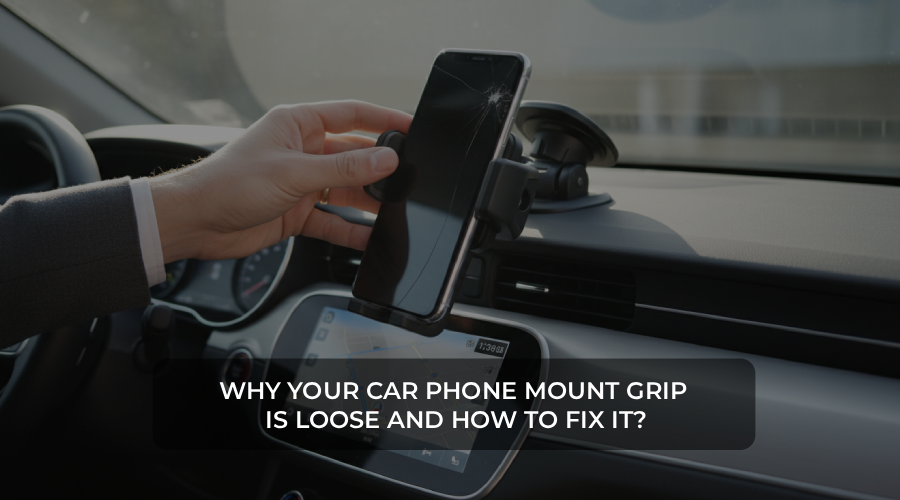
Why Your Car Phone Mount Grip Is Loose and How to Fix It?
A wobbly car phone holder is extremely annoying. Your phone is steady one minute, and the next it begins to shake, slip, or entirely drop off as you drive. Most loose phone mount issues can be fixed without replacing the entire holder, which is great news for all the people who love driving while talking to their close ones or often rely on Maps. We are going to analyze the most common reasons your car phone mount loosens and how to repair it successfully. Why Car Phone Mounts Become Loose? Phone mounts constantly deal with: Vehicle vibrations Heat exposure inside the car Frequent phone removal and adjustment Dust and surface contamination These factors, over time, weaken the grip and lower stability. Mounts using suction are especially ineffective since the sealing ability is influenced by temperature and wear of materials. 1. Dust and Dirt Build-Up Dirt accumulation is one of the most prevalent causes of weak grip. Dust, oils, and debris accumulate upon: Suction cups Dashboard surfaces Mount clamps This reduces adhesion and weakens the hold. How to fix it Wipe the suction plug with warm water. Clean dashboard with alcohol wipes. Let the suction cup dry off and use it again. The grip strength is usually recovered through cleaning. 2. Worn-Out Suction Cup Suction cups are inherently not elastic. The material may become hard due to heat and sunlight, and this may result in a problem with proper suction. Very high temperatures in automobiles may deteriorate the sealing properties of suction mounts. Flexible road dashboards. There are no smooth textures as they are less grippable. How to fix it Rinse the suction cup with warm water Slightly moisten the cup before attaching Replace damaged or hardened suction cups If the rubber feels stiff or cracked, replacement is usually the best option. 3. Loose Grip Arms or Clamps Spring-loaded grip arms weaken with continuous use. This causes the phone holder to become shaky or unable to hold the device tightly. How to fix it Tighten adjustable screws where possible. Check the tension of broken springs. Change the grip pads. If you want a more detailed DIY repair process, this guide on fixing the wings of a car phone mount holder explains practical repair methods clearly. 4. Incorrect Mount Placement At times, the problem may not be the mount itself, but the surface. Rough dashboards or irregular surfaces reduce suction performance because air gradually flows under the cup. How to fix it Apply smooth mounting surfaces. Do not have textured dashboard surfaces. Attach dashboard adhesive discs where necessary. Windshields usually offer stronger suction than the dashboard’s rough materials. 5. Heat Damage Inside the Car The interiors of cars are extremely hot during the summer. The sweaty temperatures loosen the adhesives and soften the mounting materials, and the holder can loosen or fall off. How to fix it Occasionally, park in the shade. Take off the mount when extremely hot. Do not spend a long time in the sun. Insulating mounts help to increase their life span. 6. Overloading the Mount Some mounts are not compatible with heavier smartphones. Big phones with heavy cases add extra weight, which degrades grip over time. How to fix it Install larger phone mounts. Take off heavy phone cases. Select more powerful magnetic/clamp mounts. The phone should be supported by a mount that fits the phone without undue pressure. Simple Maintenance Tips To ensure the phone mount lasts longer: Wash the suction cups regularly. Do not pull or twist too hard. When out of use, store away. Occasionally, check grip tension. Most grip issues can be avoided with small maintenance habits. If you’re planning to replace your current holder, check out the most loved car phone mounts right now for some reliable and stable mounting options. Common Mistakes to Avoid It is worsened by the fact that most users do not use their phone mounts correctly or pay little attention to the first signs of poor grip and instability. Do not make the following mistakes: Securing mounts to dirty or dusty surfaces. Continued repositioning or moving suction cups. Too long on the mounts, which are damaged or worn out. Tightening or loosening adjustable joints or moving components. Not listening to signs of a loose grip or shakiness. Mount heavy phones on weak mounts or low-quality mounts. Good installations, cleaning, and general maintenance are essential for enhancing the stability of the phone mount in the long run and ensuring your phone mount remains intact during normal driving. The use of a loose phone mount might appear to be a minor issue, yet it can be a significant source of distraction on the road when overlooked. In most instances, it is even caused by the simplicity of dirt accumulation, deteriorated suction cups, heat damage, or loose grip attachments. The good news is that these issues can be resolved by cleaning them up, maintaining them, and installing them correctly. If you clean your phone mount regularly, don’t replace it more, and check if it is properly fixed, it can extend its lifespan, enhance its stability, and make your driving experience much safer and more comfortable in the long term. FAQs 1. How to fix the car mount becoming too wiggly? Loose joints, loose clamps, or unstable surfaces. Fastening the components that can be fastened and cleaning the mount tends to minimize motion and enhance stability. 2. How to re-stick the phone mount in the car? Clean the suction cup and the area to mount it on and dry it with a towel before sticking the suction cup. 3. Why does my suction phone holder keep falling off? This normally occurs because of the accumulation of dust, heat, deterioration of suction material, or coarse mounting surfaces, which do not allow sealing. 4. How to secure the phone holder to the dashboard? Use strong force when fixing and make sure there is no dust or oil on the surface to ensure a strong grip. Loose joints, loose clamps, or unstable surfaces.

How Do I Prevent a Phone Holder from Vibrating Too Much While Driving?
A vibrating phone holder can be easily distracting and annoying when driving. When your phone always shakes, rattles, or moves on a bumpy road, it is more difficult to read a route, and your phone mount can be ruined in the long term. In other instances, sensitive phone camera components are also prone to excessive vibration, particularly in phones with optical image stabilization. Vibration-damping materials and mounting systems that remain stable can also be used to reduce this problem. The good news is that most vibration issues can be minimized through appropriate installation, superior mounting strategies, and some simple modifications. Through this guide, let’s consider the best methods of preventing your phone holder from vibrating too much when you are driving. Why Phone Holders Vibrate While Driving? The vibration of phone mounts is due to the continuous motion of the road and the vibrations of the vehicle. Common causes include: Weak mounting grip Loose joints or clamps Poor-quality suction systems Rough road conditions Heavy smartphones put pressure on the mount Small vibrations could be felt even when the mount is unsteady or improperly mounted. 1. Tighten All Adjustable Parts Properly One of the most common reasons for vibration is loose adjustment points. Over time: Rotating joints loosen Screws shift slightly Clamps lose tightness What you should do Check all tightening points regularly Secure adjustable arms firmly Avoid leaving joints partially loose A properly tightened mount feels significantly more stable during driving. 2. Use a Stronger Mounting Surface Rigid and rough surfaces tend to vibrate. For example: Flexible road dashboards. There are no smooth textures as they are less grippable. Better mounting surfaces are: Smooth dashboard areas Windshield glass Solid mounting plates Not only are stable surfaces helpful for increasing grip, but for decreasing vibration. 3. Add Anti-Vibration Padding Vibration-dampening material can be used as one of the solutions. Other materials, such as silicone rubber, are also used to absorb the movements in order to minimize vibrations. Helpful options include: Silicone pads Rubber anti-vibration strips Foam cushioning layers These materials aid in shock absorption in the road before they reach the phone mount. 4. Avoid Cheap or Weak Mounts Poor suction and weak plastic joints are common features of low-quality phone holders. This leads to: Excessive shaking Weak grip stability Increased wear and tear. Thus, a more stable and robust mount is more stable in the long-term. To know more about these mounts, visit here. 5. Balance the Phone Weight Properly Vibration can be exacerbated by large smartphones or heavy cases. An additional weight strains the mount, particularly during turns or bumps. To minimize this issue: Eliminate phone cases as much as possible. Mount bigger phones. Have the phone centralized in the holder. So, stability is enhanced with balanced positioning. 6. Reduce Excessive Arm Extension Long adjustable arms create more shaking because movement becomes amplified during driving. Better approach: Keep extension arms shorter Position the mount closer to the base Avoid overextending adjustable sections Shorter setups usually remain much more stable. 7. Clean the Suction Cup Regularly Dust and dirt weaken the suction grip, making it move even more. Simple fix: Apply warm water to suction cups. Wipe the dashboard regularly. Reattach once dry. Wet surfaces provide surface grip and reduce vibration. 8. Use Proper Driving Positioning In some cases, the mount is perfect, but the position can cause unneeded movement. Avoid placing mounts: Close to the vent areas of instability. On flexible areas of the dashboard. Close to vibrating surfaces. Proper posture assists in decreasing vibration. Common Mistakes That Increase Vibration Poor installation practices and a lackadaisical attitude among most drivers exacerbate the vibration issue without their knowledge; other small problems build up over time, causing the phone mount to become unstable. A good-quality mount can start shaking excessively even when not mounted or properly maintained. The following are some of the pitfalls that should be avoided: Using chronically damaged, loose, or worn mounts. Sticking the holder on good or dirty surfaces. Controlling movable joint positions and movement. Making use of the heavier smartphones with weak suction systems. Re-fitment of the mount was not needed. Going too far out with the adjustable arms. Failing to respond early to an instability or loss of grip. These small setup mistakes may not be regarded as major initially; however, over time, they can cause serious vibrations and balance problems that make driving more distracting and uncomfortable. When used, correct installation, appropriate placement, and maintenance are relevant to reducing vibration and improving the mount’s long-term performance. A phone holder that vibrates might not seem like a big problem, but over time, it will become distracting, frustrating, and uncomfortable to drive with it. The majority of vibration issues occur due to loose-fitting, low-quality mounts, loose suction grip, or improper placement in the car. Fortunately, some basic modifications, such as tightening joints, wiping surfaces, using anti-vibration substances, and selecting firmer mounting points, can significantly help. With proper installation and periodic maintenance, you can create a much more stable phone mount system that remains safe and comfortable even on uneven roads or during extended trips. FAQs 1. Is it safe to drive with loose car mounts? No, loose mounts might be distracting and might result in the phone falling during driving, making the driving more unsafe and less focused on the road. 2. What cancels out vibrations? Damping materials such as silicone rubber, foam padding, and rubber isolators are used to dampen vibrations and minimize the transfer of movement. 3. What is the best material to reduce the vibration of car mounts? One of the best materials is silicone rubber, which absorbs shock and is flexible and durable. This, in turn, reduces the vibration of car mounts. 4. How to remove the car phone holder suction? To remove the mount from the surface, lift the suction tab or pull the release edge slowly to release the air seal. No, loose mounts might be distracting and might result in the phone falling during driving, making the driving
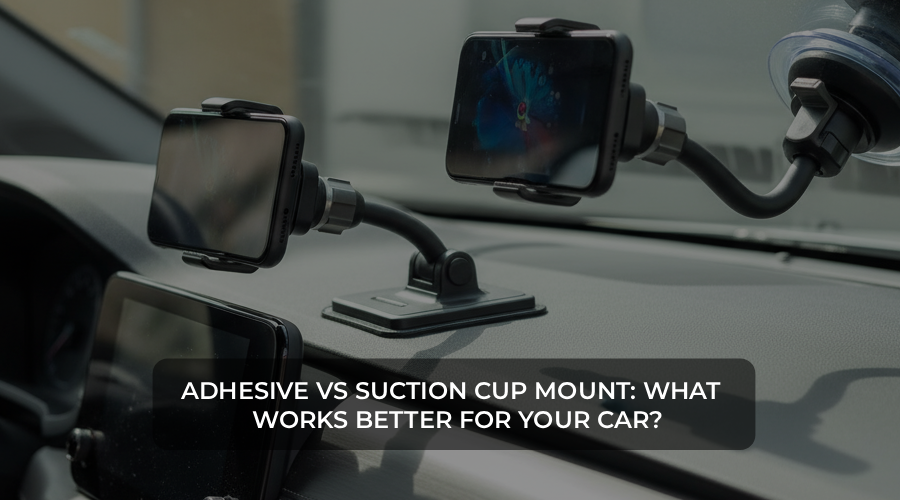
Adhesive vs Suction Cup Mount: What Works Better for Your Car?
When selecting a car phone mount, it is not only the holder that should be considered: the mounting system also makes a big difference. Among the most popular are adhesive mounts and suction cup mounts; there is a big difference between the two. Other drivers like adhesive mounts because they have good grip and are stable, while others like suction cup mounts because they are easy to use and re-attach. But what really works better in your car? The solution will be based on the driving habits, dashboard surface, weather conditions, and the frequency at which you change the location of your mount. We can simplify the distinctions in practice. For more technical details, you can also refer to this in-depth guide on adhesive vs. suction cup mounts. What Is an Adhesive Mount? An adhesive mount is one that is attached directly to your dashboard or windshield using a heavy sticky pad or adhesive tape. These mounts are to be mounted permanently and are typically fixed to provide a firmer grip. Common features of adhesive mounts: Good strength and balance. Limited mobility in driving. Compact mounting design Better vibration resistance Adhesive mounts are also attached to the surface, which reduces the shaking and motions in the traveling. What Is a Suction Cup Mount? Suction cup mountings are housed on smooth surfaces, e.g., windshields or dashboards, with vacuum pressure. They are also popular due to ease of installation, easy dismounting, and remounting anytime you need that particular mount. Common features of suction cup mounts: Easy installation Reusable placement Flexible positioning Quick removal Suction mounts are popular among many drivers due to their flexibility in altering viewing positions or transferring between vehicles. Adhesive Mount vs Suction Cup Mount 1. Stability While Driving Adhesive mounts tend to be more effective for stability. They prevent movement and vibrations better since they adhere directly to the surface. This contributes to their use on harsh roads or for daily commuting. Suction cup mounts may also become loose after a period, particularly during hot weather conditions. Winner: Adhesive Mount 2. Easy Installation and Removal Suction cup mounts are less complicated to install and reposition. They are removable or movable in no time, leaving no traces. Adhesive mounts are more difficult to reposition, however. Winner: Suction Cup Mount. 3. Performance in Hot Weather The systems respond to heat in different ways. High temperatures can cause suction cups to lose their grip and weaken over time. Other drivers have indicated suction mounts falling off during hot weather. Adhesive mounts tend to be more resilient to temperature variations and are more resilient in the long term. Winner: Adhesive Mount 4. Dashboard Compatibility Not all dashboards fit suction mounts. Surfaces with texture may reduce suction performance by a considerable margin. Sticky adhesives tend to adhere better to irregularly shaped dashboard surfaces, as they can be stuck directly to the surface. Winner: Adhesive Mount 5. Flexibility and Reusability Suction cup systems are more convenient in case you frequently switch cars or change the position of your phone mount. They are easily removable and reusable without damaging surfaces. Winner: Suction Cup Mount. Which Option Is Better for You? Choose an adhesive mount if you: Want maximum stability Drive on rough roads often Prefer long-term installation Need better vibration reduction Choose a suction cup mount if you: Want flexible positioning Frequently move the mount Use multiple vehicles Prefer easy removal and installation Your driving style and vehicle setup should guide the final decision. In case you are wondering about the best car mounts for driving, we have a detailed list here. Common Mistakes to Avoid To achieve optimal performance with your mount, you should avoid some common mistakes made by many drivers, who may even be unaware of them. Applying suction cup mounts in rough, uneven, dusty, or dirty surfaces so not to have strong suction and resulting in the mount easily falling off. Using adhesive mounts without cleaning and drying the surface would make the adhesives less firm and less likely to hold. Using the same adhesive pads (without replacing them) after peeling away the pads because the adhesive no longer has hold when taken off. Exposing suction mounts to prolonged exposure to high temperatures, in particular during direct exposure to the sun, may also impair suction performance with prolonged usage. Sometimes, placing heavy smartphones on flimsy or poor mounts can cause instability and sway motion or result in detachments during driving. Both suction and adhesive mounts are good, and the superior one depends on how you intend to use your phone mount in the car. Adhesive mounts are typically the more robust option for long-term stability and minimal vibration. However, when flexibility and easy repositioning are of greater importance to you, suction cup mounts are a lot more convenient. The best is to select a mount that suits your driving habits, the interior of your vehicle and your daily usage requirements. Correct installation and proper maintenance will always make a tremendous difference in the mount’s performance over time. FAQs 1. Is an adhesive or suction cup better for a dashcam? Dashcams typically have a higher likelihood of success with adhesive mounts, as they offer greater long-term stability and less road vibration. 2. Can suction cups damage walls? Suction cups generally do not leave a mark on smooth surfaces, although ineffective removal methods or prolonged use can leave a mark on fragile materials. 3. Why does my suction cup keep falling off? This normally occurs due to dust being deposited or heat exposure, uneven surface or deteriorated suction material, which loosens the seal with time. 4. Do suction cup car mounts work? Yes, suction cup mounts are effective provided they are properly mounted on smooth, clean surfaces. But performance can decrease over time due to heat or surface conditions. Dashcams typically have a higher likelihood of success with adhesive mounts, as they offer greater long-term stability and less road vibration. Suction cups generally do not leave a mark on smooth surfaces, although

6 Best Places to Put a Phone Mount in Your Car (Safe and Easy Options)
Driving with your phone is much easier and safer, whether you are using phone mounts to get directions, play music, make hands-free phone calls, or get traffic updates, as long as you have it in the right place in the car. Nevertheless, most drivers just purchase a good phone mount and entirely overlook the mount’s placement. The wrong position during mounting can cause obstruction in visibility, distraction, or even be uncomfortable to use in the process of driving. Let’s look at the safest and most practical places to put a phone mount in your car. 1. Dashboard Mount Position One of the most desirable and safe locations for a phone mount is the dashboard. It holds the phone in a natural viewing position, so you can quickly check the navigation without taking your eyes off the road. The reason why drivers want to use dashboard mounts: Easy to see when driving. Easy accessibility. Firm mounting surface of most vehicles. Enhanced safety and convenience. Dashboard mounts also minimize unwarranted head movement compared to lower mounting positions. 2. Windshield Mount Position Windshield mounts are in fashion because the phone is positioned closer to eye level. This system is particularly effective for drivers who rely heavily on navigation when traveling long distances or in unfamiliar areas. The advantages of windshield placement: Easy map visibility Little downward eye movement. Convenient viewing angle Many drivers claim it is more comfortable to use a phone because it is raised. 3. Air Vent Mount Position Air vent mounts are small, easy to install, and not difficult. They attach directly to the AC vent in your car and are particularly handy in smaller cars with smaller dashboards. The reasons why people like vent mounts: Fast installation Compact design Does not obstruct the windshield’s visibility. Easy phone access Such mounts are often well-suited to minimalist drivers. But heavy phones can cause certain vent mounts to shake, particularly on coarse roads. They can also partially block fluid flow through the AC vent. 4. CD Slot Mount Position If your vehicle still has a CD player that you no longer use, this area can become a surprisingly effective mounting spot. CD slot mounts slide into the slot and provide a firm and centered phone fit. Benefits of CD slot mounts: Secure and stable positioning. Central viewing angle Is not obstructive of the windshield or vents. Handy when on the road. The configuration is particularly effective for older cars, where dashboard space is constrained. The only negative is self-evident: it only works when your car has a CD slot. 5. Cup Holder Mount Position Cup holder mounts are beneficial to drivers who want a lower, more stable position. These mounts are installed in the cup holder and typically provide adjustable-height or positioning arms. The advantages of cup holder mounts are: Very stable base No adhesive or suction needed. Installing and removing easily. They are effective in vehicles where the dashboard or windshield location seems uncomfortable. Nevertheless, since the phone is lower, the drivers might have to check it more frequently, which can be distracting when used for navigation. 6. Rearview Mirror Mount Position Rearview mirror mounts hold the phone at a near-eye level and do not attach to the windshield. This will minimize the distance your eyes travel off the road. The reasons why some drivers use this setup would be: Natural eye-level visibility Useful for navigation Maintains a clean dash. But placement is of great importance here. When this is inappropriately placed, the phone may interfere with the view or complicate the proper usage of the mirror. Which Placement Is Best for You? The optimal place to mount your phone depends on: Vehicle interior layout Driving habits Phone size Visibility preference Comfort while driving There are those drivers who want eye-level visibility, and others want minimal distraction and cleaner placement. Generally, the most secure configuration is one that lets you take a glance at the screen without having to look far off the road. If you’re also looking for mount recommendations, check out the most loved car phone mounts right now for practical and reliable options. Common Mistakes to Avoid Even a high-quality phone mount can become unsafe if installed incorrectly. These are some of the errors to avoid: Blocking windshield visibility Placing the phone too low. Placing near-airbag deployment zones. Mounting on weak or unstable surfaces. Always fiddling with the phone whilst in motion. Having the mount in a position that does not disturb controls. An effective configuration must be comfortable, stable, and free of distractions for everyday driving. The placement of the phone mount can greatly enhance driving comfort and safety. A properly mounted mount can help minimize distractions, make it easier to access, and allow safer navigation or calls while driving. The aim is to design an arrangement that is not unnatural and does not distract your concentration while driving. Finally, the best place to mount a phone in a car is the one that offers you the most convenient access to your phone without interfering with your view, comfort, or focus. FAQs 1. Where is the safest place to mount a phone in a car? A position that is usually the least dangerous will be on the dashboard or slightly below eye level, where the phone is still visible without obstructing the road view. 2. Should I place my phone face up or down? When driving, the phone must be in front of your face so you can easily see navigation and other crucial details within a short period. 3. Where to put a suction phone holder in a car? Suction phone holders are effective on flat dashboard areas or the bottom corners of windshields, where they can be firmly attached. 4. Should I mount a phone holder on the windshield or dashboard? You should select dashboard mounts rather than windshield mounts since, in the first case, dashboard mounts create the minimal distraction to the windshield as compared to the second case, windshield mounts, which allow