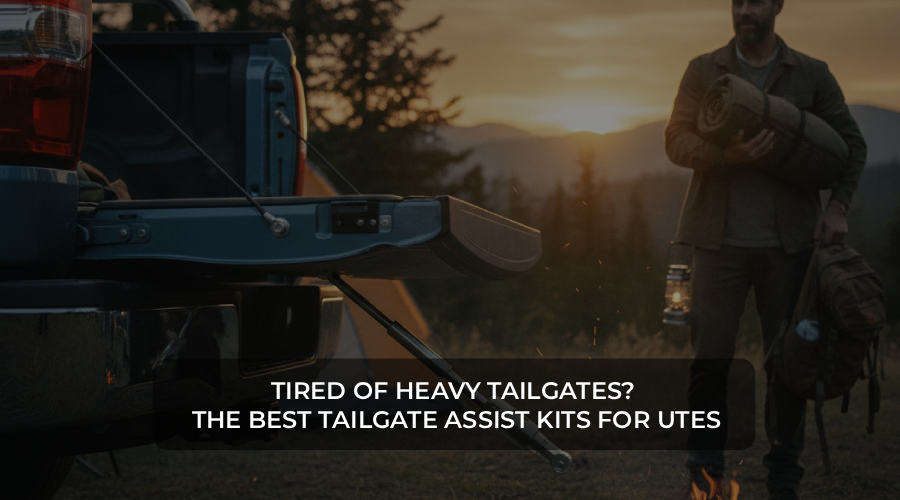
Modern utes are built tougher than ever, but one thing many owners still struggle with is the heavy tailgate. No matter the load, be it tools, camping gear, groceries or recovery equipment, getting used to the frustration of continuously lifting and lowering a heavy tailgate can become frustrating after a while. And that is where the tailgate assist kits can come in. A tailgate assists kit helps the tailgate regulates opening and closing movements with gas struts or damping. The tailgate does not drop with a bang; instead, it descends smoothly and safely with much less force. These kits are especially useful for: Daily work vehicles Camping and touring setups Family utes Off-road builds When you are fed up with having a hard-falling tailgate, below are some of the best tailgates assist kits that you can consider at the moment. 3 Best Tailgate Assist Kits for Utes 1. Orion Motor Tech Tailgate Assist for Ford F-150 (2015–2025) The Orion Motor Tech Tailgate Assist is tailored to the owners of the Ford F-150 to experience easier and safer tailgate use. This kit will fit 2015-2025 F-150 models and is designed with a heavy-duty shock absorber mechanism that will allow the tailgate to descend more slowly than usual so as not to close on its own. The outcome is more convenient and user-friendly loading or offloading cargo. Controlled lowering action of this tailgate assist is one of the largest benefits. Rather than just ramming down, the tailgate folds down slowly, eliminating the strain on factory cables, hinges, and mounting points. Not only does it enhance the everyday usability, but it can also serve to enhance the life of tailgate parts over time. Constructed from structural-grade steel with a corrosion-resistant finish, the kit is intended for use in typical work, recreational, and off-road applications. It can be easily installed with little or no hand tools, and no drilling or taillight removal is required. A lot of truck owners will love the ease of operation afforded by the tailgate, in particular during occasions of transporting tools, equipment, or camping gear. The ease of lowering and easy installation are also noted in the community comments as advantageous features. The Orion motor Tech tailgate assist is an all-around upgrade package for F-150 owners who want to enhance convenience, security, and the overall long-term protection of the tailgate. Check Price Pros Accurate and hydraulic tailgate downtail. Compatible with Ford F-150 models from 2015-2025 Durable steel construction Helps eliminate stress on Hinges and Cables. No-drill installation design Improves everyday usability Cons Specifically created to fit F-150 models. Some installations may require minor adjustment for perfect alignment 2. Orion Motor Tech Tailgate Assist for Silverado & Sierra (2007-2019) The Orion Motor Tech Tailgate Assist Kit is created to provide a tailgate experience that is smooth and safe to those Chevy Silverado and GMC Sierra owners. Constructed using a strong shock-absorbing mechanism, this kit regulates the pace at which the tailgate descends, eliminating abrupt drops that can harm materials used in the hardware or cause inconvenience in everyday use. The balanced movement control is one of the most important benefits of this kit. The tailgate is lowered easily without being too slow or confined to a point where loading and unloading become difficult. It also assists in decreasing the wear on cables, hinges, and mounting points, which may enhance the long-term durability of tailgate parts. The build is sturdy and strong enough to be used in work trucks, off-road construction, and daily driving. They are fairly easy to install and can typically be achieved with a typical set of hand tools. In general, it is a fantastic addition for Silverado and Sierra owners who want a more convenient and safer tailgate. Check Price Pros Controlled and smooth tailgate lowering. Durable heavy-duty construction Lessens the pressure on hinges and cables. Improves daily usability Straightforward installation Cons Compatible only with specific Silverado and Sierra models Installation instructions may require careful review 3. Tailgate Assist Compatible with Chevy Silverado & GMC Sierra (1999-2007 Classic) This Tailgate Assist Kit is uniquely fitted to Chevrolet Silverado and GMC Sierra trucks between 1999 and 2007 Classic models. The system makes use of a gas shock mechanism that decelerates the tailgate descent, which is more secure and easier to use when facing daily conditions. Among the most notable characteristics is the fact that it smooths out the rough tailgate drop that is usually met when using older pickup trucks. The lowering is controlled to give extra safety, and strain is lessened on factory tailgate parts. The kit is designed to fit as a factory-style and fits in the vehicle with no interference with the regular tailgate functions. The added convenience will be appreciated by drivers who are used to carrying tools, equipment, or camping gear in their vehicles. Installation is usually easy, but proper alignment should be done to achieve optimum performance and efficient operation. On the whole, it provides a convenient and affordable modification to the owners of older Silverado and Sierra trucks. Check Price Pros Produced to fit 1999-2007 Classic models. Easy tailgate lowering action. Helps secure hinges and cables. OEM-style appearance Enhances comfort and security. Cons Limited vehicle compatibility Proper alignment is important during installation Why Tailgate Assist Kits Are Worth It Many ute owners underestimate how useful these systems actually are until they start using one regularly. It can be aided with a quality tailgate assist kit: Avoid an abrupt drop of the tail gate. Enhance loading and offloading safety. Minimize the hinge wear over time. Enhance one-handed operation. Enhance general convenience when in use. It is a little up-pick which actually has a great impact. In order to gain a better understanding of such systems, visit here. Heavy tailgates might not be that big of a problem at first, but over time, they can be frustrating, inconvenient and even hazardous to use regularly. Most assist kits are affordable, simple to install and will last for years with proper use. Finally, after
Installing a Headache Rack? Here’s What You Need to Know
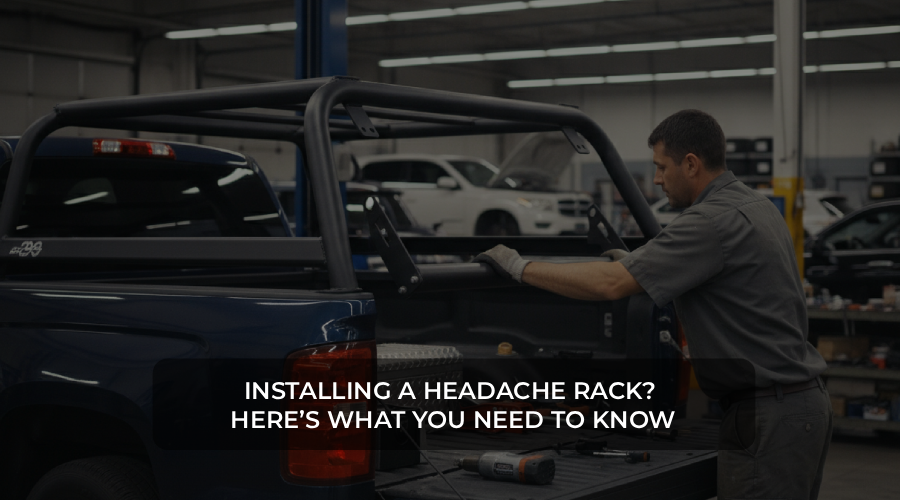
One of the upgrades that will be among the most practical modifications that you can make on a pickup truck is a headache rack. Installing an appropriate headache rack can enhance safety and functionality regardless of the fact that you use your truck for work, equipment hauling, towing, or outdoor adventure. Most truck owners are more interested in selecting the appropriate rack but fail to allocate sufficient time to learning how to install the rack. An imperfectly fitted headache rack may cause vibrations and loose fitting, weakened protection to cargo, and even damage to the truck bed in the long-term. What is good is that the largest proportion of the modern headache racks can be installed easily with the proper mounting hardware. What Is a Headache Rack? A headache rack is an item of protection that is attached to the rear of the pickup cab. Its primary aim is to: Protect the rear window Hold cargo in place. Improve load security Provide accessory mounting options Most headache racks are also used as mounting racks to: Work lights Tool holders Recovery equipment Cargo straps Ladder supports This protection and utility attributes make them favored by the commercial and hobby truck owners. Why Install a Headache Rack? It is always good to know why there are so many truck owners who opt to install one before talking about the process of installation. Protection for the Cab The support weight can lead to accidental forward shifting of the cargo during sudden braking of the vehicle. A headache rack assists in creating an obstacle between: Cargo Truck cab Rear window This would help avoid expensive malfunctions and enhance safety. Better Cargo Management Headache racks have lots of tie-down spots and side mounted accessory spots that can assist in maintaining organization of equipment. Improved Functionality Contemporary headache racks will support: LED work lights Tool mounts Recovery boards Utility storage systems The result is a more versatile truck setup. Choosing the Right Headache Rack Not all headache racks are alike. Before installation, consider: Material The most popular ones are: Steel Aluminum Stainless steel Steel has ultimate strength whereas, aluminum carries less weight with an enhanced corrosion resistance. Compatibility Always ensure that the rack is intended to: Your truck model Bed size Mounting system The most typical are vehicle specific designs, which offer the least complications during installation and are the most suitable fit. Intended Use The selection of the kind of truck to use should be in line with your usage. For example: Contractors can put more emphasis on strength. Accessory mounting features might be desired by overlanders. Lightweight designs can be desired by daily drivers. Tools You May Need The majority of headache racks constructions necessitate simple tools. Common items include: Socket set Wrench set Measuring tape Drill (when installed) Torque wrench Screwdrivers Never start without first reading the manufacturer’s instructions. Step-by-Step Headache Rack Installation The set up differs depending on the manufacturer, but most of the setups have a similar process. Step 1: Prepare the Truck Bed Clean the mounting area. Remove: Dirt Dust Rust buildup Debris A clean surface is important to provide adequate alignment and fixation. It is also a good place to check on the truck bed rails on whether they are damaged or not. Step 2: Position the Rack Carefully place the headache rack behind the cab. At this stage: Align the rack appropriately. Check sides spacing. Check rear-window clearance It should be properly positioned since even minor problems in alignment can be realized in future. Step 3: Install Mounting Brackets The majority of the headache racks utilize either: Clamp-on brackets Bolt-on brackets The mounting hardware should be attached loosely initially. Do not completely tighten things until you have made final confirmation. This gives a chance of making minor alterations when installing it. Step 4: Check Alignment Before tightening the hardware, inspect: Side-to-side alignment Lateness of the cab. Rack levelness See the truck in various views. The correct position of the headache rack must be square and at the center of the truck bed. Step 5: Tighten All Hardware Once you’re satisfied with the positioning: Uniformly tighten mounting bolts. Adhere to torque specifications, where applicable. Double-check bracket security You must not overtighten since overtightening may cause harm to hardware and bed rails. Step 6: Install Accessories A lot of truck owners are adding accessories as soon as they are installed. Popular upgrades include: LED work lights. Cargo hooks Tool holders Recovery gear mounts The inclusion of such features now simplifies the wiring and setup. FAQs 1. What do you use a headache rack for? Protecting the truck cab and back window is carried out by means of a headache rack that can be attached, offering various positions to affix all tools, lights, and other accessories. 2. How to attach a headache rack? The majority of the headache racks fit clamp-on or bolt-on systems, which fasten the rack to truck bed rails. The ways of installation differ according to the manufacturer and type of truck. 3. How to hook up headache rack lights? The lights used on headache racks are normally hardwired to the electrical system of the truck with weather-resistant wiring, appropriate connectors, and shielded wiring within the truck bed or frame. 4. Is a headache rack worth it? Yes. A headache rack gives great cargo security, enhances truck performance, offers mounting of accessories, and prevents pricey damage to the rear window during hauling. Protecting the truck cab and back window is carried out by means of a headache rack that can be attached, offering various positions to affix all tools, lights, and other accessories. The majority of the headache racks fit clamp-on or bolt-on systems, which fasten the rack to truck bed rails. The ways of installation differ according to the manufacturer and type of truck. The lights used on headache racks are normally hardwired to the electrical system of the truck with weather-resistant wiring, appropriate connectors, and shielded wiring within the truck bed or frame. Yes. A
Headache Rack vs Back Rack: What’s the Difference and Which Do You Need?
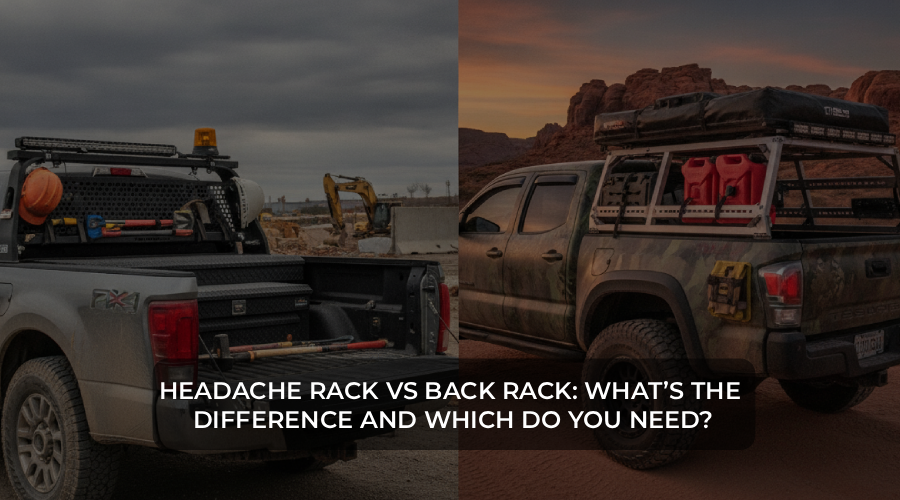
You have likely heard the terms headache rack and back rack, as you have been researching truck accessories. The names are often used interchangeably by many truck owners, leading to a lot of confusion during an upgrade shopping session. While both accessories are mounted behind the truck cab and offer protection, they aren’t always designed for the same purpose. These differences may allow you to select the proper kind of setup to use in either your work, hauling or outdoor requirements. You might be carrying ladders, lumber, or tools, or you might be carrying camping gear, but in either case, the right rack can enhance your safety and convenience. What Is a Headache Rack? A headache rack is a protective device that is fitted on the rear of the truck cabin. It is mainly used as safety. Cargo transported in the truck bed can be subjected to movement in the forward direction in case of sudden braking or a road accident. A headache rack will assist in ensuring the cargo allotments do not hit the back window or the cab. Common uses include: Hauling lumber Carrying pipes Transporting construction materials Securing heavy equipment Off-road cargo protection In the view of many commercial truck owners, headache racks are a crucial safety feature. What Is a Back Rack? A back rack is usually more utilitarian and cargo-oriented in design. Although it also offers cab protection, it usually has other features which include; Tool mounts Ladder supports Accessory brackets Cargo tie-down points Equipment storage options Back racks are especially popular among: Contractors Electricians Landscapers Utility workers Overlanding enthusiasts A back rack is used in most instances as a protective barrier or a management system of equipment. Headache Rack vs Back Rack: Key Differences Despite some similarities between the two accessories, it is possible to note a number of differences. Primary Purpose Headache Rack Concentrates on the protectors of the cab. Eliminates cargo impact damage. Back Rack Helps with tools and accessories. Offers more mounting possibilities. Cargo Management Basic cargo support is typically provided by headache racks. Back racks typically offer: Multiple tie-down locations Storage flexibility Equipment mounting solutions A back rack generally can be more versatile in case organization is a consideration. Customization Options There are numerous back racks that sustain other accessories like: LED work lights Fuel can holders Recovery gear mounts Shovel brackets Toolboxes Headache racks, too, can be upgraded, though back racks are commonly engineered to be modular. Weight and Construction The products are often in: Steel Aluminum Stainless steel The heavy-duty headache racks can be more focused on strength and protection, whereas some back racks can compromise protection with compatibility to accessories. Which One Is Better for Work Trucks? You may just need a headache rack if you use your truck to transport items such as construction materials, lumber, or equipment. It is ideal in: Construction sites Commercial fleets Heavy hauling applications The construction is also earthy, and this minimally structured design is less prone to maintenance. Which One Is Better for Everyday Use? A back rack can be more flexible to the needs of those drivers who want a multi-purpose installation. It allows you to: Secure tools Add lighting Mount accessories Improve organization This offers it popularity among truck owners where they work and recreate by their trucks. Are They Sometimes the Same Thing? Yes. The presence of both back racks and headache racks, as some manufacturers advertise some products, is one of the causes of confusion. In practical use: All the back racks may be used to protect against headaches. Not all headache racks can be used as full-blown back racks. The difference is usually determined by design and intended purpose. How to Choose the Right One When purchasing, consider: What is the main use of your truck? Select a headache rack when you: Often carry heavy objects. Want to have the most rear-window protection. Want a simple, rugged solution Select a back rack when you: Need equipment organization Use work tools regularly Desire a universal mounting accessory. Enjoy camping or overlanding The decision should be determined by your daily usage of the truck. Common Buying Mistakes Most truck owners buy a rack because it looks good. Avoid these mistakes: Ignoring cargo needs Overlooking accessory compatibility Hypocriticalness: Making a decision on style rather than on functionality. Not checking mounting requirements Exceeding load limits It only takes a few minutes to assess your needs, which will help you avoid expensive mistakes in the future. Both the headache racks and the back racks have great advantages; however, the most suitable option will depend on your usage of the truck. When the ability to shield the cab against moving cargo is most important to you, there is an easy and very effective remedy: a headache rack. If you need extra storage space, engineering, and mounting options, an additional rack at the back could be the more economical choice. FAQs 1. What happens if I overload my roof rack? Exceeding the load limit of a roof rack may result in an altered experience on the road, a longer braking performance, broken mounts, and cargo falling over while in transit. Always obey the weight limit of the manufacturer. 2. Are headache racks useful? Yes. Headache racks help ensure cargo safety by preventing items from moving into the rear cab. They also enhance safety in the transportation of long or heavy materials. 3. Why are back racks called headache racks? The headache rack owes its name to the fact that it keeps cargo from colliding with the truck cab or even injuring people inside it in case of an abrupt stop or an accident. This type of protective action is done by many back racks. 4. Are headache racks required? Most pickup trucks do not have any legal obligation to use a headache rack. They are, nevertheless, highly recommended to drivers who often carry heavy, lengthy, and unsecured equipment. Exceeding the load limit of a roof rack may result in an altered
How to Take Care of the Ute Tailgate Assist?
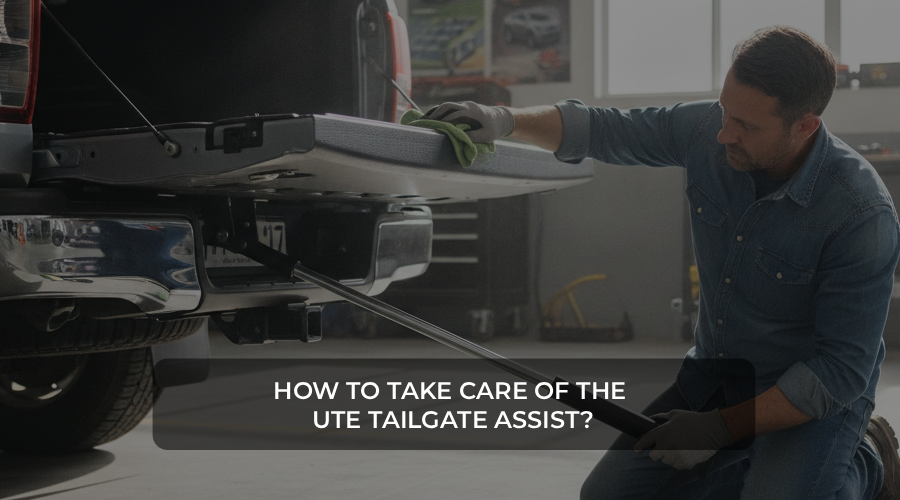
One of the things you can do with a ute to make life easier is a tailgate assist kit. It ensures the tailgate is smoother, safer, and easier to use on a daily basis. But as with any moving part on a car, it must also receive due care and attention to ensure that it operates well with the time. A lot of ute owners attach a tailgate assist and leave it to chance until the issues become noticeable. The tailgate suddenly becomes jerky, starts making noise, falls down too quickly, or is in an irregular position. The good part of it is that tailgate assist systems usually have low maintenance. Their performance and life could be greatly enhanced with a handful of basic care habits. Why Tailgate Assist Maintenance Matters A tailgate assist system is continually concerned with: Heavy tailgate weight Road vibrations Exposure to dust and dirt. Weather conditions Taken in and out all the time. Components will wear more quickly without proper maintenance and may cause problems such as: Uneven movement Tailgate bouncing Loose brackets Noisy operation Reduced dampening performance Routine maintenance prevents unwarranted service and maintains everything in good working order. 1. Keep the Gas Strut Clean The gas strut is the main working component of the tailgate assist system. The strut can accumulate dust, mud and grime over the years or even upon frequent use off road or on dusty roads. What you should do: Keep the strut clean, wipe on a regular basis with a soft cloth. Eliminate the accumulation of dirt. Stay away of harsh chemicals or rough cleaners. Maintaining a clean strut will ensure that there is a smooth motion and no early wear and tear. 2. Inspect Mounting Brackets Regularly The brackets and constant movement pressure care are taken care of by suspending the assist system. Loose or loose-fitting brackets can cause: Tailgate wobbling Uneven movement Strange noises Alignment problems Maintenance tips: Test every 3-6 months. Relax, lazily screwed fasteners become tight. Depression or bending. Brackets are never to be removed. Though there is just a bit of looseness, it can easily get worse. 3. Lubricate Moving Parts Carefully Occasional lubrication is advantageous to some of the tailgate machine. This includes: Hinges Pivot points Mounting joints Important tip: Only apply light automotive lubricants and do not let the grease accumulate too much. Excessive grease will collect dust and dirt particularly on off-road ute. 4. Avoid Slamming the Tailgate A tailgate assist has been developed to control, but not to resist frequent aggressive power. Striking the tailgate with a sort of a beat can: Damage dampers Stress mounting points Wear out hinges faster When closing the tailgate, it is important to do it in a smooth manner and not to use excessive force. This is a very basic practice that significantly enhances its long-term stability. 5. Watch for Dust and Water Exposure Utes usually work in austere conditions where dusts and humidity cannot be ignored. Over exposure may impact: Gas strut performance Bracket corrosion Tailgate alignment Hinges and latches Helpful practices include: Removing mud and dirt on a regular basis. Proper drying of wet parts. Checking to see whether rust or corrosion. In case of frequent crossings of water or mud, which you do in the course of driving, it is even more important to conduct inspections. 6. Check Tailgate Cables and Hinges Assist kit goes a long way in making up of the tailgate system, which most people are conscious of and forget others. However, worn-out cables or broken hinges may have a negative impact on the performance. Common signs of problems: Uneven tailgate movement One side sitting lower Tailgate bouncing excessively Difficulty closing properly Checking the entire tailgate system is a good way of detecting issues. 7. Prevent Tailgate Misalignment In the long-run, alignment may be lost somewhat due to vibration and heavy use. Otherwise, the tailgate can: Sit unevenly Slide on adjacent panels. Place additional loads on the assist system. To prevent this: Overloading the tailgate should be avoided. Inspect alignment periodically Tighten hardware evenly Minor tweaks now will help are sure to stop larger issues in the future. Signs Your Tailgate Assist Needs Attention To be on the safe side, your assist system might be experiencing some problems when you observe: Faster tailgate dropping Jerky movement Tailgate bouncing Easily noticeable rust or leakage. Lopses or lumps in the opening or closing. Unusual noises Most ute owners only require a routine inspection at least every few months. FAQs 1. How to protect your truck tailgate? Ways to prevent your tailgate on your truck can involve types of tailgate assists, not slamming, making the hinges oily, and checking the cables and mounting hardware frequently. 2. How to keep dust out of a ute tub? Canopy systems, tonneau covers, weather seals and full fitted tailgate gaps can assist in reducing dust entering the ute tub. 3. How to keep a tailgate from bouncing? The right tailgate assist, hinges, and cables shall be properly installed and tight mounting hardware will ensure there is no bouncing of the tailgate when used. 4. How to adjust tailgate gap? Tailgate gaps can be repaired by such typical methods as moving hinges, ensuring they are flat in the frame, balancing hardware, and checking corroded areas of the tailgate. Ways to prevent your tailgate on your truck can involve types of tailgate assists, not slamming, making the hinges oily, and checking the cables and mounting hardware frequently. Canopy systems, tonneau covers, weather seals and full fitted tailgate gaps can assist in reducing dust entering the ute tub. The right tailgate assist, hinges, and cables shall be properly installed and tight mounting hardware will ensure there is no bouncing of the tailgate when used. Tailgate gaps can be repaired by such typical methods as moving hinges, ensuring they are flat in the frame, balancing hardware, and checking corroded areas of the tailgate. A tailgate assist kit can be a relatively small item, yet proper maintenance is significant
Tailgate Assist Kits Explained for First-Time Ute Owners
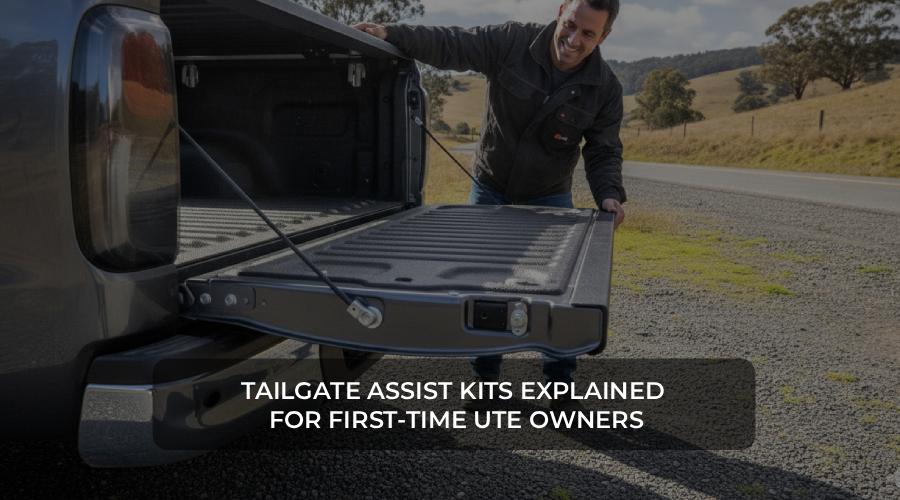
When you just got your first ute there is one thing you probably have figured out and that is that new tailgates are lighter than they appear. Unless you go to work with your ute, camping in the country, road trip, or your daily drive, lifting and dropping a heavy tailgate many times will be tiresome in no time. It is precisely this reason why tailgate assist kits have been tops in the list of popular upgrades by ute owners. A tailgate assist kit is used to regulate the action of the tailgate to open and close without a drop like fall. It could be a tiny addition to it, however, when it is equipped, everyday use is significantly simpler and less risky. What Is a Tailgate Assist Kit? A tailgate assist kit is an after-market gadget that helps in lightening the burden of opening and closing a tailgate of a ute. Most kits use: Gas struts Dampers Shock-assisted systems Mounting brackets These parts act to decelerate the tailgate by lowering it and provide at least some of the weight as they work. Without a tailgate assist, heavy tailgates can: Drop suddenly Slam hard Stress hinges and cables Become difficult to control with one hand The assist system creates a much smoother and more controlled movement. Why Tailgate Assist Kits Are So Popular A lot of first time owners of utes do not realize the helpfulness of such kits, however, once they begin to use it every day, they realize the value. 1. Easier Everyday Use Convenience is one of the greatest benefits. A tailgate assist is useful in making it easier to: Close the tailgate easily. With one hand reduce it. Deal with big tailgates. This is particularly handy in transporting tools, groceries, camping-stuff, or recovery gear. 2. Prevents Sudden Tailgate Drops The tailgates may land on the ground with a lot of force without proper control. This can: Damage hinges Wear out the cables more quickly. Cause injury to fingers or hands A tailgate assist reduces the rate of descent and helps avoid any sudden impact. 3. Improves Long-Term Durability Frequent hard drops cause an added stress on: Hinges Mounting brackets Tailgate cables Locking systems The assist system aids in minimizing wear and tear in the long term by ensuring a protected movement. 4. Better for Camping and Touring Setups Tailgate assists are highly demanded by individuals who use their ute in: Camping Touring Tailgating events Outdoor work Smooth tailgate operation is a great convenience when loading and unloading equipment routinely. How Does a Tailgate Assist Kit Work? The system typically involves the use of gas strut or damper between the tailgate and the ute body. Upon opening tailgate: The move is absorbed by the gas strut. The rate of descent is decreased. Weight is less heavy and more controllable. A few sophisticated systems even offer selection of some lifting support as they close. The net effect is the movement that is easier and causes fewer strains both to the user and the vehicle. Are Tailgate Assist Kits Easy to Install? Yes, most contemporary kits are meant to be installed by the DIY step. Installation may in most instances only require: Basic hand tools Around 20–40 minutes Simple bracket mounting Most kits come with: Installation hardware Vehicle-specific brackets Step-by-step instructions Common Problems After Installation Majority of the problems occur due to improper installation or alignment. Common problems include: Tailgate sitting unevenly Reduced or clumsy movement. Loose brackets Unusual noises Tailgate not an uptight ground. Luckily, in most cases, such issues can be rectified by means of adjustment. Are Tailgate Assist Kits Worth It? For most ute owners, absolutely yes. The benefits include: Easier tailgate handling Improved safety Reduced wear and tear Better convenience for daily use It is one of those upgrades, which is small at the beginning but comes highly in handy after some time. Common Mistakes First-Time Owners Make The decrease in the functionality of their assist kits due to improper installations or even improper maintenance practices is accidentally the case of many new ute owners. Avoid these mistakes: Purchasing universal kits non-compatibly. Overtightening brackets Ignoring loose hardware Skipping alignment checks Using damaged tailgate cables The correct installation is of great significance in the performance over the long term. FAQs 1. Are tailgate assists easy to install? Yes, the majority of tailgate assist products are aimed at easy DIY installation and typically need just fundamental tools and need 20-40 minutes to be installed correctly. 2. Is an electric tailgate worth it? Electric tailgates are very convenient and automatic, particularly to those who frequently use it, yet it is much costly compared to regular assist kits. 3. How much does it cost to put a liftgate on a 26 ft box truck? Installing a liftgate on a large box truck can cost anywhere from ₹2 lakh to ₹8 lakh or more depending on lift capacity, brand, and installation complexity. 4. How does an automatic tailgate work? It also has an automatic tailgate where the tailgate is closed and opened automatically by the use of electronic motors, sensors and control modules and it opens and closes the tailgate by buttons, remote keys, or foot sensors. Yes, the majority of tailgate assist products are aimed at easy DIY installation and typically need just fundamental tools and need 20-40 minutes to be installed correctly. Electric tailgates are very convenient and automatic, particularly to those who frequently use it, yet it is much costly compared to regular assist kits. Installing a liftgate on a large box truck can cost anywhere from ₹2 lakh to ₹8 lakh or more depending on lift capacity, brand, and installation complexity. It also has an automatic tailgate where the tailgate is closed and opened automatically by the use of electronic motors, sensors and control modules and it opens and closes the tailgate by buttons, remote keys, or foot sensors. One of the easiest modifications that can have a surprisingly large impact on day-to-day functionality is
How to Open the Tailgate in Tata Punch Without a Key?
The frustration of locking out of your Tata Punch boot or not being able to open the tailgate with the key can be very stressful and when your bags, tools or valuable things are locked inside. The advantage here is that the Tata Punch also has various options for reaching the boot based on the circumstances. Depending on the type of car, you might open it in the car, or you might have to make use of the smart key system, the emergency release techniques or even the manual unlocking techniques. It is best to know how the Tata Punch tailgate system functions before attempting any violent movements with it. How the Tata Punch Tailgate System Works The Tata Punch also has an electronically assisted tailgate locking system in most of the variants. Normally, the boot can be opened by: Using the key fob to unlock the vehicle. Pressing the tailgate handle switch. Keeping the smart key within range. Unlocking the car through the central locking system from inside the cabin. Using the physical key in case of key fob battery failure or electronic malfunction. Opening the tailgate only after the vehicle is unlocked, as the boot remains locked when the central locking system is engaged. Receiving a signal from the vehicle’s Body Control Module (BCM), which releases the tailgate latch electronically when an authorized unlock command is detected. According to the Tata Punch owner’s manual, when you press the tailgate key, press the tailgate handle switch in 30 seconds to open the tailgate when using the smart key. In case the key is not available or the system malfunctions, you might have to resort to other procedures. Method 1: Use the Smart Key Remote First, you need to check to see whether you can open the boot or not when you have the smart key, although it may not appear to be. Steps: 1. Open the car to the fullest. 2. Click the tailgate unlock button up on the key fob. 3. Get to the back of the car. 4. Press the hidden tailgate release switch near the number plate area Other times, users may unlock the car and fail to press the tailgate release switch after that. The switch in the Tata Punch car is a boot handle at the point close to the rear number plate and might need several attempts to fit properly. Method 2: Open the Boot from Inside the Car In the case when the external tailgate release fails, then you can attempt opening the boot inside the car. Cases of Tata Punch owners exposing an emergency tailgate opening lever which is accessible at the inside have occurred. How to do it: 1. Fold back the back seats. 2. Safely get into the back of the car. 3. Find the emergency tailgate release switch by the lock. 4. Manually open the boot; press the lever. This method is especially useful if: The key battery is dead The electronic lock fails The tailgate button stops responding Always avoid using excessive force while accessing the internal release mechanism. Method 3: Check If the Car Is Fully Unlocked Full unlocking is another quite frequent problem of Tata Punch models. There are instances of some owners reporting that: Doors unlock properly Tailgate remains locked separately This issue has also been discussed by Tata Punch users online. Quick fix to try: Lock car back up fully. Open all doors with remote. Turn on one door first, as a passenger. Then try opening the tailgate again After a complete unlock cycle the system may sometimes reboot itself. Method 4: Replace the Key Fob Battery In case of a weak smart key battery, the signal of the key might not reach the car adequately. Common symptoms include: Tailgate not responding Delayed unlocking Intermittent lock issues Solution: Replace the key fob battery Retry unlocking the vehicle Stand closer to the car while testing The weak batteries are usually ignored in the process of troubleshooting. Common Tata Punch Tailgate Problems Some Tata Punch owners report occasional tailgate issues including: Failure to boot up. Malfunctions in aligning tailgate sensors. Delayed electronic response Tailgate switch malfunction Some online forums state that incorrect locking of boots due to incorrect placement of sensors can result in locking issues. In case the problem occurs repeatedly, it is most likely to be safe to visit a Tata service center. Things You Should Avoid When trying to open the tailgate without a key, avoid these mistakes: Using screwdrivers aggressively And yanking the tailgate. Breaking the locking mechanism. Attempting to unlock maliciously. To start with ignoring means of electronic reset. Banging the tailgate can cause damage to: Tailgate locks Sensors Wiring Alignment It is always less costly to be careful. Being locked out of your Tata Punch tailgate might certainly be frustrating, yet in quite a number of instances, the real problem is not as difficult as it might seem. Incomplete unlocking, low-strength smart key battery, sensor positioning problems or poor understanding of the tailgate release mechanism are the root causes of most of the issues. Luckily, Tata Punch models also have emergency access points which can assist you in opening the boot safely and do not harm the car. It is only necessary to remain patient and never push the lock mechanism. A stepwise, detailed solution tends to address the problem much quicker and avoid needless expenses in repair in the future. FAQs 1. How do I open the trunk of Tata Punch? The trunk of the Tata Punch is opened with either the smart key or the tailgate release switch, or with the internal emergency release mechanism in case the external system is not operated. 2. What is the common problem in the Tata Punch? Reported problems by owners are occasional problems in the tailgate lock, misalignment of sensors and delays in unlocking electronics. 3. How do I get my trunk open without a key? You can attempt the internal emergency tailgate release, the smart key backup techniques