


The breakdown of a vehicle may occur at a time when you do not expect it. It can be a punctured tyre, a low battery, engine issues, or a sudden change in weather; being ready can help avert the scenario from being far less risky and stressful. Although routine servicing of your car may prevent some unfortunate breakdowns, keeping a key emergency kit in the trunk will keep you on track in case something unexpected arises along the way.
The right emergency equipment packed into a well-organized trunk will ensure that you are capable of solving minor problems, that you will remain safe while waiting for roadside assistance, and that you will be able to resume your journey whenever you can.
We will discuss the key things that every driver must carry in the trunk and the reasons why these are important in this guide.
Why You Should Keep an Emergency Kit in Your Trunk

Breakdowns do not necessarily occur at petrol stations or repair shops. When a vehicle breaks down, you might be in uncharted territory, at night, or in bad weather.
But having vital supplies in your trunk can assist you:
- Be safe till help arrives.
- Deal with small problems with cars.
- Accessibility in case of emergency.
- Lessen stress in unplanned experiences.
- Protect yourself during extreme weather
- Be prepared for long delays
Some basic preparation can result in a big difference in the case of a breakdown.
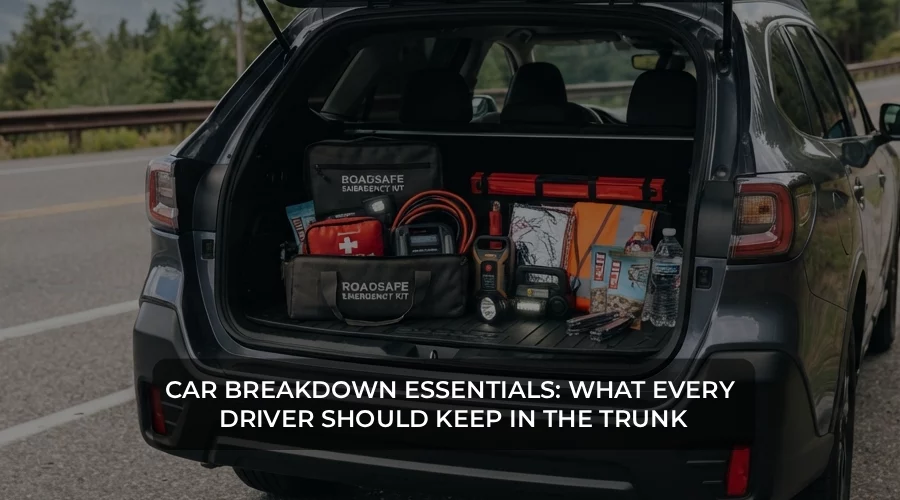
Important Items Every Driver To Keep in the Trunk
1. First-Aid Kit
A well-stocked first-aid kit should always be part of your emergency supplies.
Include:
- Adhesive bandages
- Sterile gauze
- Medical tape
- Antiseptic wipes
- Pain relievers
- Tweezers
- Scissors
- Disposable gloves
Replace expired items regularly and replenish anything you use.
2. Jumper Cables
A flat battery is one of the most common reasons for roadside breakdowns.
A jump starter kit consists of a good set of jumper cables that will enable your battery to be jump-started by another vehicle.
If you frequently travel alone, consider carrying a portable jump starter, which doesn’t require assistance from another driver.
3. Tyre Repair Equipment
Flat tyres can happen without warning.
Keep:
- Spare tyre
- Jack
- Lug wrench
- Tyre pressure gauge
- Tyre repair kit
- Portable air compressor
Periodically, you should check your spare tyre so that it is properly inflated and it is ready in case of need.
4. Reflective Warning Triangle and High-Visibility Vest
In the event of a breakdown of a vehicle on a highway, visibility is crucial.
Carry:
- Reflective warning triangle
- High-visibility safety vest
These assist other drivers in noticing you and make your stay outside the car safer.
5. Flashlight
An efficient flashlight is priceless in the event of a car failure when there is no light.
Choose one with:
- LED bulbs
- Long battery life
- Waterproof construction
Have backup batteries or have a rechargeable one.
6. Multi-Tool
A small multi-tool will assist with some of the small jobs.
Useful features include:
- Knife
- Screwdrivers
- Pliers
- Bottle opener
- Wire cutter
- Scissors
It can also help in performing daily duties other than dealing with emergencies.
7. Emergency Blanket
The climate is not consistent and, in fact, can vary very fast, in particular, when making a long trip.
An emergency thermal blanket assists in keeping the body warm in case of being stuck in cold weather.
You may also want to keep:
- Warm gloves
- Hat
- Rain poncho
Such products occupy minimal space and offer good protection.
8. Drinking Water and Non-Perishable Snacks
When you are a few hours late, it’s significant to be equipped with previous supplies.
Store:
- Bottled water
- Energy bars
- Trail mix
- Crackers
- Dried fruit
Periodically change food and water supplies to maintain fresh supplies.
Additional Items Worth Carrying
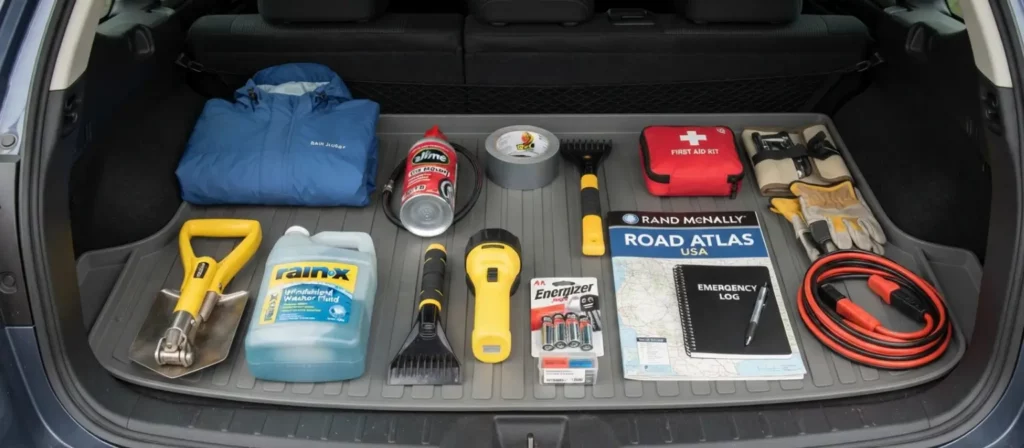
Depending on where and how often you drive, you may also want to keep:
- Ice scraper
- Small shovel
- Rain jacket
- Spare fuses
- Duct tape
- Torch batteries
- Paper maps
- Notebook and pen
- Tyre sealant
- Windshield washer fluid
These items can be particularly useful during long-distance travel or in areas with changing weather conditions.
Every driver should be ready when a breakdown occurs, even though no driver wants such a thing to happen. To be safe and capable of handling non-serious roadside issues, having a trunk equipped with vital emergency supplies can also alleviate stress and anxiety as you await a solution to your problem.
A first aid kit, jumper cables, tyre repair tools, flashlight, reflective safety equipment, basic tools, water, snacks, and an ordered trunk storage system will come in handy in unexpected cases. Regularly inspecting your emergency kit and updating it with damaged or expired supplies will ensure you are equipped to hit the road ahead, regardless of your destination.
FAQs
1. What should I keep in my trunk?
All trunks ought to be equipped with a first-aid kit, jumper cables, spare tyre, jack, lug wrench, tyre inflator, a flashlight, a reflective warning triangle, a high-visibility vest, an assortment of basic tools, some bottled water, non-perishable snacks and a phone charger.
2. What are trunks used for today?
Groceries, luggage, sports equipment, job tools, emergency roadside supplies, travel accessories, camping gear, shopping goods and day-to-day items are transported in modern car trunks. They offer safe storage of emergency kits and car maintenance equipment.
3. What are the 20 items in an emergency kit?
A full vehicle emergency kit may contain: first-aid kit, jumper cables, spare tyre, jack, lug wrench, tyre pressure gauge, tyre repair kit, portable air compressor, flashlight, spare batteries, reflective warning triangle, high-visibility vest, emergency blanket, bottled water, energy bar, phone charger, power bank, multi-tool, gloves, and a fire extinguisher.
4. What to have in your car in case of a breakdown?
To avoid becoming stranded, stock a first-aid kit, jumper cables, spare tyre and tools, flashlight, emergency blanket, water, snacks, phone charger, power bank, basic toolkit, tow rope, gloves, and trunk organizer to ensure all emergency necessities are secure, organized, and readily accessible when needed.