


A crash bar may be a good addition to a motorcycle should you wish to make sure that any vulnerable parts of your bike are not damaged in case of a fall. This is especially true in the case of adventure, touring, and off-road motorcycles, where low-speed tip-overs may occur on gravel or uneven surfaces or when a bike is turning with a full load.
However, there is no easy way to choose crash bars and get the thickest and most expensive ones. The correct product must fit your motorcycle correctly, safeguard the most vulnerable parts, and be used in the manner of your riding.
But how do you select the correct crash bars to fit your motorcycle? So, what are the factors that really matter?
What Are Motorcycle Crash Bars?
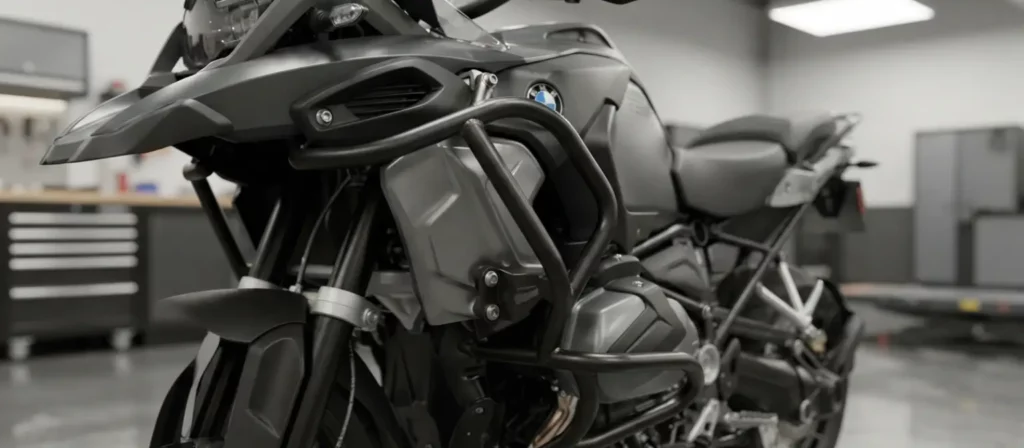
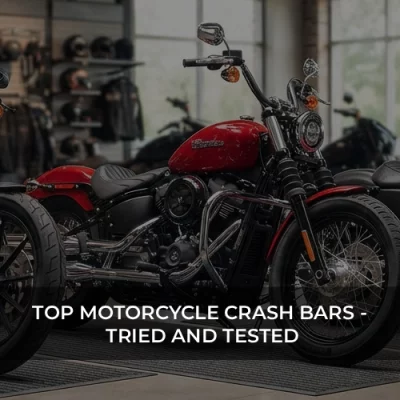
Crash bars are tubular protective devices that are fitted around sections of a motorcycle that are susceptible in case of a fall. They may assist in impact protection of the engine, lower frame, exhaust, and bodywork on the ground, depending upon the design.
They are particularly popular on adventure and touring motorcycles since such bikes are often ridden through rough roads and might be hard to control once they begin leaning downward.
During a low-speed tip-over, the crash bar may make contact with the ground before the engine casing or other expensive components. It cannot prevent all damage, but it can add another layer of protection.
If you want to understand the broader considerations involved in choosing protection for an adventure bike, you may refer to this guide.
1. Start With Your Motorcycle Model
The first and most important consideration is compatibility.
Some of the motorcycle accessories are universal, whereas crash bars are not. The design of the frames, location of the engine, exhaust flow, fairings and mounting will differ between motorcycles.
Look for a product specifically designed for your motorcycle’s:
- Make
- Model
- Engine version
- Model year
- Trim or variant
2. Decide What You Actually Want to Protect
Maximum coverage is not required by all riders. A small lower crash bar can be adequate if you are more interested in keeping the engine casing out of the park. You might need a system that curls around the motorcycle more and covers more places instantly, should you often ride off-road.
Think about the components most exposed on your motorcycle:
- Engine: Look for bars that create adequate clearance around the engine casing.
- Exhaust: On some motorcycles, the exhaust system can be vulnerable during a side fall.
- Fairings: Adventure and touring bikes with body panels may benefit from upper protection.
Lower frame: A well-positioned system can help keep the lower chassis away from direct ground contact.
3. Consider Your Riding Style
Your riding environment has a major influence on the type of crash bars you need.
Mostly City Riding
When your commute is primarily within urban environments, then parking falls, slow-speed manoeuvres and minor tip-overs may happen to be your greatest worry. A small system can provide sufficient protection without adding any extra weight.
Long-Distance Touring
Touring riders are usually well-travelled and waste time navigating the highway. A durable crash-bar system can be of some service if the motorcycle tips over, and at a refuel point, a camp or someplace unlevel to park.
Adventure and Off-Road Riding
There is also a general inclination of off-road riders to think about wider protection. Low-speed falls have the potential of becoming more prevalent on gravel, mud, loose soil, and uneven trails.
4. Look at the Mounting Points
The mounting system is just as important as the tubes themselves.
A crash bar transfers forces through its mounting points when the motorcycle falls. This means the mounting locations and brackets need to be properly engineered for the specific motorcycle.
5. Check the Material and Construction
Steel is commonly used for motorcycle crash bars because of its strength and durability. However, material alone does not determine how well a crash bar performs.
Look at the complete construction, including:
- Tube diameter and wall thickness
- Weld quality
- Bracket design
- Mounting hardware
- Corrosion protection
- Surface finish
6. Don't Ignore Weight
There is a tendency to believe that crash bars that are heavier are more protective. That isn’t necessarily true.
Additional metal results in increased weight to the motorcycle, and may also influence the handling, especially on already heavy adventure bikes.
An appropriately designed crash bar must give suitable coverage without being too bulky. A small size may also minimize interference with the geometry and the seat position of the motorcycle.
FAQs
1. How do I know what handlebars I should get for my motorcycle?
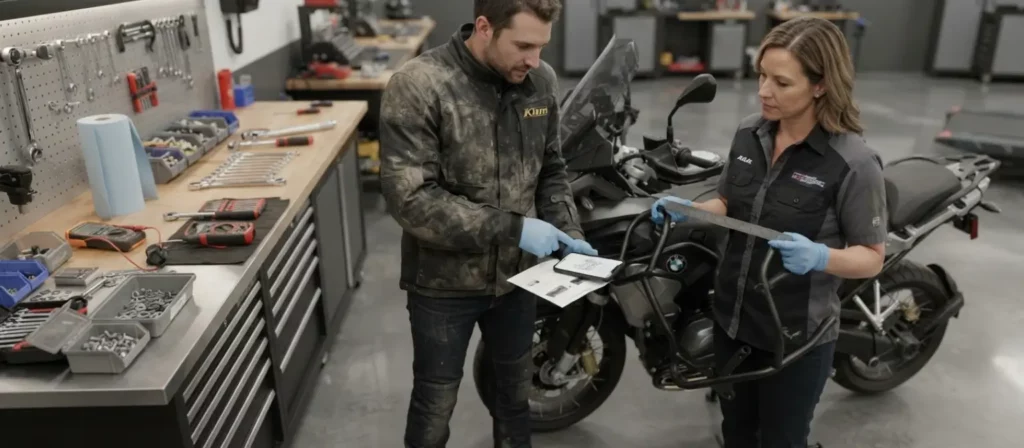
If you mean crash bars, choose a product specifically designed for your motorcycle’s make, model, and year. If you literally mean motorcycle handlebars, that is a different component. Handlebar selection depends on riding position, width, rise, sweep, control compatibility and your motorcycle’s ergonomics.
2. Should I put crash bars on my motorcycle?
Crash bars can be worth considering if you regularly ride an adventure, touring or dual-sport motorcycle, particularly on uneven roads or off-road terrain.
3. What is the best type of crash protection for a motorcycle?
There isn’t one protection system that is ideal for every motorcycle. Crash bars provide broad protection around the engine and lower bodywork. Frame sliders offer more focused protection and are common on street and sport motorcycles. Skid plates protect the underside of adventure and off-road motorcycles, while handguards and axle sliders protect other vulnerable areas.
4. Are flat bars more comfortable than drop bars?
This question refers to bicycle handlebars rather than motorcycle crash bars. Flat handlebars generally provide a more upright riding position and can feel comfortable for city riding, commuting, and riders who prefer a straightforward hand position.
Choosing the right crash bars is about finding the balance between protection, compatibility, weight, and riding conditions.
Start with your exact motorcycle model, then consider which components need protection and where you ride most often. Check the mounting points, construction quality, ground clearance, and compatibility with accessories such as skid plates and luggage.