



An untidy car is not only irritating but can also affect your everyday routine and make it more stressful. Starting with groceries rolling around to cables, bottles, and tools lying everywhere, organization failure soon makes your automobile a mess on wheels.
That is where a car organizer would fit in.
However, herein lies the trick not all organizers serve all people. The right one would be subject to your car’s daily usage. The best thing to do is to select an organizer that fits your schedule, whether you are commuting, traveling, or carrying on family errands.
We will break it down realistically so you can choose one that works for you.
Why Does a Car Organizer Matter?
The car organizer will make sure your stuff is in place without being distracted.
It makes the driving experience:
- More organized
- Less stressful
- Safer (no loose items rolling around)
- More efficient for daily use
One does not have to search during their driving time, as all things are where they belong.
Steps to find a Car Organizer That Fits Your Routine
Step 1: Understand Your Daily Routine
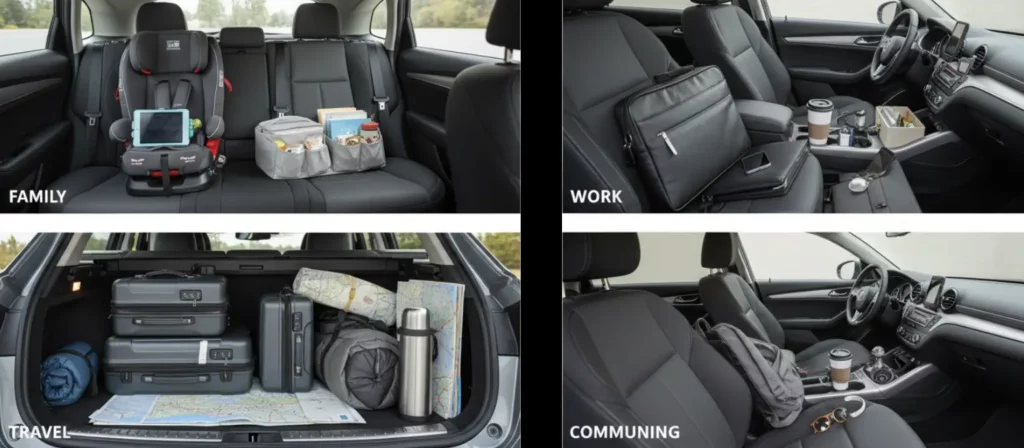
The initial step is not complicated. Before purchasing anything, you need to know how you use your car.
Organizers are required to be of different kinds in different lifestyles.
Common Usage Types:
- Daily commuters → Lunch boxes, documents, chargers
- Families → Toys, snacks, bottles, baby essentials
- Travel lovers → Clothes, gear, emergency items
- Work professionals → Tools, files, equipment
Making a decision that fits your schedule is the only way to make sure the organizer is really going to fix your issue rather than introduce more mess.
Step 2: Check Your Car Space
Not every organizer fits every car.
Before buying, consider:
- Size of your trunk
- Available backseat space
- Seat layout
Having a big organizer in a miniature car will cause more trouble than good. Always wear something that is not tight, such that it does not obstruct movement or access.
Step 3: Choose the Right Type of Organizer
Available car organizers are of various types and are designed to meet specific needs.
1. Trunk Organizers
These are the most widespread and helpful.
They fit into your car trunk and help in the storage of larger goods such as groceries, tools and travel bags.
Best for:
- Everyday storage
- Keeping heavy items stable
- Long drives or trips
2. Backseat Organizers
They are mounted at the back of the front seats. They are the best place to store small items.
Best for:
- Kids’ essentials
- Tablets, bottles, snacks
- Road trips
3. Collapsible Organizers
These can also be folded when not in use. They are also portable and do not take up permanent space.
Best for:
- Occasional use
- Small cars
- Minimal setups
4. Multi-Compartment Organizers
These are coupled with several sections and partitions. They can help you to organize the stuff and keep your order.
Best for:
- Mixed storage (tools + groceries + accessories)
- People who like structured organization
5. Hanging or Net Organizers
They are mounted in seats or trunks. They help in fixing loose articles and also act as barriers to movement.
Best for:
- Lightweight items
- Preventing clutter from spreading
Step 4: Look for Practical Features
The right features might be a big distinction in daily life.
Key things to check:
- Strong build quality → So it lasts long
- Non-slip base or straps → Keeps it in place while driving
- Adjustable compartments → For flexible storage
- Handles for easy carrying → Useful for loading/unloading
- Water-resistant material → Protects against spills
These minor details enhance usability in the long run.
Step 5: Think About Ease of Use
An organizer is not supposed to complicate your life; he or she is supposed to make it easier.
Choose one that:
- Is easy to install
- Doesn’t require constant adjustment
- Can be cleaned easily
- Is simple to access while needed
If it feels complicated, you probably won’t use it regularly.
Step 6: Match It With Your Lifestyle
This is where most people miss it all; they purchase based on appearance rather than use.
Here’s a quick guide:
- Busy parent → Backseat + multi-compartment organizer
- Office commuter → Compact trunk organizer
- Traveler → Large trunk + collapsible setup
- Professional/work use → Heavy-duty structured organizer
Choose something that includes your daily routine, not only your budget.
Common Mistakes to Avoid
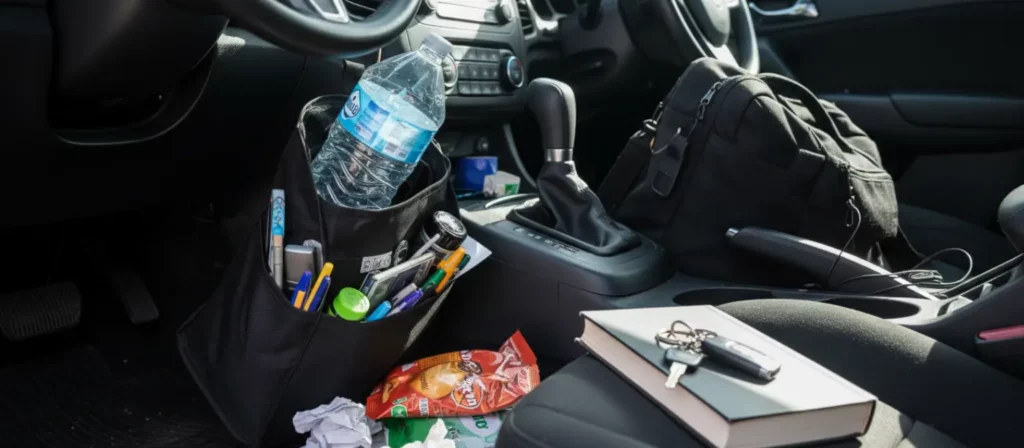
These are the pitfalls to avoid when selecting:
- Buying too large or too small
- Ignoring your car space
- Selection of poor-quality materials.
- Stuffing all that in a single organizer.
- Not securing it properly
The last thing that an organizer can do is cause more mess rather than resolve an issue.
Finding a proper car organizer does not have to be a confusing or time-consuming process. When you know what you do on a daily basis and what you normally keep in your car, then it becomes a lot easier to make the correct choice.
You no longer need to deal with things rolling about or even waste time looking up what you need. It also helps with your daily commutes, whether to work, on errands, or on a trip. After all, it is a mere upgrade, yet it brings a ton of convenience and comfort to your everyday driving routine.
FAQs
1. Do I really need a car organizer?
This is not compulsory, but it will keep your car clean and tidy and without any distractions, especially on day-to-day use.
2. Which type of organizer is best?
It depends on your routine. Trunk organizers should be used for general use, and the backseat organizers should be used in cases of small items and family purposes.
3. Can organizers move while driving?
Yes, when they are not provided with anti-slip bases or straps. Always select one that has good stability features.
4. Are collapsible organizers durable?
Premium collapsible organizers are durable and designed to last long. They also have advantages in regard to the storage capacity that is flexible as well because it can be folded whenever not in use without occupying more space in your vehicle.
5. How do I maintain a car organizer?
A car organizer should be tidy, which is why it is important to clean it regularly, not overload it with heavy items, and make sure that the straps, stitches, and supports are well-maintained. This will contribute to a long lifespan and good functionality in a normal day-to-day operation.