


Aluminum truck plates have their purpose. They are easy to carry, hardy, and they resist corrosion and can withstand severe working environments. Regardless of whether you have paid for an aluminum headache rack, toolbox, ladder rack, canopy frame, or storage system, these accessories can work out well over a period of time, should you maintain them well.
Nonetheless, numerous owners of trucks believe that aluminum is absolutely maintenance-free. Though it does not rust like steel, it may be damaged by oxidation, staining, scratches, and wear caused by weather, and be neglected.
The key here is that it is not hard to maintain aluminum truck accessories in excellent condition. With a little basic maintenance, one can keep their appearance, strength, and functionality intact in the long term.
For additional maintenance recommendations, you can also check this guide on maintaining aluminum truck accessories- Check Here.
Why Aluminum Needs Maintenance
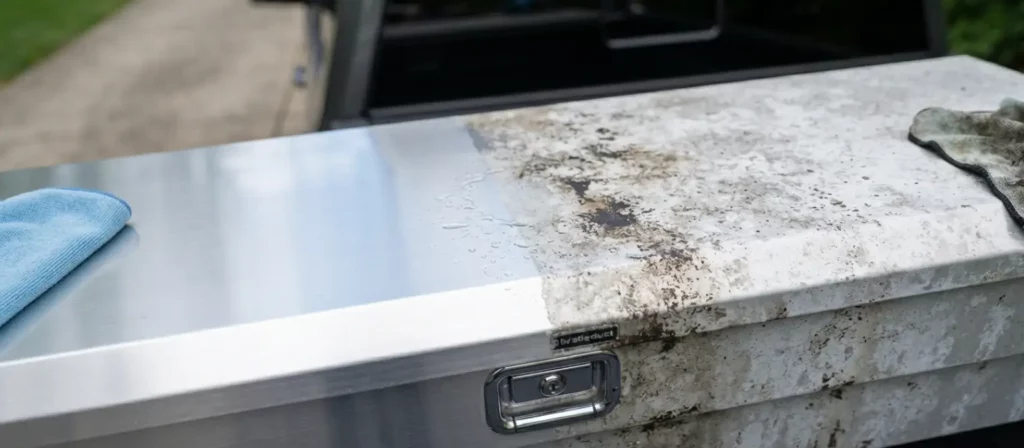
The first myth and misperception about aluminum is the fact that it does not need to be cared for.
Aluminum can be susceptible to: although aluminum does form a protective layer of oxide, which helps prevent corrosion, it is susceptible to:
- Road salt
- Mud and dirt
- Moisture
- Chemical exposure
- UV rays
- Industrial pollutants
These elements may, over time, cause the aluminum to appear lifeless and dirty even when its structural integrity has not been impaired.
Regular maintenance helps preserve both appearance and performance.
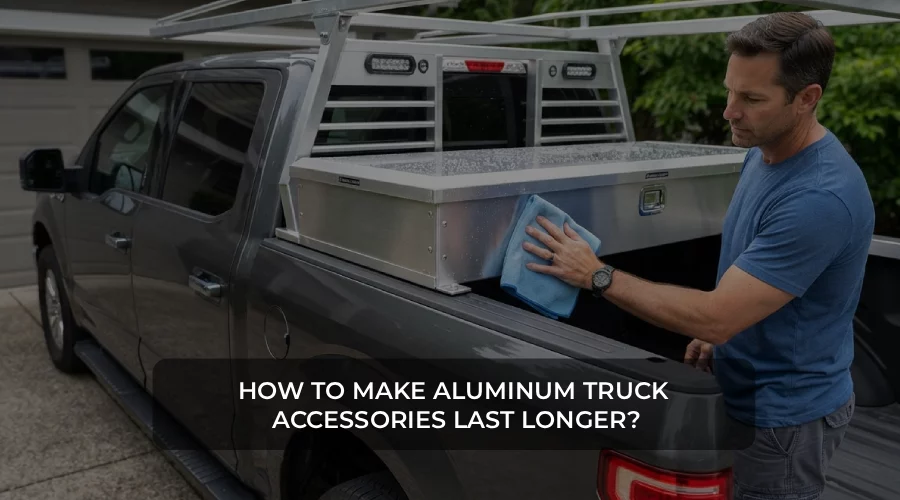
1. Wash Accessories Regularly
The most convenient and effective maintenance activity is routine cleaning.
Dome dirt, road grime as well as salt deposits may cause gradual damage to the surface when it is not treated.
Cleaning tips:
- Wash in mild soap and water.
- Wash following off-road adventures.
- Rinse thoroughly
- Wipe with a microfiber towel.
Frequent cleaning means that there will be no time between cleaning and contaminants being deposited on the surface.
Washing is also essential for trucks that need to work in coastal or snowy regions.
2. Remove Road Salt Quickly
One of the largest foes of metal accessories is road salt.
Though aluminum does not experience rusting like steel, salt can accelerate corrosion and surface damage.
If you frequently drive in:
- Snowy regions
- Coastal environments
- Areas with salted roads
Form a habit of having your accessories washed on a regular basis.
Notice especially:
- Mounting brackets
- Weld points
- Hidden corners
- Fasteners
Such spots are likely to be salty and wet.
3. Polish Aluminum Occasionally
An application of polishing will be helpful in reinstating polish and the removal of slight oxidation.
High-quality aluminum polish can:
- Improve appearance
- Remove light stains
- Reduce oxidation buildup
- Enhance protection
Best practices:
- Cleanse with a cotton towel.
- Tasks in small parts.
- Buff gently
- Follow manufacturer recommendations
You do not have to polish as much; however, when it becomes dirty, it can be used as a means to keep the surface clean.
4. Inspect for Oxidation
As opposed to rust, the oxidation of aluminum usually presents itself in the form of:
- White chalky residue
- Dull gray patches
- Surface discoloration
Marginal Oxidization is not a cause of concern, but excess oxidation needs to be prevented early on.
Regular cleaning helps in identifying troubles before it becomes difficult to clean.
5. Protect Against Scratches
There is a lot of abuse with truck accessories.
In normal circumstances, scratches are a consequence of:
- Loading tools
- Cargo movement
- Branches and debris
- Improper cleaning tools
However, although shallow scratches are more of an aesthetic issue, deep scratches may form spaces in which dirt and water can collect.
To reduce scratching:
- Secure cargo properly
- Avoid abrasive brushes
- Wear protective pads in areas of contact.
Prevention is a long way.
6. Keep Mounting Hardware in Good Condition
Many aluminum hardware items are utilized with steel hardware.
As time goes on, mounting bolts and brackets may become a limitation of the system.
Inspect regularly for:
- Rusted fasteners
- Loose hardware
- Mounting point corrosion.
Making replacements would ensure safety and longevity.
Common Mistakes Truck Owners Make
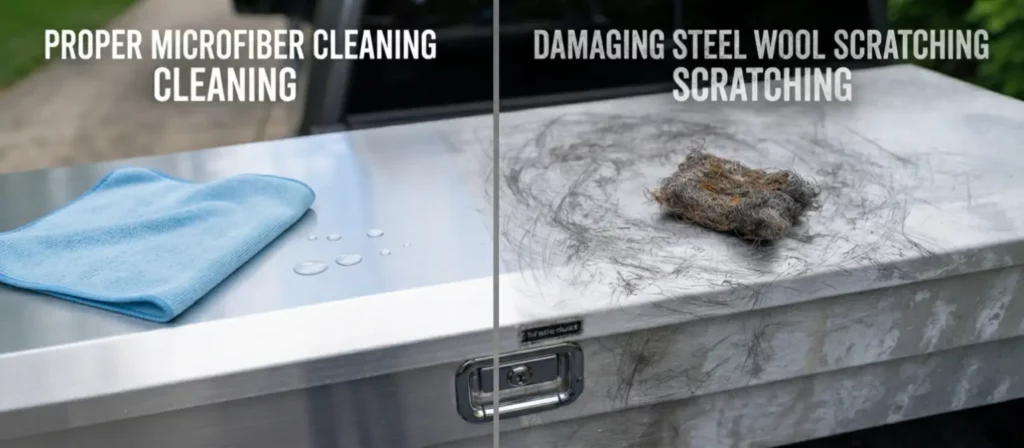
Many aluminum components are damaged by simple mistakes made when they are maintained.
Steer clear of such pitfalls:
- Ignoring oxidation
- On surfaces: Leaving leftover road salt.
- Using steel wool for cleaning
- Skipping routine inspections
- Chemical cleaners are harsh and ought to be avoided.
- Neglecting mounting hardware
It is simpler to perform small maintenance rather than to replace costly accessories.
FAQs
1. Can WD-40 clean aluminum?
Yes, WD-40 may be used to lift light dirt, residue, and some oxidation off of aluminum surfaces. Nonetheless, it must not substitute legitimate aluminum cleaners to deep-clean or to clean long-term.
2. How to remove heavy oxidation from aluminum?
Heavy oxidation is generally removed with aluminum polish, oxidation removers, fine polishing compounds, or special aluminum restoration products. In case of severe cases, professional refinishing may be needed.
3. What are some ideas for cleaning the old scabby diamond tread headache rack?
Wash with soap and water and then apply Aluminum cleaner or polish to remove any oxidation and stains. Textured diamond plate can be cleaned with a soft-bristled brush that will not damage it.
4. How to remove paint from an aluminium headache rack?
Paint can be taken off using aluminium-safe paint removers, plastic scrapers, and by taking pains to clean them. Use no aggressive grinding tools, which could scratch or damage the surface of aluminum.
5. Is a headache rack worth it?
Yes. A headache rack can save the truck cab from moving cargo, contain the cargo, and mount opportunistic lights, tools, and other accessories; thus, a beneficial tool to many truck owners.
Designed to cope with harsh environments, aluminum truck accessories are not in need of much care and maintenance, but they still appreciate it.
These tiny routines, such as washing every day, cleaning road salt, maintaining equipment, and avoiding oxidation at an early stage, will make their lives with a significant number of years and make them looking their best. These minor care plans are useful in saving your investment and allow your accessories to work each year reliably.