
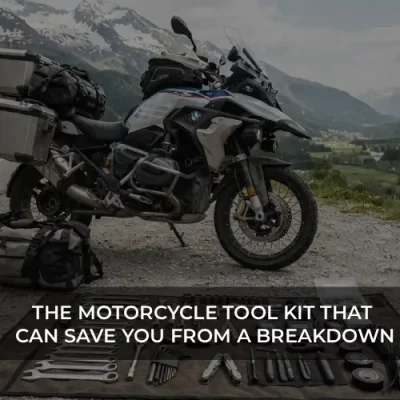
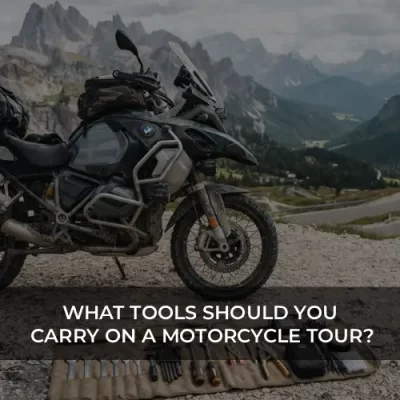
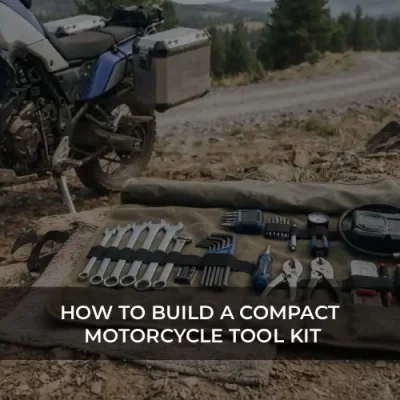
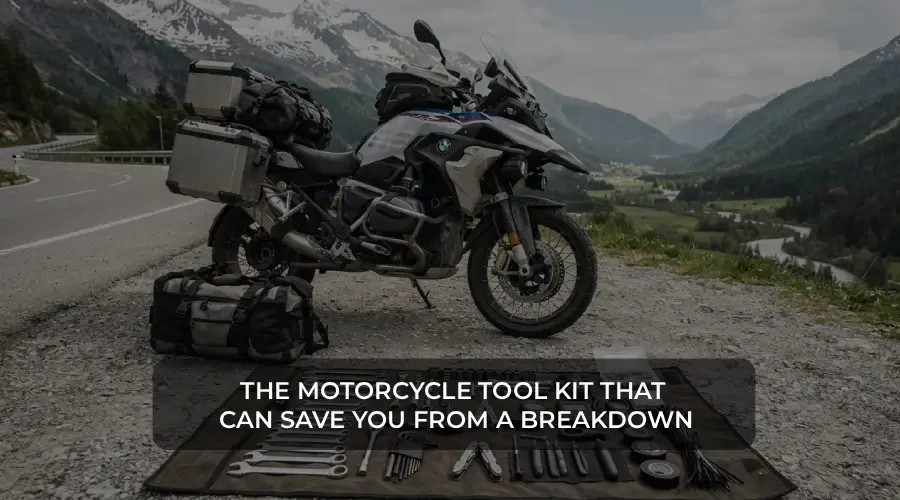
A motorcycle failure is not very convenient. Things like a loose bolt, a burst tyre, a blown fuse, or another minor electrical issue can put you at the roadside, miles away, before you see the nearest mechanic. That is why the practice of carrying a small motorcycle tool kit may prove to be among the most relevant to most routine and long route riders.
You do not have to bring your workshop with you on a bicycle. The problem you can diagnose or determine on your own, what you can solve or repair, or what can be visualised mentally, really needs to be included in a well-planned roadside kit.
Why Every Rider Should Carry a Motorcycle Tool Kit
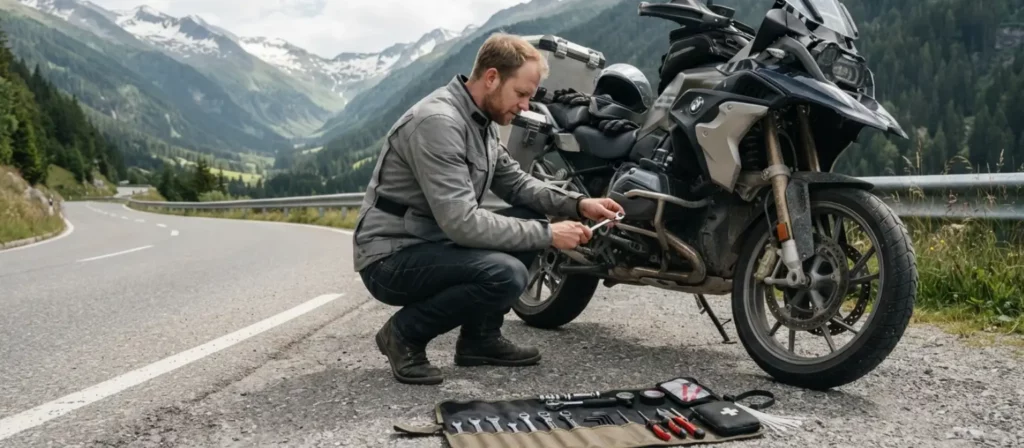
Modern motorcycles are considered to be quite reliable, yet there is no machine that is entirely problem-free. The lengthy rides subject the bike to vibrations, shifts in weather, unsettled roads, and prolonged use, exposing one to small problems that might not be noticed when riding over short distances.
A roadside toolkit can help with problems such as:
- Loose mirrors or controls
- Minor bodywork issues
- Flat or low-pressure tyres
- Loose fasteners
- Blown fuses
- Minor wiring problems
- Loose luggage mounts
- Basic chain adjustments
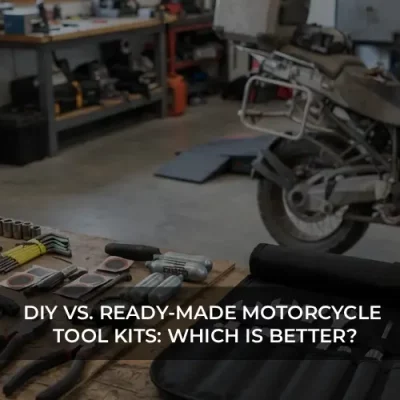
The important thing is to keep the kit small, motorcycle-specific, and easy to access. A 40-piece hardware-store kit may look impressive, but many of its tools may not fit your bike and simply add unnecessary weight.
1. Start With Your Motorcycle's Original Toolkit
Always do a check before purchasing more tools- before you buy make sure you have what has been supplied with your motorcycle.
One convenient place to start is in the toolkit supplied by the manufacturer, since these typically contain the tools that are chosen to work on the motorcycle’s own fasteners. Specifically, replacing the proper axle wrench with a generic alternative might be challenging.
Use the original kit for simple maintenance at home and note down everything that you are unable to adjust or remove using the kit.
This approach keeps the final kit smaller while ensuring it actually works with your motorcycle.
2. Carry the Correct Wrenches and Sockets
A few correctly sized wrenches can handle a surprising number of roadside jobs.
Instead of carrying every size, identify the fasteners used on your motorcycle. Pay particular attention to the sizes needed for:
- Front and rear axle components
- Chain adjusters
- Battery terminals
- Mirrors
- Handlebar and lever clamps
- Foot controls
- Luggage mounts
A compact socket-and-ratchet setup can be even more useful if your motorcycle uses larger or recessed fasteners. The exact requirements vary significantly between motorcycle models.
3. Add Hex and Torx Keys
Hex or Allen fasteners are common on motorcycle bodywork, controls, and chassis components. Some motorcycles also use Torx fasteners.
Carry the sizes your motorcycle actually uses rather than a complete collection. A folding set can save space, while individual bits can be combined with a compact ratchet.
Before a long trip, check your motorcycle carefully and make sure you have the correct sizes. Discovering that the one missing Allen key is needed to remove a panel is not something you want to find out on the roadside.
4. Keep a Multitool or Compact Screwdriver
A multitool can combine pliers, drivers, cutters, and other functions in a small package. It is useful for miscellaneous roadside jobs where carrying several individual tools would be inconvenient.
However, don’t rely on a multitool for every repair. Motorcycle fasteners can require more leverage or a specific socket size than a pocket-sized tool can provide.
A compact multibit screwdriver can also be useful for removing panels, adjusting small components, and handling electrical covers.
5. Make a Puncture Kit a Priority
A puncture can happen almost anywhere, making tyre-repair equipment one of the most important parts of a touring toolkit.
For a tubeless tyre, carry a suitable plug kit containing a reaming tool, insertion tool and several plugs. Pair it with a reliable tyre-pressure gauge and inflator.
For a tube-type tyre, the setup is different. You may need tyre levers, patches, a suitable spare tube and equipment for removing the wheel.
Don’t simply buy the first puncture kit you see. Make sure it matches your motorcycle’s tyre system and practise using it before your trip. A puncture kit is much less useful if you’ve never tried the repair procedure.
6. Carry a Portable Tyre Inflator
A puncture repair is only part of the job. You also need a way to restore the tyre to an appropriate pressure.
A compact electric inflator can fit into a small luggage compartment and can be useful for both puncture repairs and routine pressure adjustments.
A manual pump can serve as a backup, particularly on longer journeys where battery power may be limited.
It’s also worth carrying a separate tyre-pressure gauge rather than relying entirely on an inflator’s built-in display. Accurate tyre pressure matters for handling, traction and tyre wear.
FAQs

1. What are the most common problems with motorcycles?
Certain issues that are typical of motorcycles would include flat tires, low or faulty batteries, loose fittings, chain faults, electrical faults, worn brake parts, overheating and fuel problems.
2. What are the most common bike repairs?
Tyre puncture repair, changing the battery or charging it, adjusting the chain, replacing brake pads, changing the oil, changing the filter, cable repair, and replacement of worn-out parts are some of the common motorcycle repairs.
3. What is the average lifespan of a bike?
There isn’t one fixed lifespan for every motorcycle. A bike’s useful life depends on its engine design, build quality, maintenance history, mileage, riding conditions, and how it has been stored.
4. How can I repair a bike in 7 days?
If you mean repairing a motorcycle that has developed a fault, the first step is to identify the problem rather than setting an arbitrary seven-day repair schedule.
The motorcycle tool kit that can save you from a breakdown isn’t necessarily the biggest one. It’s the kit that contains the tools your motorcycle actually needs.
Most importantly, learn how to use those tools before you’re stuck on the roadside. Combined with regular maintenance and a sensible pre-ride inspection, a compact toolkit can turn some potentially trip-ending problems into manageable roadside fixes.