

One of the most effective methods to discover new locations, beautiful landscapes, and have good moments with family or friends is a road trip. As opposed to other modes of transport, it allows you the liberty of halting at your preference and moving at your own pace.
Nevertheless, even the most thrilling road trips may prove to fail in case you fail to prepare. Even such innocent errors as forgetting to check the vehicle, failing to pack the baggage, or getting sleep-deprived may cause a lot of pleasant adventures to turn into a nightmare.
Good news is that most challenges encountered in road trips can be easily avoided with some planning. Here are five common mistakes drivers make and practical ways to avoid them before you hit the road.
1. Starting Without Checking Your Vehicle
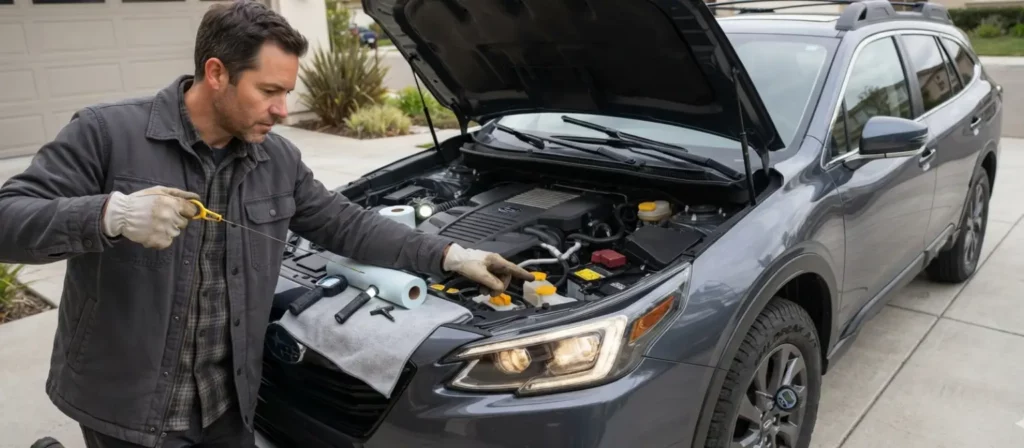
Assuming that the vehicle is fit to make a long ride is one of the greatest errors that people make without inspecting their car.
Take some time and look at the status of your car before going.
Inspect:
- Engine oil
- Coolant level
- Brake fluid
- Tyre pressure
- Spare tyre
- Battery condition
- Windshield wipers
- Headlights and indicators
Unless it has been serviced recently, you might want to have a company inspect your vehicle. It is better to spot one tiny problem prior to your trip rather than to cope with a breakdown that is hundreds of kilometres away.
2. Packing Too Much or Forgetting the Essentials
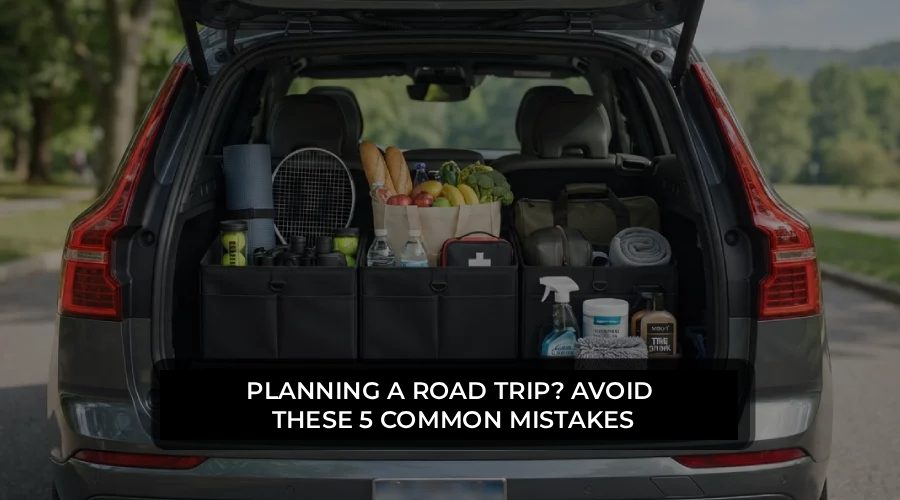
Overpacking makes your vehicle heavier, leaves you with less space, and it becomes hard to locate essential items on the way.
Conversely, failure to remember basic things may result in being left in an awkward situation in case of an unexpected crisis.
Pack only what you’ll actually use.
Some important items include:
- First-aid kit
- Phone charger
- Power bank
- Flashlight
- Drinking water
- Healthy snacks
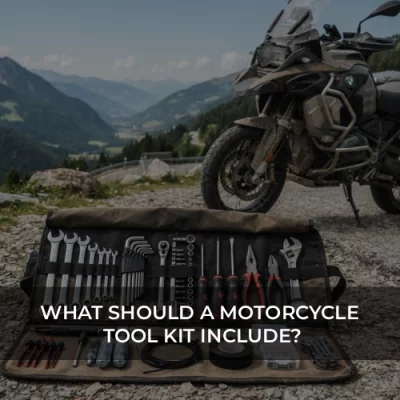
- Basic toolkit
- Emergency blanket
- Rain jacket
A trunk organizer helps to keep everything tidy and does not allow the luggage to slide all around the car when driving.
3. Not Planning the Route Properly
Numerous drivers are fully dependent on GPS and do not check their route prior to traveling.
The navigation apps are incredibly useful, but they do not always know how many roads are closed, what construction areas exist, and where there is bad cell coverage.
Before leaving:
- Check your planned route
- Download offline maps
- Locate fuel stations
- Identify rest stops
- Review weather forecasts
- Share your route with someone at home
You also have more flexibility in planning ahead, in case of any unexpected plans.
4. Ignoring Driver Fatigue
One of the most risky things to do during a road trip is to drive when one is sleepy.
Fatigue affects:
- Concentration
- Reaction time
- Decision-making
- Overall awareness
Many drivers attempt to drive long distances without having appropriate breaks, contributing to the risk of accidents.
To stay alert:
- Take a break every two to three hours
- Stretch your legs regularly
- Stay hydrated
- Eat light meals instead of heavy ones
- Share driving duties if another licensed driver is available
Always keep in mind that it is much more important to arrive safely than fast.
5. Forgetting an Emergency Backup Plan
Even properly maintained cars may have unforeseen issues.
A flat tyre, a flat battery, bad weather or being stranded in a new locality are some circumstances that every motorist is meant to be equipped with.
Your emergency kit will have:
- Jumper cables or jump starter
- Portable tyre inflator
- Reflective warning triangle
- Flashlight
- Multi-tool
- First-aid kit
- Bottled water
- Emergency contact numbers
Bonus Tips for a Smoother Road Trip
Minor packing can help a lot when it comes to long trips.
Other additional tips are:
- Always leave all the electronic appliances fully charged.
- Include payment and cash.
- Store valuable paperwork in places that are easily accessible.
- Dress up in long clothes to spend many hours driving.
- Make music or podcast downloads in case of loss of the network.
- Travel early to avoid heavy traffic as much as possible.
Common Road Trip Packing Checklist
Before you leave, make sure you have:
- Driver's licence and vehicle documents
- Phone charger and power bank
- Sunglasses
- Reusable water bottles
- Snacks
- Wet wipes
- Hand sanitizer
- Tissues
- Neck pillow
- Blanket
- Emergency toolkit
- Flashlight
- Tyre pressure gauge
- Spare clothes
- Trash bag
Road trips are not meant to be a lot of work, but a little preparation can be the difference between a great adventure and a sudden headache. Driving with peace of mind and confidence can be achieved by taking time to check your car, packing wisely, organizing luggage and preparing an emergency kit.
The most perfect travelling ventures are not necessarily about getting somewhere; it is more about enjoying each and every kilometre you travel.
FAQs
1. What is the most common driving mistake?
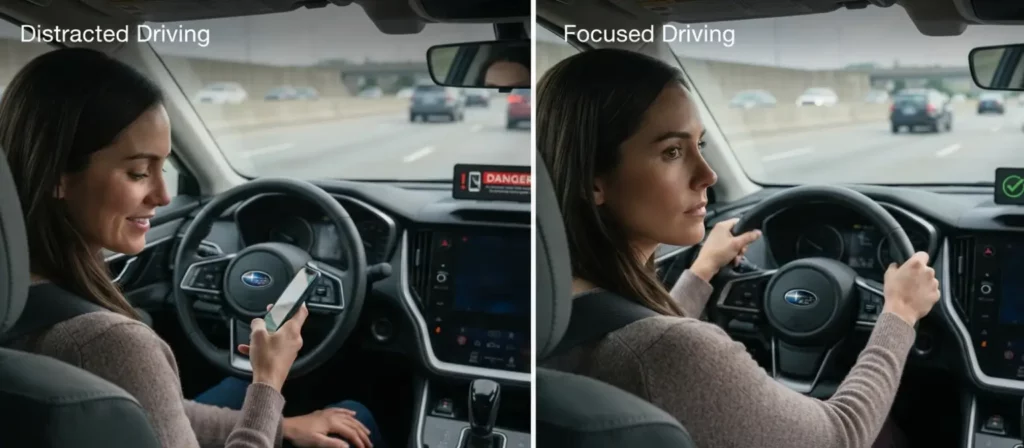
One of the most common driving mistakes is distracted driving, especially using a mobile phone behind the wheel. Other frequent errors are speeding, driving closely behind other vehicles, neglecting blind spots and driving with fatigue.
2. What is the biggest mistake people do on a road trip?
The most critical error is to embark on the trip without proper preparation. The lack of inspection of the car, the absence of emergency equipment in the pack, or the absence of a route may cause some unnecessary delays, failures, and unwarranted stress during the trip.
3. What are some road trip essentials for women?
The handy items to bring on a road trip are a first-aid kit, reusable water bottle, personal hygiene items, drugs, phone charger, power bank, snacks, flashlight, comfortable clothes, travel pillow, emergency contacts, and a small blanket to add more comfort.
4. What are the best things to pack when driving long distances?
Items such as an emergency kit, jumper cables, portable tyre inflator, bottled water, healthy snacks, first-aid kit, phone charger, power bank, flashlight, navigation backup, sunglasses, trunk organizer and weather-type clothing can be very helpful.