

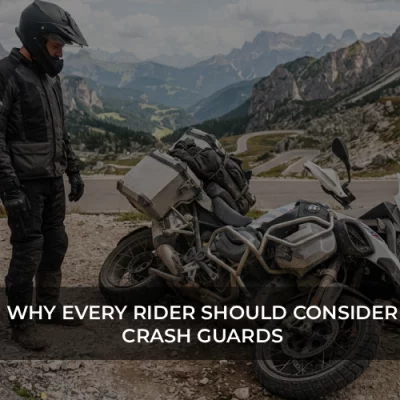



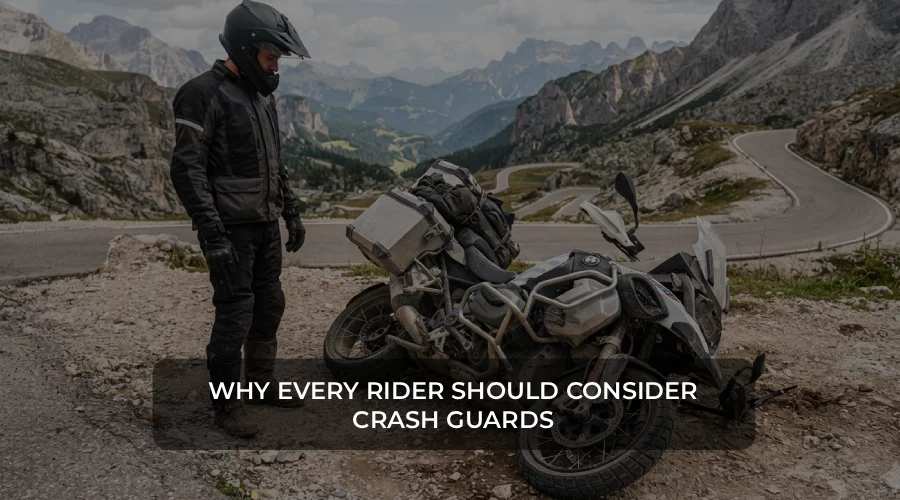
A motorcycle offers freedom, convenience, and an enjoyable ride, yet even experienced riders know that unexpected falls can happen. Any creaky road, an unexpected imbalance at a traffic light, a sharp turn, or someone parking in a poor position can put your motorcycle on its side in seconds.
Even though the use of protective riding gear safeguards your body, the motorcycle crash guards are meant to minimize the damage the bike suffers after some falls and collisions. They are able to shield engine casings, body parts, and any other critical parts of the body. Depending on their design and the type of accident, they may also provide some space between the motorcycle and the rider’s legs.
However, crash guards are not a replacement for a helmet, riding jacket, boots, or safe riding habits. Their effectiveness depends on the design, mounting points, motorcycle model, and type of crash.
In this guide, we explain why crash guards are worth considering, how they work, and what to check before installing them.
What Are Motorcycle Crash Guards?
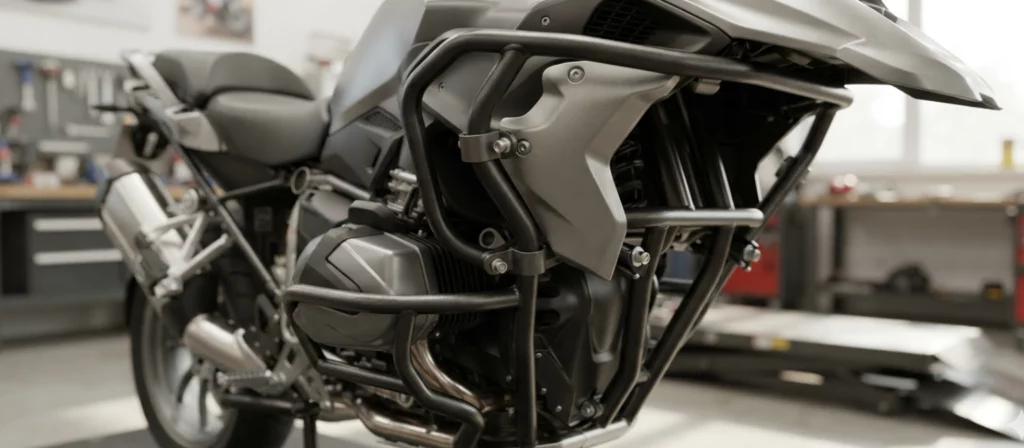
Motorcycle crash guards, crash bars, or engine guards are metal frames that are fitted to the frame of the motorcycle or specified locations. They tend to be arranged around the engine, lower body, and side panels.
Commonly used materials for crash guards include steel, stainless or aluminium alloys. The right material is not the only consideration. The general form, the diameter of the tube, the system used in mounting, the quality of clearance, and construction also affect the performance of the guard.
For a detailed explanation of their importance, you can read this guide on why crash guards are important for every rider.
1. Protect the Engine During Low-Speed Falls
One costly but significant piece of a motorcycle is the engine. The engine casing in most bikes is not covered and thus may hit the ground in an accident.
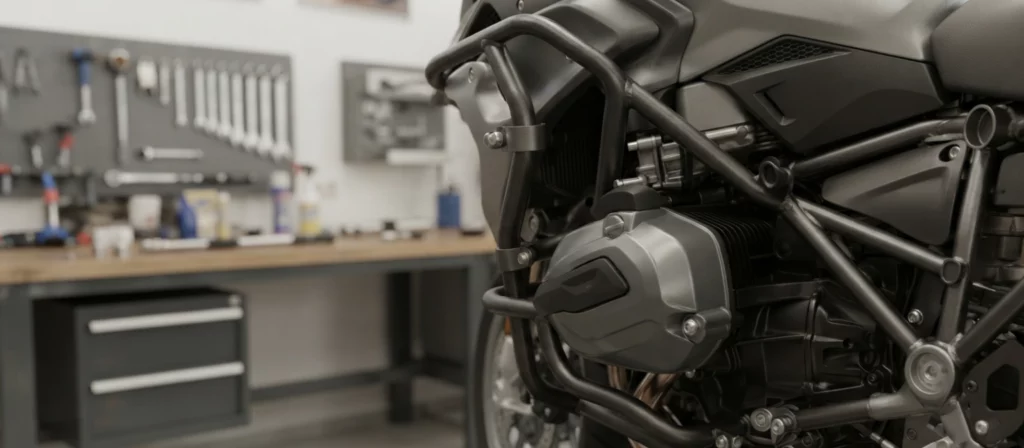
A crash guard is a fabricated wall around areas where they are vulnerable. It can be used to prevent direct impact on the engine cover, crankcase or other parts in case of a low-speed tip-over.
This does not imply that the engine will never be damaged. Even a harsh hit, a wrong position of the guard, or an incorrectly designed holding system may provide an opportunity to damage the item. Nevertheless, a crash guard may serve to offer an added measure of protection, especially when it comes to parking crashes and low-speed accidents.
2. Reduce Repair Costs
Even a minor motorcycle fall can result in expensive repairs. Depending on the bike, damage may include:
- Scratched or broken side panels
- Damaged engine covers
- Bent footpegs
- Broken levers
- Cracked fairings
- Damaged exhaust components
Replacing these parts can cost considerably more than installing a good-quality crash guard. A guard may not prevent every repair, but it can reduce the likelihood of certain components taking the full impact.
3. Offer Additional Protection Around the Rider’s Legs
The effect of crash guards that are likely to leave space between the motorcycle and the rider’s legs is one of the widely spoken advantages of crash guards.
The motorcycle can be leaning or even falling on the rider during a low-speed crash. The bike may fall fully onto the leg sometimes, and this can be prevented by a well-placed guard.
But there is no guarantee of leg protection with crash guards. Their effectiveness varies with the direction of impact, shape of the guard, weight of the motorcycle, and the fall of the rider.
4. Useful for Touring and Adventure Riding
Long-distance riders often travel across changing road conditions, including gravel, uneven surfaces, wet roads, and unfamiliar terrain. Adventure motorcycles may also be dropped during off-road riding or when navigating loose surfaces.
Crash guards are particularly popular among touring and adventure riders because they can help reduce damage during low-speed falls. They may also make it easier to lift or reposition the motorcycle after a tip-over, depending on its design and weight.
5. Provide Peace of Mind for Daily Riders
You don’t need to be a long-distance tourer to consider crash guards. Everyday commuters have to cope with overcrowded traffic, the lack of parking lots, unanticipated halts, and uneven roads.
The imbalance at a low speed can occur even in the case of an experienced rider. The awareness that the motorcycle is equipped with another protective system may help eliminate the fears of small falls.
You can also read a guide on how to prevent motorcycle helmet fogging for practical visibility tips.
FAQs
1. What is the purpose of a motorcycle crash bar?
The main aim of a motorcycle crash bar is to provide security to the vulnerable sections of the motorcycle in case of falls and low-speed impacts. It creates a protective structure around areas such as the engine casing, lower frame, and side panels.
2. Should I put crash bars on my motorcycle?
Crash bars can be considered as a good choice in case you are used to commuting on road, where you have a heavy motorbike, you go on touring today or use the road of uneven surfaces.
3. Do crash guards protect your legs?
The crash guards might offer a little protection in that they will allow space between the motorcycle and the legs of the rider in case of certain falls. But, they do not stipulate that the legs will not be injured.
4. How much does a crash bar cost?
The price of a motorcycle crash bar depends on the bike model, material, brand, and design. In India, basic options may cost approximately ₹2,000–₹5,000, while more advanced or model-specific systems can cost ₹5,000–₹15,000 or more.
Crash guards could represent a viable solution for riders who wish to minimize the chances of injury in low-speed crashes and motorcycle tip-overs. They can shield parts of the engine and body panels, and in other cases, they can provide more room around the legs of the rider.
Consider the type of motorcycle you are buying, the environment for riding the motorcycle, protection needs, and potential constraints of the product before purchasing.