
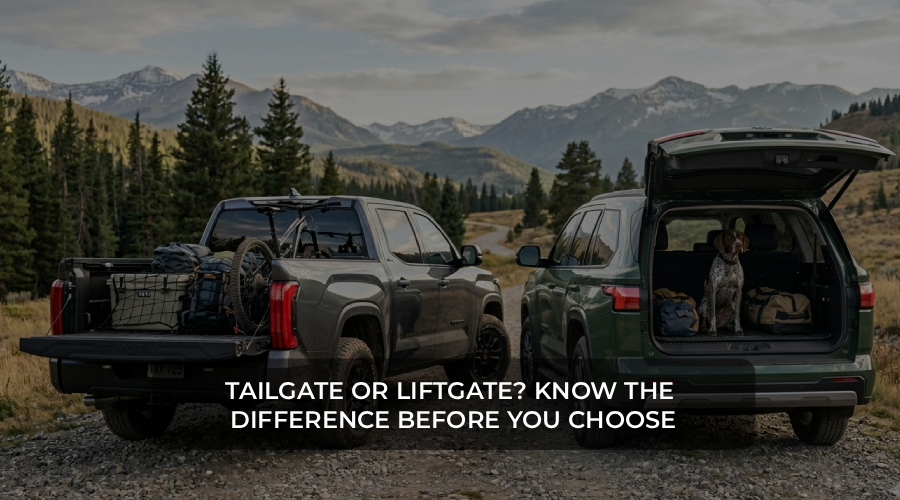
When purchasing an automobile, SUV, or pick-up truck, a minor feature could mean a lot in your day-to-day life, such as the rear door. Tailgate and liftgate are two terms that have been used interchangeably by many people. Actually, they are used for various purposes, fit various vehicles, and affect convenience, safety, and usability. This step-by-step guide will help you see the difference, advantages, and disadvantages of choosing the right one. What Is a Tailgate? A tailgate is a door at the back of a pickup truck. It is pinned at the bottom and folds downwards to make a flat surface. They are most commonly associated with trucks and open by folding down rather than lifting upward. Key Features of a Tailgate: Lies horizontally (down position). Forms a long loading platform. Commonly found in pickup trucks. Usually manually operated (but powered models are available). Why People Love Tailgates: Perfect for transporting heavy goods. May be used as a bench or desk. Excellent in the field (camping, sporting, etc.) What Is a Liftgate? A liftgate is a rear door typical of SUVs, hatchbacks, and crossovers. It opens upward, providing access to a fully enclosed cargo space. Liftgates can be commonly assisted by gas struts or powered devices, which are more convenient to use. Key Features of a Liftgate: Opens up (vertical movement). Protects a closed cargo space. These are mounted on SUVs, vans, and hatchbacks. Frequently has power or hands-free features. Why People Prefer Liftgates: Accessibility of groceries and luggage. Protection from rain while loading Easy to use Tailgate vs Liftgate: Core Differences It is easier to understand when you contrast them. 1. Opening Mechanism Tailgate: Drops down flat Liftgate: Lifts upward A tailgate forms a platform, whereas a liftgate is similar to a door. 2. Vehicle Type Tailgate: Pickup trucks Liftgate: SUVs, hatchbacks, crossovers Tailgates are used in most trucks, and liftgates in family vehicles. 3. Usage Purpose Tailgate: Transporting big or heavy products. Liftgate: Stress-free access to sealed cargo. A tailgate is more utility-oriented than a liftgate, which is convenience-oriented. 4. Power & Technology Tailgate: Generally manual (there are powered tailgates available today). Liftgate: Sometimes powered or hand-free. Liftgates are more advanced regarding automation. 5. Everyday Convenience Tailgate: Better for hauling Liftgate: Better for daily errands Pros and Cons: Tailgate vs Liftgate Tailgate Pros: Strong and durable Perfect for carrying heavy objects. Can be used as a platform or a seat Tailgate Cons: Takes greater effort to raise. Weather, no shelter. Not so easy to use every day. Liftgate Pros: Easy to open (particularly powered) Insures against the weather. Perfect in the city and with family. Liftgate Cons: Limited loading platform Can be heavy without power assist The cost of repairs is higher. Which One Should You Choose? Your choice depends on how you use your vehicle. Choose a Tailgate if: You have or are going to purchase a pickup truck. You deliver large or bulky products. You like outdoor activities such as camping or tailgating. Choose a Liftgate if: You are an SUV/Hatchback driver. You are convenient- and comfort-loving. You often carry groceries, bags, or luggage. For safe and practical usage tips, don’t miss our detailed guide on best ways to safely tailgate with a truck, where you’ll learn how to handle your tailgate securely in real-world situations. Hybrid Designs: Best of Both Worlds There are modern cars that combine the two ideas. Some SUVs have split tailgates, in which: The top is opened like a liftgate. The bottom is folded tailgate fashion. This design is flexible and is increasingly getting popular in high-end SUVs. Power Tailgate vs Manual Tailgate The current cars are changing, particularly the power tailgates and liftgates. The power liftgate has electric motors and sensors to open automatically by a button or foot gesture, which is highly convenient to use in everyday life. Advantages of Power Options: Hands-free access The safer and smoother operation. Best when you have your hands full. Whether you need a tailgate or a liftgate will always depend on your lifestyle, driving needs, and day-to-day use of a car. Tailgate is made sturdy and user-friendly so it can be used for carrying heavy loads, outdoor activities, and professional tasks. Liftgate on the other side is a more convenient design with easy access, improved weatherproofing, and better features, and is therefore easier to use in daily life. A tailgate will be more appropriate for your utility and rough needs. But when you are more box-oriented towards comfort, ease of use, and friendliness to both the family, then a liftgate will be useful. These days, there are plenty of electric and hybrid models to choose from, so you can pick the one that best suits you. This makes them a one-time investment for long-term use. FAQs 1. What is the difference between a tailgate and a liftgate in a car? A tailgate is the rear door that folds downwards on the back of the truck, often seen on pickup trucks, and a liftgate is the door that rises up and is seen often on SUVs and hatchbacks. The major differences are their design, purpose, and type of vehicle. 2. Is a power tailgate worth the extra cost? Yes, when convenience is important to you. A power tailgate/liftgate can be used, which is hands-free, so that even when you have your hands full, it is still possible to load things. It also provides a high-quality touch and enhances everyday functionality. 3. Does opening your tailgate save gas? Not significantly. Although some claim that lowering the tailgate makes the vehicle more fuel-efficient, research typically indicates that the effect on actual driving is minor or non-existent. 4. Can you leave your tailgate open while driving? It is subject to local laws and safety. It may be okay to carry long objects with an open tailgate within short distances, but it is not a safe procedure, and one can be fined in some areas. So, when you have a load, always lock it. A tailgate
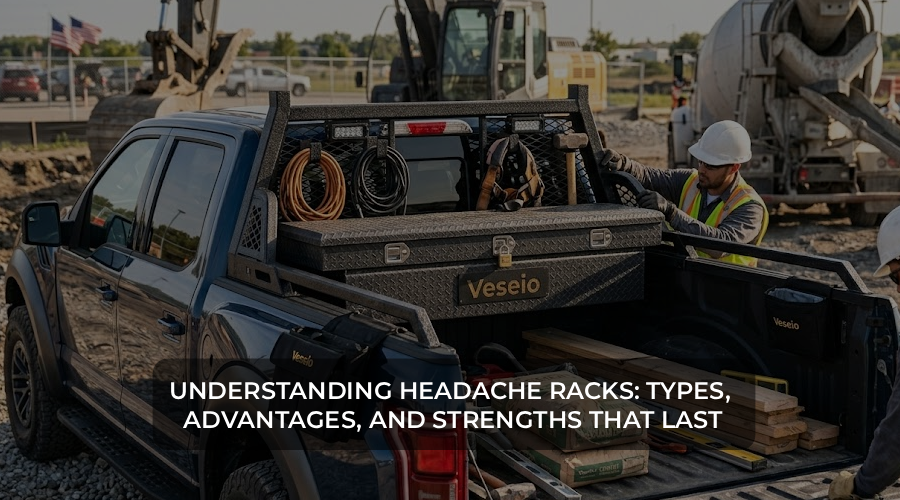
Understanding Headache Racks: Types, Advantages, and Strengths That Last
Ever had to hit the brakes a little harder than expected… and heard something shift behind you? That split-second moment when you glance in the mirror and think, “Hope nothing’s coming forward…”, yeah, that’s exactly where a headache rack proves its worth. For many pickup truck owners, especially those who carry tools, ladders, pipes, or heavy gear, the space right behind the cab is the most vulnerable zone. One sudden stop, and unsecured cargo can slide forward, sometimes with serious consequences. A headache rack is designed to stop that. However, it is no longer about safety. The headache racks have been developed to be more of a multi-purpose upgrade in 2026 to offer protection, storage, style, and long last ability. We will start by simplifying it so you can understand what headache racks are, the various rack types, and why they are an excellent investment for your truck. What Is a Headache Rack? A headache rack is a tough frame or a barrier that is fixed directly behind the pickup truck cab. All it does is keep the rear and passengers out of the way of the rolling cargo. If you’re carrying long or heavy items like: Lumber Pipes Ladders Tools Construction materials The headache rack serves as a shield, and the said items do not slide forward as a result of sudden braking. However, in addition to protection, modern headache racks are also equipped with: Mounting options for tools and lights Tie-down points for securing cargo Enhanced truck aesthetics Types of Headache Racks The headache racks are not all designed the same way. The right one is based on the way you put your truck to use. 1. Mesh Headache Rack Mesh racks are the most widespread and convenient ones. They have a metal mesh panel that is in the middle of a steel frame. Why choose it? Allows good rear visibility Lightweight compared to solid racks Still provides strong protection This is the most convenient type to use on daily occasions, and it is also the one that you would want to be cautious as well as visible. 2. Solid Panel Headache Rack Racks made of solid are with full metal plate rather than mesh. They are the most protective, particularly when it comes to heavy workplaces. Best for: Construction work Carrying heavy or sharp materials Maximum rear window safety The trade-off? Slightly reduced rear visibility. 3. Louvered Headache Rack Louvered racks are placed between mesh and solid designs. They use angled slats that: Provide airflow Maintain visibility Offer solid protection Avoid uneven or tilted loads The design is excellent as it can be durable, along with airflow, which is essential in hot climates. 4. Headache Rack with Storage Headache racks have storage cubbies or tool mounts incorporated into them. These are ideal to store: Tools Chains Straps Equipment 5. Headache Rack with Light Mounts In various racks, mounts have been added for: LED work lights Spotlights Off-road lighting This is especially useful for: Night work Off-road driving Campsite setups Materials Used in Headache Racks A headache rack is made of a material that depends greatly on the strength and durability. The following are the most common types of headache racks: Steel Headache Racks Extremely strong and durable Ideal for heavy-duty use Can handle high impact They are, however, heavier and could influence fuel efficiency a bit. Aluminium Headache Racks Lightweight Rust-resistant Easier to install Although they are not as strong as steel, they can be used daily and during light to medium loads. Advantages of Installing a Headache Rack A headache rack may seem to be a mere addition to the main product, yet it has serious advantages. 1. Protects Your Rear Window This is the greatest advantage. Even a single loose statement may break your rear glass, which is very expensive to repair. That is prevented by a headache rack. 2. Improves Cargo Safety It acts as a concrete lid, and cargo does not move. It is particularly necessary at: Sudden braking Sharp turns Uneven roads 3. Adds Mounting and Storage Options Modern racks come with: Hooks Brackets Storage panels This helps you organize tools and gear efficiently. 4. Enhances Truck Appearance Honestly, though, the good headache rack will make your truck look more rugged and professional. It gives your vehicle a work-ready, high-end touch. 5. Long-Term Durability Good headache racks are constructed to be durable. When well-materialized and coated, they can survive: Rain Dust Heat Heavy usage This makes them a one-time investment for long-term use. How Strong Are Headache Racks? This is a common question, and an important one. The strength of a headache rack depends on: Material (steel vs aluminium) Build quality Mounting system The heavy-duty steel racks can take a lot of impact because of moving the cargo, and therefore, they are ideal to be used by professionals. Nevertheless, one should keep in mind: a headache rack is not a substitute for adequate tie-downs, but rather a protective barrier. You should always lock up your cargo and have a rack. Do You Really Need a Headache Rack? It depends on how you use your truck. You should strongly consider one if you: Carry long or heavy materials regularly Use your truck for work (construction, delivery, etc.) Transport tools or equipment Want added safety and organization Even for casual users, it adds an extra layer of protection and utility. A headache rack is one of those upgrades that quietly does its job until the moment you really need it. Whether it is to secure your rear window or enhance your cargo organisation, along with other features and functionalities, it is a smart accessory for any pickup truck owner who cares about their safety and longevity. Whether it is a lightweight aluminium rack or a heavy-duty structure, the type of rack can transform your truck into a more competent, more organised, and much safer vehicle on the road. Cargo capacity is more than enough, and since it is always better to be safe
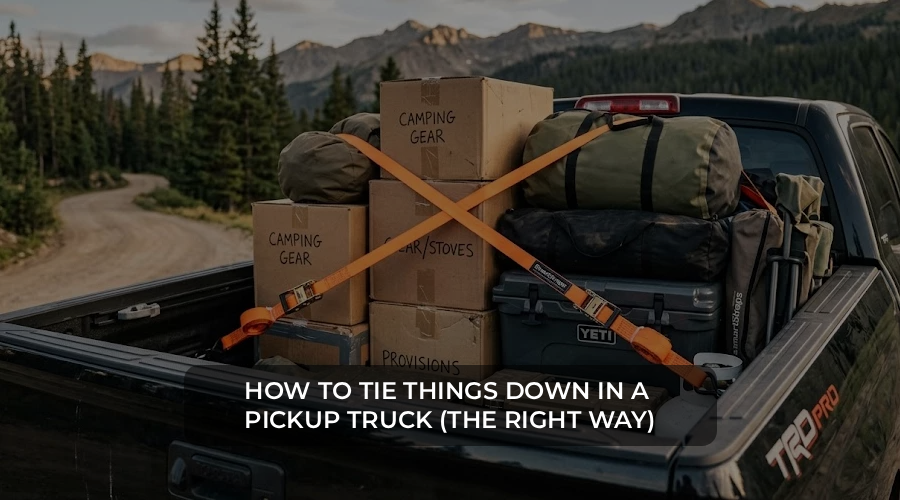
How to Tie Things Down in a Pickup Truck (The Right Way)
We’ve all seen it. A pickup truck cruising down the road with boxes wobbling in the back… a mattress flapping in the wind… or worse, something falling off completely. Now think – You’re heading out for a weekend trip. You’ve packed your luggage, maybe a cooler, some camping gear, and a few loose bags. Everything looks “fine” … until you hit a speed breaker or take a sharp turn. Suddenly, things start shifting. That is precisely why the ability to correctly tie items in a pickup truck is not only vital but also safety related. We can simplify it, make it more practical, and more grounded in the real world, so that you can be a professional at securing your cargo. Why Securing Cargo Matters More Than You Think? Before we jump into the “how,” let’s quickly understand the “why.” Unsecured cargo can: Slide around and get damaged Fall out and cause accidents Affect your truck’s balance while driving Lead to fines or legal issues Even a minor object can be dangerous when traveling at high speed. The idea is straightforward: maintain everything steady, tight, and in place, regardless of the road conditions. Step 1: Choose the Right Tie-Down Equipment Not all the ropes and straps are the same. The baggage that you carry with the right tools should also matter when it comes to the degree of security of your cargo. Common Tie-Down Options Ratchet Straps (Best Choice) Strong and adjustable Ideal for heavy loads Provides tight tension Bungee Cords Good for light items Not suitable for heavy cargo Rope (Nylon or Polyester) Flexible and affordable Requires proper knot skills Cargo Nets Perfect for covering loose items Prevents small items from flying out Ratchet straps are your friend if you are serious about safety. Step 2: Use the Truck’s Tie-Down Points Not all the ropes and straps are the same. The baggage that you carry with the right tools should also matter when it comes to the degree of security of your cargo. Corners of the truck bed Side rails Floor-mounted anchors These are the only places where you should fasten your straps, and not any other section of the truck. They are designed to withstand pressure on loads. Step 3: Position Your Cargo Properly The first thing is to place before tying anything down. Even with tied load, it may shift on a badly placed position. Follow These Basics: Place heavier items at the front (near the cab) Keep weight evenly distributed Stack items in a stable way Avoid uneven or tilted loads Think of it like building a stable base, once that’s solid, tying down becomes much easier. Step 4: Secure Using the Right Technique Now comes the most important part, tying things down. The Golden Rule: Cross-Strap Your Load Instead of tying straight across, use a cross pattern. For example: Strap from left front to right rear Strap from right front to left rear This prevents movement in multiple directions. Using Ratchet Straps (Step-by-Step) Hook one end to a tie-down point Pass the strap over your cargo Attach the other end to the opposite anchor Pull the slack out Use the ratchet to tighten Make sure the strap is: Tight (but not damaging the cargo) Flat (not twisted) Securely locked Step 5: Cover Loose Items Straps might not suffice, especially when carrying light or small items. Wrap it in a cargo net or tarp. This helps: Prevent items from flying out Protect cargo from wind Keep things organized For example, grocery bags or sports gear can easily shift without a cover. Step 6: Check Before You Drive Prior to travelling, ensure that you check your safety. Ask yourself: Are all straps tight? Is anything loose or moving? Are hooks properly attached? Is the tailgate closed and locked? Give the cargo a small push; if it moves, tighten it again. Step 7: Recheck During Long Trips Cargo can loosen over time, especially on: Rough roads Highways Long-distance drives It is time to establish a habit of pausing and inspecting your load within every couple of hours. The fast 2-minute check will help avoid significant issues in the future. Common Mistakes to Avoid Even experienced drivers make these mistakes. Avoid them to stay safe. Using weak or worn-out straps Not tightening enough Over-tightening and damaging items Ignoring weight distribution Relying only on the tailgate Remember: The tailgate is not a safety system; it’s just a barrier. Common Mistakes to Avoid When you are picking up your pickup with lifestyle items, traveling, bikes, camera equipment or even moving rooms, these guidelines come in handy: Use color-coded straps for quick setup Always keep a tie-down kit in your truck Invest in bed liners or anti-slip mats Use storage boxes for smaller items Relying only on the tailgate Keeping your setup clean and organized not only looks good but is also safer. FAQs 1. Can I use rope instead of ratchet straps? Yes, but only if you know proper knots. Ratchet straps are easier and more secure. 2. How tight should straps be? Tight enough to prevent movement, but not so tight that they damage the cargo. 3. Do I always need a cargo net? Not always, but it’s highly recommended for small or loose items. 4. Is it safe to leave the tailgate open? Only for oversized items, and even then, everything must be properly secured. 5. How many straps should I use? At least two for small loads. For larger or heavier cargo, use multiple straps. The art of strapping in a pickup truck is not complicated, but it matters for safety and comfort. No matter your destination, be it to work, moving things around, or just going on a journey, you should always make sure there is tightness, stability, and safety in your pack. This will save you time and trouble and avoid unnecessary stress and accidents caused by taking a little more time to check your setup. It assists other drivers and helps keep your vehicle
Best Ways to Safely Tailgate with a Truck
Trucks and tailgating can hardly be separated. Pickup trucks are the perfect outdoor hangout regardless of whether you are at a football game, camping, a music festival, or a road trip destination. Imagine, before the big game, you drive into a parking lot. The trucks begin to queue, the tailgates are lowered, the grills are lit, the music is turned on, and friends are sitting in bed of the trucks. Your pickup is all of a sudden, the focus of the party. However, although tailgating is a good thing to do, it is equally important to do it responsibly and safely. Broken trucks, accidents, and unsafe conditions may be experienced as a result of poor organization of a tailgate setup. To tailgate properly with a truck, these are the best tips to safely tailgate. Top Ways to Safely Tailgate: You Must Know in 2026 1. Choose a Safe and Legal Tailgating Spot You should also ensure you are parked in a safe, designated area before you open the tailgate. Several stadiums, parks, and event centers permit tailgating only out of designated parking areas. Establishing in illegal places can also cause safety risks and result in a fine. In choosing your position, you should seek: Flat and stable ground Enough space around your truck Clear access for other vehicles Distance from traffic lanes Proper parking also helps to avoid congestion and blocking of emergency routes by your truck. 2. Secure Your Truck Before Setting Up Once parked, take a moment to properly secure your vehicle. Always: Turn off the engine Engage the parking brake Ensure the truck is in park Lock the wheels if parked on a slope This is a simple measure that will make sure that the truck does not roll over when individuals are sitting on or leaning against the tailgate. 3. Open the Tailgate Carefully The tailgates in pickup trucks are usually heavy, particularly when they are in large trucks. Opening them excessively fast will lead to their falling abruptly, and this can overstretch the cables or even cut your hands. To avoid this: Lower the tailgate slowly Make sure nothing is blocking the hinges Check that support cables are intact Several newer trucks have tailgate assist systems, which facilitate this process and make it safer. 4. Avoid Overloading the Tailgate Tailgates are robust, yet they are not set to carry indefinite weight. Excessive weight may tear away hinges or cables when people sit on the tailgate or place heavy coolers and grilles on it. To stay safe: Check your truck’s tailgate weight limit Avoid having multiple people sit on the edge Use folding tables instead of placing everything on the tailgate Thus, using the truck bed as a base for gear instead of the tailgate itself can help distribute weight better. 5. Use Proper Equipment for Tailgating Tailgating facilities usually consist of grills, speakers, coolers, and lights. Wearing the correct equipment serves to avoid accidents. There is some useful equipment like: Portable folding tables Tailgate pads or mats Battery-powered lights Truck bed organizers These accessories maintain order in your setup and do not allow things to slide about the truck bed. 6. Be Careful When Using a Grill The most common aspect of tailgating is grilling, yet it poses the greatest safety hazard. When you are grilling outside your truck, be sure to: Place the grill on stable ground Keep it away from the truck body Maintain proper ventilation Keep a fire extinguisher nearby Never lay a hot grill on the tailgate or the truck bed liner, because the heat may damage it, or even start a fire. 7. Keep the Area Clean and Organized An untidy tailgate can easily be unsafe. Tripping around the truck may be caused by loose cans, bottles, bags, and cables. To keep things safe: Use trash bags or bins Store gear neatly inside the truck bed Avoid blocking walkways A cluttered tailgating area makes everyone comfortable and avoids unnecessary accidents. 8. Be Mindful of Alcohol Consumption Tailgating may involve alcohol consumption, so one should be a responsible drinker. If alcohol is part of the event, then you should: Never drink and drive Assign a designated driver Follow local tailgating regulations Most establishments have vigorous regulations regarding the use of alcohol in parking lots, so one should always read the instructions before entering the parking lot. 9. Keep Music and Noise Respectful Tailgating events are often accompanied by music and speakers, but very loud systems may interfere with the neighbouring people. Respect for fans or family around one would make their day enjoyable. If you’re using portable speakers: Keep volume at a reasonable level Avoid blocking pathways with equipment Position speakers away from neighbouring vehicles So, a good atmosphere doesn’t need to be overly loud. 10. Plan Your Tailgate Exit Strategy The parking lot may be congested and hectic when the event is over. Before packing up, make sure: All trash is collected Equipment is secured in the truck bed The tailgate is fully closed and locked Early departure and waiting to clear the traffic can also be a way of exiting the area with ease and in a safe way. As the owners of a truck, tailgating is among the most fun activities on game days, on road trips, and at outdoor activities. Pickups are the best mode of transporting food, music, and meeting friends. Nevertheless, a fantastic tailgate event is one that is planned and safe. With the proper choice of parking area, setup arrangement, and safety precautions, you can have a fun tailgating event without putting your truck or those around you in danger. An event cannot be made any better with a truck tailgate setup that is well prepared, but the whole experience will be memorable. FAQs 1. Can people sit on a pickup truck tailgate? Yes, but it must be able to support the weight on the tailgate. Make sure you examine the weight limit of the manufacturer. 2. Is it safe to grill on
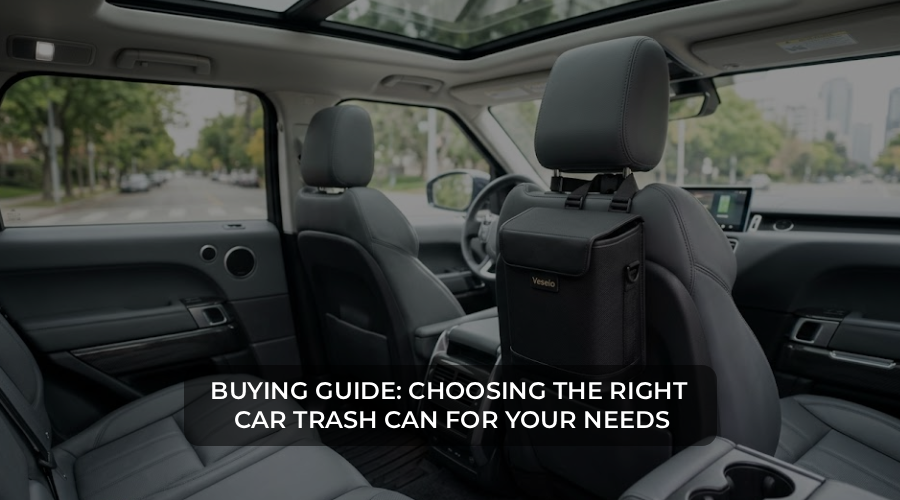
Buying Guide: Choosing the Right Car Trash Can for Your Needs
Keeping your car clean sounds simple until you start using it daily. There is a rush to the coffee shop, eating a snack on your way to work, a long car ride with your friends, and suddenly you are left with wrapping papers, bottles, and tissues. Most people either ignore it or temporarily stash trash in cup holders or door pockets… which only makes things worse later. That is why one of the little changes that can make a huge impact is a car trash can. However, it is not simply about picking a winner, but about seeking one that fits your space, your routine, and how you actually use your car. Let’s break it down step by step so you can choose the right one without overthinking it. Why a Car Trash Can Is Worth It? A car trash can will help you stay tidy without extra effort. You substitute the accumulation of clutter with: A dedicated place for all waste Cleaner seats, floors, and interiors Less distraction while driving Easier cleanup after trips It is particularly handy when you drive every day, when you travel very frequently, or when you carry passengers on a regular basis. Simple Steps to Choose The Right Trash Can Step 1: Focus on Functionality First You should first of all have a trash can that is convenient to use when driving. It should not need to be pried or fetched to open it. Find alternative options that: Stay within arm’s reach Open easily with one hand Don’t distract you while driving An easy, practical design is always superior to an expensive yet unproductive design. Step 2: Choose the Right Placement The location of your garbage is very important. Various placements are effective to different needs: Headrest hanging → Best for backseat or family use Center console or floor → Easy access for driver Side door or glove area → Compact setups The aim is to make it visible without obstructing space or movement. Step 3: Always Check for Leakproof Design This is one of the aspects that you cannot ignore. Liquid waste like leftover drinks can easily leak and damage: Seats Floor mats Car interiors A good trash can should have: Waterproof inner lining Leakproof stitching Spill-resistant design This makes your car clean and stain-free. Step 4: Pick the Right Size for Your Usage The space is dependent on how frequently you use your car and how many passengers you have. Small size → Ideal for solo drivers or short trips Medium size → Works for daily use Large size → Best for families, kids, or long journeys It should be capable of fitting in the space of your car without interfering. Step 5: Look at Build Quality and Durability Car rubbish bins are subjected to normal use and cleaning. As such, when choosing materials, it is important to select materials that: Strong and long-lasting Clean and convenient to clean. Stain and wear-resistant. It will not replace a good-quality product but will last many years. Step 6: Check for Lid or Closure The lid may be considered a minor detail, yet it does matter. It helps: Control odor Keep trash hidden Prevent spills on bumpy roads Common options include: Flip lids Velcro covers Zipper closures Step 7: Stability Matters More Than You Think A moving trash can destroy its mission. Search characteristics such as: Adjustable straps Velcro base Non-slip bottom This ensures it does not fly out when there is sudden stopping or turning. Step 8: Extra Features That Add Value There are also trash cans with enhanced features that can be helpful. For example: Side pockets for storage Insulated lining (can double as a cooler) Removable inner lining Compatibility with disposable bags These characteristics make the product more convenient to use. Step 9: Price vs Value The cost of trash cans used by cars is high, and costly does not necessarily imply quality. Instead of focusing only on price, check: Build quality Leakproof design Ease of use Durability It is better to pay a bit more for a good-quality alternative, and it is likely to pay off in the long term. Can You Use DIY Options Instead? Yes, plastic or grocery bags are a fast fix that many people use. They are: Cheap Easily available Simple to use Nevertheless, they have disadvantages as well: They don’t stay in place Can spill easily Look messy Not convenient while driving A clean and safer long-term alternative is a proper trash can. Common Mistakes to Avoid Buying the wrong size of your car. Ignoring leakproof features Purchase of poor-quality materials. Locating it in an inconvenient position. Failure to obtain it in the right way. These are some pitfalls to avoid ensuring something that works. FAQs 1. Do I really need a car trash can? Although this is not crucial, it will get your car clean, tidy, and simpler to maintain, particularly when used frequently. 2. What size trash can should I choose? Make a decision according to your schedule. Small to use daily, and others are bigger when people are traveling with families. 3. Are leakproof trash cans important? Yes, they stop spills and keep your car interior from being stained or smelling of anything. 4. Can I use plastic bags instead? Yes, however, they are not as stable, convenient, or as clean as ordinary trash cans are. 5. How do I maintain a car trash can? Wipe it with a damp cloth and empty it frequently and put liners to keep it clean easily. The right car trash is all you need to make your daily commute more comfortable and environmentally friendly. Once you choose one that fits your routine, space, and usage, it becomes a part of you that you do not have to think about. You can avoid the problem of littering, rushing in after cleaning, and having to sweep up junk accumulating in your car as well. It also assists you in keeping cleaner, it saves time when cleaning, as
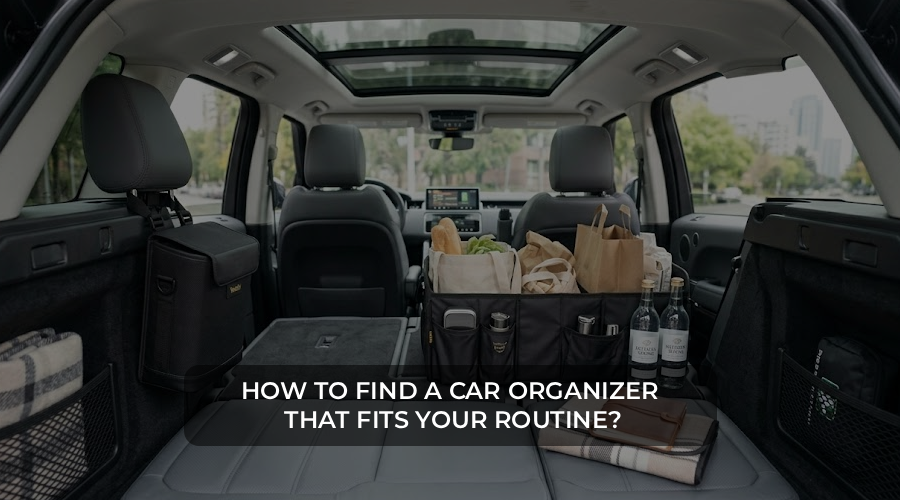
How to Find a Car Organizer That Fits Your Routine?
An untidy car is not only irritating but can also affect your everyday routine and make it more stressful. Starting with groceries rolling around to cables, bottles, and tools lying everywhere, organization failure soon makes your automobile a mess on wheels. That is where a car organizer would fit in. However, herein lies the trick not all organizers serve all people. The right one would be subject to your car’s daily usage. The best thing to do is to select an organizer that fits your schedule, whether you are commuting, traveling, or carrying on family errands. We will break it down realistically so you can choose one that works for you. Why Does a Car Organizer Matter? The car organizer will make sure your stuff is in place without being distracted. It makes the driving experience: More organized Less stressful Safer (no loose items rolling around) More efficient for daily use One does not have to search during their driving time, as all things are where they belong. Steps to find a Car Organizer That Fits Your Routine Step 1: Understand Your Daily Routine The initial step is not complicated. Before purchasing anything, you need to know how you use your car. Organizers are required to be of different kinds in different lifestyles. Common Usage Types: Daily commuters → Lunch boxes, documents, chargers Families → Toys, snacks, bottles, baby essentials Travel lovers → Clothes, gear, emergency items Work professionals → Tools, files, equipment Making a decision that fits your schedule is the only way to make sure the organizer is really going to fix your issue rather than introduce more mess. Step 2: Check Your Car Space Not every organizer fits every car. Before buying, consider: Size of your trunk Available backseat space Seat layout Having a big organizer in a miniature car will cause more trouble than good. Always wear something that is not tight, such that it does not obstruct movement or access. Step 3: Choose the Right Type of Organizer Available car organizers are of various types and are designed to meet specific needs. 1. Trunk Organizers These are the most widespread and helpful. They fit into your car trunk and help in the storage of larger goods such as groceries, tools and travel bags. Best for: Everyday storage Keeping heavy items stable Long drives or trips 2. Backseat Organizers They are mounted at the back of the front seats. They are the best place to store small items. Best for: Kids’ essentials Tablets, bottles, snacks Road trips 3. Collapsible Organizers These can also be folded when not in use. They are also portable and do not take up permanent space. Best for: Occasional use Small cars Minimal setups 4. Multi-Compartment Organizers These are coupled with several sections and partitions. They can help you to organize the stuff and keep your order. Best for: Mixed storage (tools + groceries + accessories) People who like structured organization 5. Hanging or Net Organizers They are mounted in seats or trunks. They help in fixing loose articles and also act as barriers to movement. Best for: Lightweight items Preventing clutter from spreading Step 4: Look for Practical Features The right features might be a big distinction in daily life. Key things to check: Strong build quality → So it lasts long Non-slip base or straps → Keeps it in place while driving Adjustable compartments → For flexible storage Handles for easy carrying → Useful for loading/unloading Water-resistant material → Protects against spills These minor details enhance usability in the long run. Step 5: Think About Ease of Use An organizer is not supposed to complicate your life; he or she is supposed to make it easier. Choose one that: Is easy to install Doesn’t require constant adjustment Can be cleaned easily Is simple to access while needed If it feels complicated, you probably won’t use it regularly. Step 6: Match It With Your Lifestyle This is where most people miss it all; they purchase based on appearance rather than use. Here’s a quick guide: Busy parent → Backseat + multi-compartment organizer Office commuter → Compact trunk organizer Traveler → Large trunk + collapsible setup Professional/work use → Heavy-duty structured organizer Choose something that includes your daily routine, not only your budget. Common Mistakes to Avoid These are the pitfalls to avoid when selecting: Buying too large or too small Ignoring your car space Selection of poor-quality materials. Stuffing all that in a single organizer. Not securing it properly The last thing that an organizer can do is cause more mess rather than resolve an issue. Finding a proper car organizer does not have to be a confusing or time-consuming process. When you know what you do on a daily basis and what you normally keep in your car, then it becomes a lot easier to make the correct choice. You no longer need to deal with things rolling about or even waste time looking up what you need. It also helps with your daily commutes, whether to work, on errands, or on a trip. After all, it is a mere upgrade, yet it brings a ton of convenience and comfort to your everyday driving routine. FAQs 1. Do I really need a car organizer? This is not compulsory, but it will keep your car clean and tidy and without any distractions, especially on day-to-day use. 2. Which type of organizer is best? It depends on your routine. Trunk organizers should be used for general use, and the backseat organizers should be used in cases of small items and family purposes. 3. Can organizers move while driving? Yes, when they are not provided with anti-slip bases or straps. Always select one that has good stability features. 4. Are collapsible organizers durable? Premium collapsible organizers are durable and designed to last long. They also have advantages in regard to the storage capacity that is flexible as well because it can be folded whenever not in use without occupying more space in