


We’ve all seen it. A pickup truck cruising down the road with boxes wobbling in the back… a mattress flapping in the wind… or worse, something falling off completely.
Now think – You’re heading out for a weekend trip. You’ve packed your luggage, maybe a cooler, some camping gear, and a few loose bags. Everything looks “fine” … until you hit a speed breaker or take a sharp turn.
Suddenly, things start shifting. That is precisely why the ability to correctly tie items in a pickup truck is not only vital but also safety related. We can simplify it, make it more practical, and more grounded in the real world, so that you can be a professional at securing your cargo.
Why Securing Cargo Matters More Than You Think?
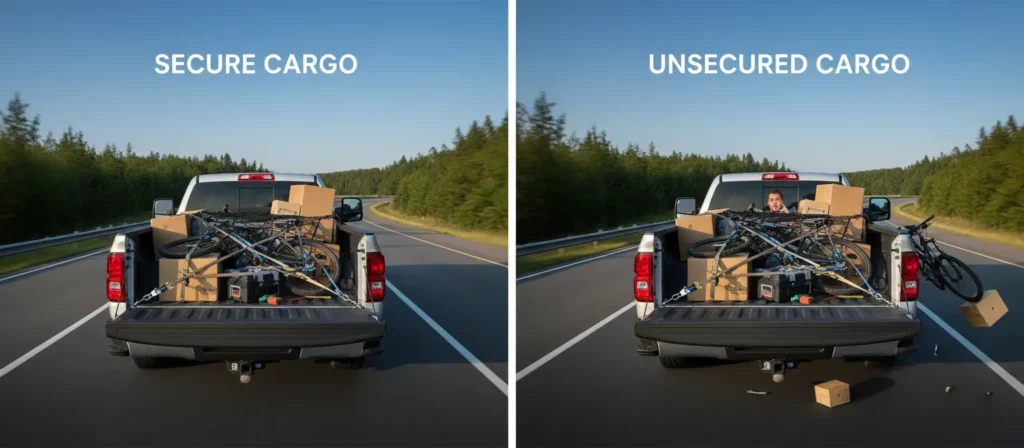
Before we jump into the “how,” let’s quickly understand the “why.” Unsecured cargo can:
- Slide around and get damaged
- Fall out and cause accidents
- Affect your truck’s balance while driving
- Lead to fines or legal issues
Even a minor object can be dangerous when traveling at high speed. The idea is straightforward: maintain everything steady, tight, and in place, regardless of the road conditions.
Step 1: Choose the Right Tie-Down Equipment
Not all the ropes and straps are the same. The baggage that you carry with the right tools should also matter when it comes to the degree of security of your cargo.
Common Tie-Down Options
Ratchet Straps (Best Choice)
- Strong and adjustable
- Ideal for heavy loads
- Provides tight tension
Bungee Cords
- Good for light items
- Not suitable for heavy cargo
Rope (Nylon or Polyester)
- Flexible and affordable
- Requires proper knot skills
Cargo Nets
- Perfect for covering loose items
- Prevents small items from flying out
Ratchet straps are your friend if you are serious about safety.
Step 2: Use the Truck’s Tie-Down Points
Not all the ropes and straps are the same. The baggage that you carry with the right tools should also matter when it comes to the degree of security of your cargo.
- Corners of the truck bed
- Side rails
- Floor-mounted anchors
These are the only places where you should fasten your straps, and not any other section of the truck. They are designed to withstand pressure on loads.
Step 3: Position Your Cargo Properly
The first thing is to place before tying anything down. Even with tied load, it may shift on a badly placed position.
Follow These Basics:
- Place heavier items at the front (near the cab)
- Keep weight evenly distributed
- Stack items in a stable way
- Avoid uneven or tilted loads
Think of it like building a stable base, once that’s solid, tying down becomes much easier.
Step 4: Secure Using the Right Technique
Now comes the most important part, tying things down.
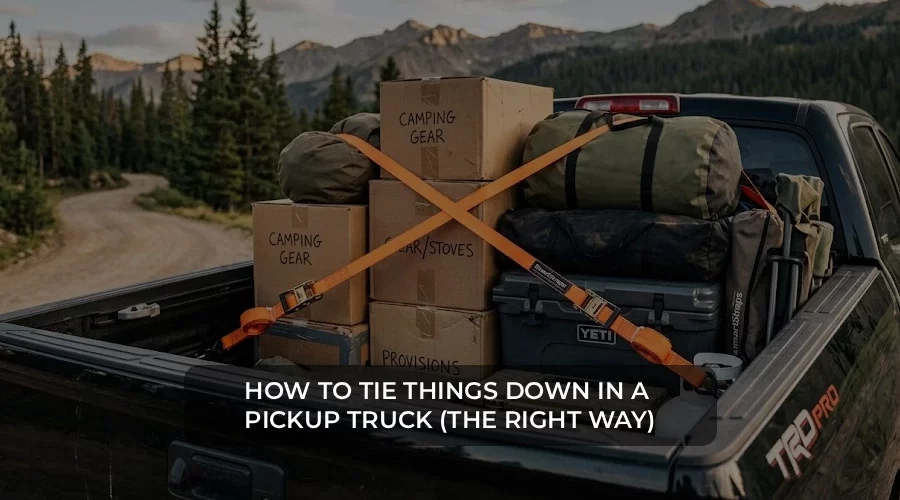
The Golden Rule: Cross-Strap Your Load
Instead of tying straight across, use a cross pattern. For example:
- Strap from left front to right rear
- Strap from right front to left rear
This prevents movement in multiple directions.
Using Ratchet Straps (Step-by-Step)
- Hook one end to a tie-down point
- Pass the strap over your cargo
- Attach the other end to the opposite anchor
- Pull the slack out
- Use the ratchet to tighten
Make sure the strap is:
- Tight (but not damaging the cargo)
- Flat (not twisted)
- Securely locked
Step 5: Cover Loose Items
Straps might not suffice, especially when carrying light or small items. Wrap it in a cargo net or tarp.
This helps:
- Prevent items from flying out
- Protect cargo from wind
- Keep things organized
For example, grocery bags or sports gear can easily shift without a cover.
Step 6: Check Before You Drive
Prior to travelling, ensure that you check your safety. Ask yourself:
- Are all straps tight?
- Is anything loose or moving?
- Are hooks properly attached?
- Is the tailgate closed and locked?
Give the cargo a small push; if it moves, tighten it again.
Step 7: Recheck During Long Trips
Cargo can loosen over time, especially on:
- Rough roads
- Highways
- Long-distance drives
It is time to establish a habit of pausing and inspecting your load within every couple of hours. The fast 2-minute check will help avoid significant issues in the future.
Common Mistakes to Avoid
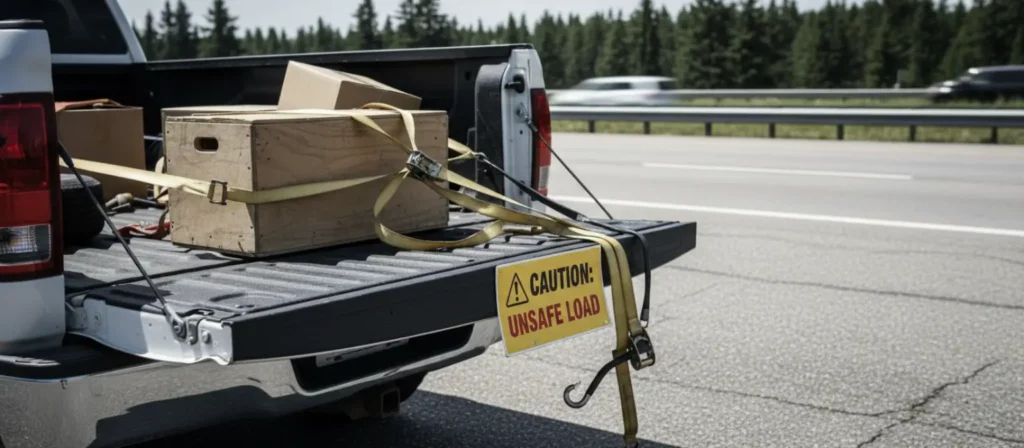
Even experienced drivers make these mistakes. Avoid them to stay safe.
- Using weak or worn-out straps
- Not tightening enough
- Over-tightening and damaging items
- Ignoring weight distribution
- Relying only on the tailgate
Remember: The tailgate is not a safety system; it’s just a barrier.
Common Mistakes to Avoid
When you are picking up your pickup with lifestyle items, traveling, bikes, camera equipment or even moving rooms, these guidelines come in handy:
- Use color-coded straps for quick setup
- Always keep a tie-down kit in your truck
- Invest in bed liners or anti-slip mats
- Use storage boxes for smaller items
- Relying only on the tailgate
Keeping your setup clean and organized not only looks good but is also safer.
FAQs
1. Can I use rope instead of ratchet straps?
Yes, but only if you know proper knots. Ratchet straps are easier and more secure.
2. How tight should straps be?
Tight enough to prevent movement, but not so tight that they damage the cargo.
3. Do I always need a cargo net?
Not always, but it’s highly recommended for small or loose items.
4. Is it safe to leave the tailgate open?
Only for oversized items, and even then, everything must be properly secured.
5. How many straps should I use?
At least two for small loads. For larger or heavier cargo, use multiple straps.
The art of strapping in a pickup truck is not complicated, but it matters for safety and comfort. No matter your destination, be it to work, moving things around, or just going on a journey, you should always make sure there is tightness, stability, and safety in your pack. This will save you time and trouble and avoid unnecessary stress and accidents caused by taking a little more time to check your setup. It assists other drivers and helps keep your vehicle straight during sudden braking or turns. So, cargo safety is not a quick fix.