
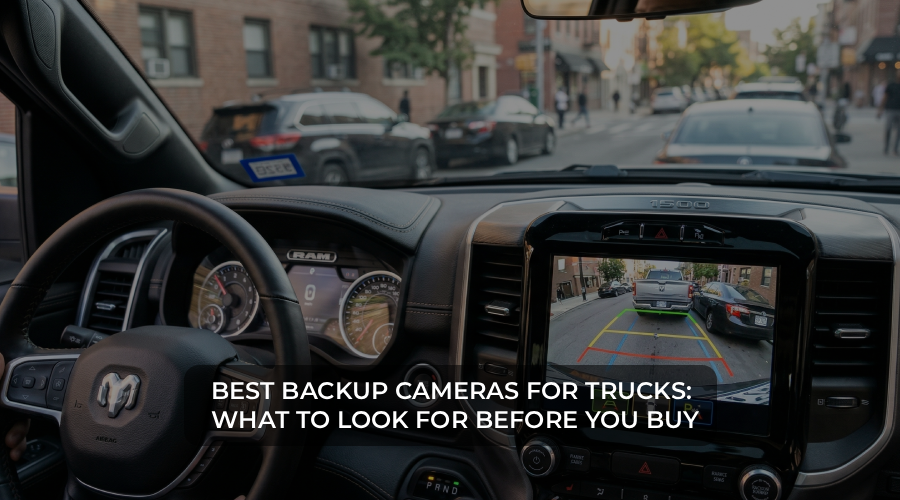
Backup cameras are a safety feature that has gained immense importance in modern-day trucks, as they assist drivers in controlling big blind spots and reversing safely. Whether driving your truck to work every day, off-road, or carrying heavy loads, a good rear-view system can significantly reduce the risk of an accident and improve overall control. Trucks are meant to be powerful and handy, but its size may prove to be difficult especially in congested or narrow spaces. That is where a good backup camera comes in, since it gives a clear picture of what is behind your car, which the mirrors cannot always do. However, one cannot always choose the right backup camera. There are various types, features, and opportunities of its installation in the market and one can easily get confused or even buy something that does not actually help to meet your requirements completely. We will discuss the most efficient truck backup cameras in this guide, the primary features to take into account, and some of the tips that will help you to make a reasonable, long-term decision. Why Backup Cameras Are a Must for Trucks? Pickup trucks are taller and larger with much larger blind spots than normal cars. The benefits of having a good backup camera are: See the low obstacles behind your truck that mirrors might miss Avoid collisions while reversing in tight areas Park more easily and accurately Improve safety when towing trailers or carrying loads Reduce stress while driving in crowded environments To the truck owners, the backup cameras are not a luxury; however, it is a practical safety enhancement that can improve control as well as confidence. Types of Backup Cameras for Trucks The key types that are offered should be learned before selecting features. 1. Wired Backup Cameras The wired systems are associated with reliability and stability. They are directly connected to your truck with cables, which provide: Stable signal with no interference High-quality video output Real-time display without lag The only negative side is that it can be slightly complicated to install, and thus professional assistance may be needed. Best for: Heavy-duty trucks, towing setups, and long-term use 2. Wireless Backup Cameras The wireless cameras are convenient and easy to install. They convey video on signals as opposed to cables. Pros: Quick and simple setup No need for complicated wiring Flexible and portable options Cons: Possible signal interference in some environments Slight delay in video feed Best for: Daily drivers and quick upgrades for older trucks 3. Multi-Camera Systems A single rear camera might not be sufficient in case of bigger truck or high-tech use. Multi-camera systems consist of: Rear camera Side cameras Front or trailer cameras These systems give you a total view of the area around your car and this becomes exceptionally handy during towing or when having to work around in tight areas. 4. OEM vs Aftermarket Cameras OEM Cameras Fitted by the manufacturer. Integrated into the truck system in totality. More expensive but smooth operation. Aftermarket Cameras More affordable Suitable for older trucks Extensive choice of options and features. The most commonly used system to upgrade the truck that does not have inbuilt cameras is the aftermarket systems. Key Features to Look for Before Buying Backup Cameras The majority of the performance of a camera depends not only on the type chosen, but also on the capabilities. 1. Image Quality (Resolution) Whenever you buy a camera, always ensure it has a minimum resolution of 720p or 1080p HD. A greater clarity will help you notice: Small obstacles Road edges Low-lying objects 2. Night Vision Nighttime driving or parking must be seen. Look for cameras with: Infrared night vision LED enhancement This ensures you can see clearly even in low-light conditions. 3. Wide Viewing Angle A wider angle means better coverage. The ideal range is 120° to 170°, allowing you to see more of your surroundings. 4. Waterproof and Durability Rating Backup cameras are open to the elements outdoors hence durability is necessary. Look for ratings like: IP67 IP68 IP69 These guarantee protection against dust, mud and rain. 5. Display Options The footage provided by the backup camera may be shown on: Rearview mirror screens Dashboard monitors Inbuilt entertainment systems. Select a truck display that fits your truck layout. 6. Parking Guidelines Numerous cameras have visual instructions on the screen. These help you: Align your vehicle Judge distance Park accurately Wired vs Wireless: Which One Should You Choose? When performance and reliability are of importance, then wired systems are preferable. Wireless systems are more convenient in case you want to install them easily and be more flexible. Wired systems are normally suggested in cases of heavy-duty usage, towing or professional purposes. Common Mistakes to Avoid The following are some of the pitfalls that should be avoided when purchasing a backup camera: Choosing low-resolution cameras Ignoring waterproof ratings Not checking compatibility with your truck Overlooking installation requirements Going for the cheapest option without considering quality A camera of bad quality will violate the safety rather than enhance it. The choice of a backup camera to install in your truck rests on the usage of the camera and what features would best fit your needs. Whether it is a long-term reliability system wired or an easy-to-install wireless system, a high-quality backup camera will increase the security, visibility, and driving confidence of the vehicle. The factor does not revolve solely around convenience; to truck owners, it is all about making each reverse safer, smoother, and more controlled. FAQs 1. Are backup cameras necessary for trucks? Older trucks are not always required to have them, though, they are strongly suggested to be safe as well as convenient. 2. Can I install a backup camera myself? Yes, in particular, wireless systems. Wired systems can be more difficult or professional to install. 3. Do backup cameras work in rain and dust? Yes, if they have proper waterproof ratings like IP67 or higher. 4. Can backup cameras be used all the time? There
Tailgate Assist for Utes: What It Is and Why It Matters
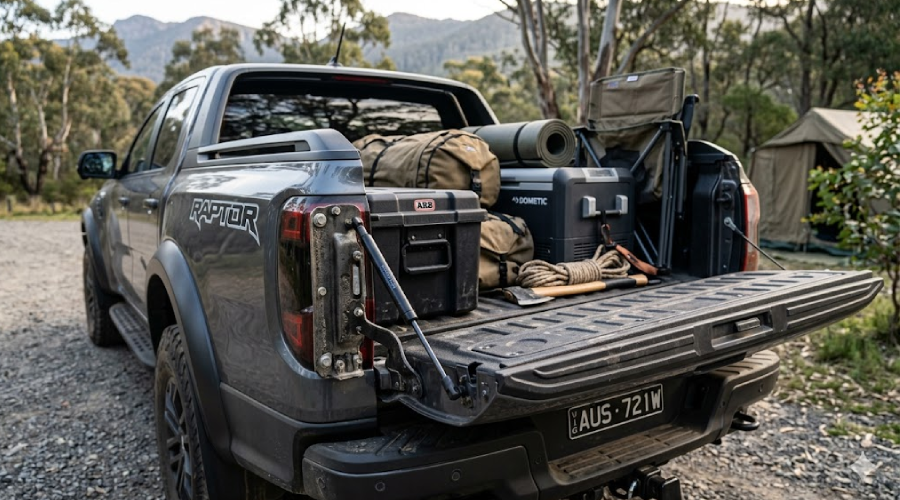
You may have already experienced how clumsy and even hazardous it can be to open the tailgate of a ute (utility vehicle) and watch it tip down with a heavy crash. Picture this: You have unpacked camping equipment at the end of a long journey. In one hand, a backpack, in the other, the tailgate is open. Then the heavy metal gate falls quickly and springs open and drags your hand with it. Not the best experience, right? And that is what tailgate assist systems will do. Tailgate assist is one of those minor features in the latest ute that has become a big difference in daily use. Whether carrying tools, groceries, sporting equipment, or even camping gear, it makes things more convenient and safer and gives your car an engineering touch of modernity. We will simplify it to explain what tailgate assist is, how it works, and why it is important. What Is Tailgate Assist? A tailgate assist is a small mechanism that is mounted on the tailgate hinge system of a ute, and it regulates the opening and closing of the tailgate. The tailgate assist system, instead of falling off at once because of gravity, reduces the motion, and therefore the tailgate will open very steadily and without any shock. Just imagine a soft-close option of a modern kitchen cabinet – the door does not bang but softly glides down. The same idea applies here. The assist system has the ability to lower the tailgate as you unlock it so that you do not need to raise the entire weight. This makes opening the tailgate: Safer Easier More controlled How Does Tailgate Assist Work? A tailgate assist system typically operates on the hinge of the tailgate via a gas strut or hydraulic damper. Here’s how the process works step by step: You pull the tailgate latch. Gravity begins to lower the tailgate. The assist strut slows the movement. The tailgate gently glides down instead of falling. The system will take the weight and regulate the tailgate speed opening. The majority of the systems are small, robust, and made to accommodate thousands of opening cycles. Why Tailgate Assist Is Becoming Popular? The tailgate assist was exclusively in the high-end trucks. However, it is currently being added to most modern Utes. There are a few key reasons why drivers love it. 1. Prevents Tailgate Slamming Tailgates are heavy and may easily crash open. This sudden drop can damage: Tailgate cables Hinges Latch mechanisms This is avoided by the tailgate assist, which slows down the movement. 2. Protects Your Hands and Arms There is always the likelihood of you being forced to support the entire weight of the tailgate when opening it without assist systems. This may subject one to strain or even injury in case the tailgate slips. The tailgate assistant eliminates that jolt, and the tailgate opens as easily as it can. 3. Extends Tailgate Lifespan Repeated slamming puts stress on: Hinges Support cables Mounting points Assist systems provide a smoother, lower mechanical load on the tailgate, increasing the durability of parts. 4. Makes Daily Use More Convenient The tailgate has numerous uses per day by many drivers. Be it loading groceries, tools, sports gear, or camera equipment, having a smoother tailgate opening will make it easier to use on a daily basis. 5. Adds a Premium Feel to Your Ute Minor improvements could help in turning a car into one that feels a lot more sophisticated. One of such upgrades that can instantly provide your ute with a premium modern experience is tailgate assist. It is a slight modification, but you realise it each time you open the tailgate. Can You Install Tailgate Assist on Older Utes? Yes, and that’s one of the best parts. Many aftermarket tailgates assist kits are designed to fit older ute models. Installation usually involves: Attaching a gas strut Mounting small brackets Securing the assist system near the hinge Most kits can be installed in 15 to 30 minutes with basic tools. This makes it an affordable upgrade for drivers who want modern convenience without buying a new vehicle. Are Tailgate Assist Systems Durable? Yes. Quality tailgates assist systems are manufactured to cope with the thousands of times it is opened. They are normally planned with: Heavy-duty steel brackets Gas struts or hydraulic dampers Corrosion-resistant coatings As they work in the outdoor world, they are designed to resist: Rain Dust Heat Mud When installed correctly, they typically require little or no maintenance. Is Tailgate Assist the Same as a Powered Tailgate? Not exactly. These two features have varying uses. Tailgate Assist Mechanical system Slows down the tailgate when opening Prevents sudden drops Mud Powered Tailgate Fully electronic system Opens and closes automatically Controlled by buttons or key fobs Mud Tailgate assist is a less expensive and simpler upgrade. Tailgate assist could appear to be a minor feature, but it could be a life-saving feature in daily use. It will enhance safety, convenience, and durability by avoiding abrupt drops and ensuring that the tailgates open easily. This upgrade is something you will find yourself wondering why you did not have soon especially for owners of Utes who are used to loading up gear, tools, or other equipment. Tailgate assist is not something that will make life easier, but it can be seen as one of those useful upgrades to your ute, which can be used at work or during recreational activities and errands. FAQs 1. Does tailgate assist make the tailgate lighter? Not exactly. It does not make the tailgate lighter; it just regulates the rate by which the tailgate opens. 2. Can I install tailgate assist myself? Yes. A large number of aftermarket kits are DIY installed and typically less than 30 minutes. 3. Does tailgate assist affect towing? No. The system does not limit towing functionality but only influences the way the tailgate opens. 4. Will tailgate assist work with heavy-duty tailgates? Yes. The majority of the systems are engineered to
Tailgates on Pickup Trucks – Everything You Need to Know in 2026
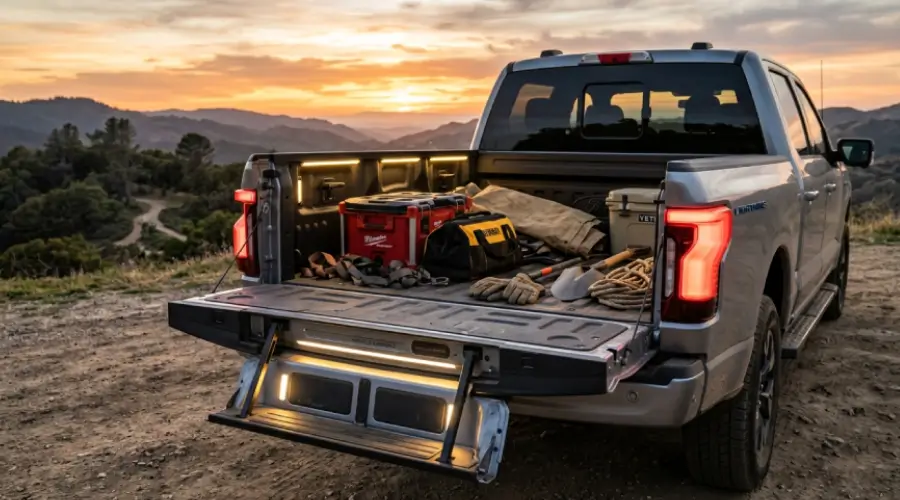
Pick-up trucks are designed to be strong, useful, and versatile. However, there is an element that is easy to overlook but that contributes enormously to the overall functionality: the tailgate. Having developed far beyond a simple rear panel, the modern pickup truck tailgate has evolved to promote and secure cargo and offer more effortless loading access. With older designs, smart lock systems, built-in steps, and even power-operated tailgates, many trucks now have advanced designs. Therefore, if you have a pickup truck or plan to acquire one soon, knowledge of tailgates can help you make the most of your pickup truck. Let’s break everything down in a simple, truck-owner friendly way. What Is a Tailgate on a Pickup Truck? A tailgate refers to the hinged section of a pickup truck bed at the rear end. It is a lockout mechanism that ensures that the cargo remains firmly in the truck bed without any trouble when loading and unloading. The tailgate helps cushion your items when in motion as it prevents them from falling out of the tailgate during accelerating, braking or over rough roads. Upon opening, it forms a convenient platform for loading tools, luggage, construction materials, or recreational equipment. Modern tailgates also include multiple utility features such as: Locking systems Built-in steps Electronic opening mechanisms Integrated lighting Rear cameras Main Types of Tailgates on Pickup Trucks Pickup truck tailgates generally fall into two main operating categories: Manual tailgates – opened and closed using a handle. Electronic tailgates – opened with a button or key fob. Beyond these categories, several designs exist based on functionality and convenience. 1. Traditional Tailgate The most common tailgate design is the traditional one used in older and most contemporary trucks. It comprises a single solid panel mounted on hinges at the bottom of the truck bed. The tailgate is folded downwards, forming a flat loading space when opened. It is easy to design and manufacture, durable, economical, and suitable for use in work trucks and heavy-duty areas. 2. Drop-Down Tailgate Drop-down tailgates resemble traditional ones and feature assist features that make it easier to open and close. These systems typically use: Hydraulic dampers Spring assist Counterbalance systems This will make the tailgate not go bang down, and strain will be minimized as well as safety will be much better. Some drop-down assistance features are now the new standard in many modern pickup trucks. 3. Multi-Panel Tailgate Multi-panel tail-gate designs are the most innovative designs in contemporary pick-up trucks. They are made of several sections rather than a single panel that folds or adapts to various shapes. Benefits include: Easier access to the truck bed Adjustable work surfaces Cargo extension support Built-in steps or handles These designs improve functionality significantly, especially for truck owners who frequently load heavy equipment or tools. 4. Barn Door Tailgate Barn door tailgates do not operate like the conventional down-opening types. Rather than bending down, the tailgate is divided into two doors that run upwards like barn doors. Advantages include: Better access in tight parking spaces Easier loading when towing a trailer Improved reach into the truck bed 5. Tailgate With Built-In Step It may be hard to climb into the back of a truck, and it may be challenging with lifted or heavy-duty pickups. This is why there are others that have inbuilt step systems which can be folded when required. These systems usually include: Foldable step platform Support handle Anti-slip surface They make accessing the truck bed much easier and safer. 6. Ramp Tailgate Certain tailgates even have an inbuilt loading ramp and are convenient especially when one is transporting equipment on wheels. Some of the things that can be loaded easily using these ramps include: Motorcycles ATVs Lawn equipment Construction machines Instead of carrying separate ramps, the tailgate itself becomes part of the loading system. 7. Powered Tailgate High-end pickup trucks even have electronic tailgate functions that either open or shut. These can be operated using: Key fob buttons Cabin controls Smartphone apps Hands-free sensors Powered tailgates are especially useful when your hands are full. Key Features of Modern Pickup Truck Tailgates Tailgates in 2026 include many smart features designed to improve usability and security. Here are the most common ones. a. Tailgate Locking System A large number of contemporary trucks are fitted with central locking systems on the tailgate. This eliminates theft, and the tailgate remains firmly closed throughout the driving. Other systems are also compatible with the main locking system of the vehicle. b. LED Cargo Lighting Newer trucks in the tailgate have LED lighting that illuminates the truck bed. This simplifies the process of loading at night, and it is also safer, particularly when one is operating in low-light conditions. c. Tailgate Release Mechanism Tailgates have a system of latch or button release. This might consist of: Manual handle Push button Remote unlock feature d. Rearview Camera Integration A large number of trucks attach their rearview camera to the tailgate. The benefits of this camera to the drivers include: Reversing Parking Trailer alignment Cargo monitoring e. Tailgate Branding and Appliques Manufacturers usually attach logos, badges, or ornamental panels to the tailgate. These are used to brand and for decorative purposes, which makes the truck have a unique appearance. f. Tailgate Toolboxes Some pickup trucks offer built-in tailgate storage compartments. These compartments are useful for storing: Tools Small repair equipment Straps or accessories Tailgate Maintenance and Repairs Due to their high frequency of use, tailgates are likely to experience wear and tear. There are usual tailgate problems, which are: Broken hinges Damaged latches Loose cables Locking mechanism failure Rust or dents Hinges and latches should be regularly inspected and lubricated to increase the life of your tailgate. If the tailgate cable or the latch breaks, one should repair it as soon as possible to avoid cargo accidents. FAQs 1. Are powered tailgates worth it? Yes, tailgates with power will be handy, especially when you are frequently loading cargo or too busy to use your hands.
Is Glass Cleaner Safe on Car Paint? A Comprehensive Guide to the Best Car Glass Cleaners
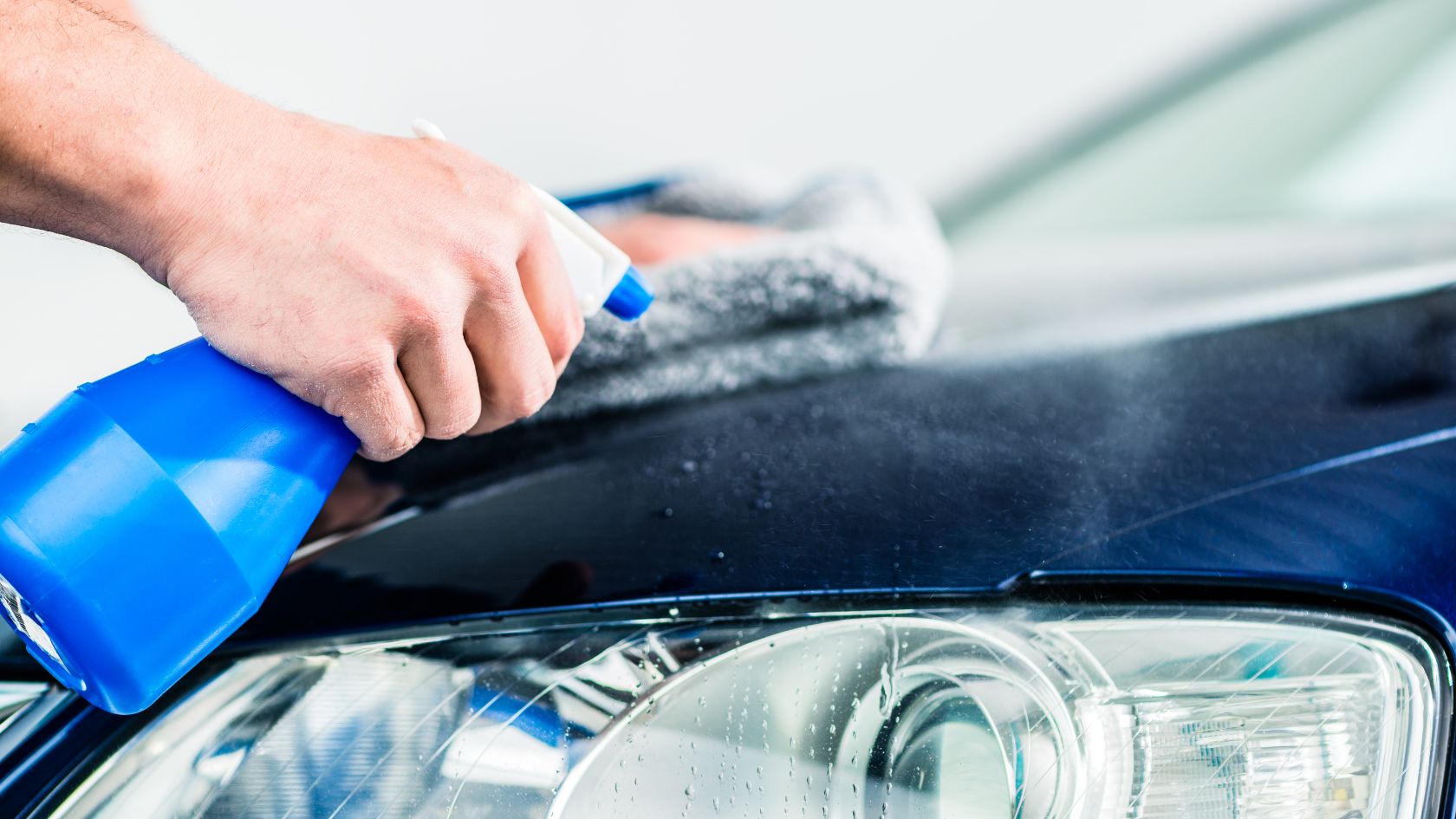
As a conscientious car owner, you understand the importance of using the right cleaning products for car paint. You must be aware of the car care products commonly used to preserve car paint but what about glass cleaners? Is glass cleaner safe on car paint? I am sure a shroud of uncertainty lingers regarding using glass cleaner while detailing your car. In this post, we will delve into the chemical composition of glass cleaners and their potential impact on car paint. We will also shed light on the safety concerns of glass cleaners on car paints and offer guidance on buying the best car glass cleaners, which will empower you to make informed decisions. Using glass cleaner on car paint is not completely recommended as it can potentially damage the paint surface. It won’t harm the finish and shine of your car exterior however the chemicals and solutions of glass cleaners can strip off the wax which can be bad for the car paint. Glass cleaners often contain chemicals, such as ammonia or alcohol, which can take away the protective wax and clear coat on the paint. These chemicals may also cause discoloration, dullness, or even etching on the paint finish. There are people who do not mind using glass cleaners on car surfaces but regularly using it is equal to playing with your car’s original appearance. Instead of using glass cleaners or any other product, it’s best to use products specifically designed for automotive paint care. Opt for pH-neutral car wash soaps and dedicated car paint cleaners that are gentle and safe. This will ensure the safety of your car exteriors. Similarly, regularly washing and maintaining your car with appropriate products will help preserve its paint’s shine and longevity. The best car glass cleaner is one that effectively removes dirt, grime, and smudges from your car windows while providing a streak-free finish. Make sure it is safe on the type of glass your car has. Secondly, beware of the chemicals a glass cleaner is made of. Opt for a cleaner that is ammonia-free to prevent any damage to window tints or seals. Additionally, consider a cleaner that offers anti-static properties to repel dust and keep your windows cleaner for longer. To make the cleaning process easier, invest in a high-quality microfiber cloth or a specialized window cleaning tool if it is not complemented with the glass cleaner. This will enhance the appearance and ensure a crystal-clear view. Notwithstanding, there are several other factors that are essential to finalize the best car glass cleaner revealed in the below section. Selecting the best car glass cleaner can be a daunting task especially when you have a myriad of options available in the market. By considering the below factors, you can make an informed decision and choose the best car glass cleaner for your needs. Type of glasses – Cars have different types of glasses. Ensure the glass cleaner you are choosing is effective on the glass surface your car has. Whether it is approved for cleaning regular glasses, tinted glasses, tempered ones, or laminated glasses ensure to read the instructions carefully before buying. Moreover, it should be built with the purpose to cover the exterior as well as interior glass cleaning. Effectiveness: The primary purpose of a car glass cleaner is to remove dirt, grime, and smudges from your windows. Look for a cleaner that has a proven track record of delivering excellent results. User reviews and ratings can provide valuable insights into the effectiveness of different products. Safety: It is crucial to prioritize the safety of your car’s glass surfaces. Avoid cleaners that contain harsh chemicals, as they can potentially damage the glass or leave behind streaks. Opt for a cleaner that is specifically formulated for automotive glass and is gentle yet powerful enough to remove stubborn residues. Most commonly used cleaners consist of ammonia which is not favorable on glass tints and car paints. If you are too conscious about these parts, avoid using ammonia-based glass cleaners. Secondly, one of the most common frustrations with glass cleaners is the residue they leave behind. Prefer the cleaner that dries quickly and leaves no residue on the glass. This will ensure a crystal-clear finish and enhance visibility while driving. Versatility: While focusing on glass cleaning, you may also want to consider a cleaner that can tackle other surfaces in your car, such as mirrors and chrome accents. A versatile cleaner will provide you with convenience and save you from purchasing multiple products. Having said that, the chemicals used in some glass cleaners like the ones made for heavy-duty cleaning purposes could be damaging on the dashboard and leather upholstery. Be very attentive to ingredient details to keep your car interiors damage-free. Ease of Use: You should not be spending hours cleaning your car glasses tirelessly. A good car glass cleaner should be easy to use, saving you time and effort. Consider the application method, such as spray or foam, and choose one that suits your preference. Additionally, check if the cleaner requires additional tools, such as a microfiber cloth, for optimal results. Longevity: Some glass cleaners offer additional benefits, such as water repellency or anti-fog properties. These features can enhance visibility and extend the cleanliness of your car’s windows, making them a worthwhile investment. Environmental Impact: As responsible car owners, we should also consider the environmental impact of the products we use. Consider glass cleaners that are eco-friendly, biodegradable, and free from harmful chemicals. This way, you can maintain your car’s cleanliness while minimizing your carbon footprint. Remember, investing in a high-quality glass cleaner will not only keep your car looking its best but also contribute to your driving safety. So, go ahead and give your car the care it deserves, with one of the most reliable and effective glass cleaners from the below list. As an Amazon Associate, we may earn a small commission if you purchase any product by clicking the link without any additional cost to you.

Why do seat belts get stuck? Causes and solutions found
Seat belts in a car are meant to save lives. But in many emergencies, car owners/occupants couldn’t come out of the vehicle due to stuck/locked seat belts. So, why do seat belts get stuck? Well, there are reasons related to seat belt technicalities and some kind of human error that can lead to the malfunctioning of this vital safety component. Find out more about vehicle seat belts, their functionality, causes that stuck the seat belts, and more importantly how you can overcome this situation by reading this post. Seat belts stuck or to term it more correctly get ‘locked’ mainly due to the locking mechanism issues pertaining to retractors, pre-tensioners, sensors, and locks. Some of the other cause for a seat belt to get stuck could be the accumulation of dirt, debris, or foreign objects in the belt mechanism. Finally, the age factor and faulty belt mechanism could play a spoilsport not allowing a seat belt to release itself. Seat belts may also get stuck as a result of aftereffects occurring from a car crash, water submergence, fire, etc. In any case, it is important to learn the causes of seat belts getting stuck and remain prepared to release yourself in emergency situations. If you tried pulling the seat belt quickly, suddenly applied brakes, or met with an accident then here are the causes that will stuck/lock the seat belt in such circumstances: Locking mechanism Different cars are equipped with different seat belt locking mechanisms. The locking mechanism of a seat belt is designed to keep the belt adequately in place during sudden movements or in the event of a collision. The seat belt locking mechanism works on various types of retractors. Most cars use emergency locking retractors and automatic locking retractors. These retractors feature a sensitive locking mechanism that engages during sudden stops or impacts. The design of the locking mechanism uses spiral springs, webbing, pre-tensioners, and an explosive-filled piston. The spiral spring and webbing mechanism automatically winds and retracts when not in use. These mechanisms utilize the vehicle’s deceleration or sudden halt to trigger the locking system and based on the webbing speed lock the seat belt effectively arresting the passenger’s motion during a crash. Pre-tensioners and explosive-filled pistons make a passenger sit closer to the seat and tighten the seat belt to embrace the impact of sudden collisions or accidents. The sensitivity and automated features of the seat belt locking mechanism can also falsely engage in certain situations. For example, sudden movement or jolts like slamming on the brakes or rapid acceleration mainly when going downhill can trigger the mechanism even if there is no actual danger. This false locking can hinder the normal operation of a seat belt. Here is a detailed video on how the seat belt locking mechanism works for a better understanding: All in all, if any of the components or safety features of a locking mechanism malfunctions or engage improperly, the seat belt may get stuck or locked. Dirt, and debris in the belt mechanism Dirt and debris are very common intruders in the belt mechanism. These objects can accumulate in the retractors where the belt is stored when not in use. The reasons for dirt and debris could be regular or excessive usage, exposure to external elements, or if the vehicle is not kept clean. When the belt mechanism is affected by foreign objects, the locking system that works on various sensors and retractors begins to malfunction. The presence of dirt particles can hinder movement, create friction and binding in the webbing, and interferes with the automated locking mechanism resulting in disengagement, or partial functionality leading a seat belt to get jammed/stuck. Aging factor in seat belts Over time, seat belts can become less flexible and more prone to getting stuck due to factors such as wear and tear, exposure to heat and sunlight, weakened retractors, and malfunctioning of the locking mechanism. The age factor of seat belts and their mechanism deteriorates their materials which are typically made of fabric, webbing, metal components, and plastic parts. The deterioration of these materials can impede the smooth operation of the seat belt mechanism and cause it to get stuck. Another victim of aging seat belts is loss of elasticity. The webbing component is made of elastic to allow responsiveness during sudden movements or impacts. With aging, the elastic properties of the webbing may get impacted, resulting in reduced elasticity making seat belts more prone to getting stuck in a partially extended or retracted position. Moreover, seat belt retractors contain springs and other mechanisms to allow the belt to extend and retract smoothly. A weakened retractor means a lack of retraction leading to a seat belt getting stuck. Accidents/collisions Seat belt mechanisms and locking systems may fail in the event of a car accident or car fire. When you actually need to come out quickly the impact forces generated during an accident can cause damage to the seat belt components limiting your movement. In a collision, the vehicle experiences rapid deceleration or comes to a sudden stop which sends a signal to the retractors to restrain the occupants as a response to these forces. Secondly, if the impact is too severe, the vehicle’s structure can deform or undergo significant damage leading to misalignment or shifting of seat belt locking components. The vehicle may also be subject to various forces that can displace the objects within the cabin that can create an entanglement or obstruction causing the seat belt to get stuck. While the seat belt locking mechanism is designed to protect occupants during accidents in some cases these mechanisms can malfunction or fail to release properly after the impact causing the seat belt to remain stuck. The release and removal of a stuck seat belt may get complicated depending on the situation you are in and the cause that lead to a seat belt getting stuck. It is also imperative to remain aware of the technicalities and locking mechanism of a seat belt
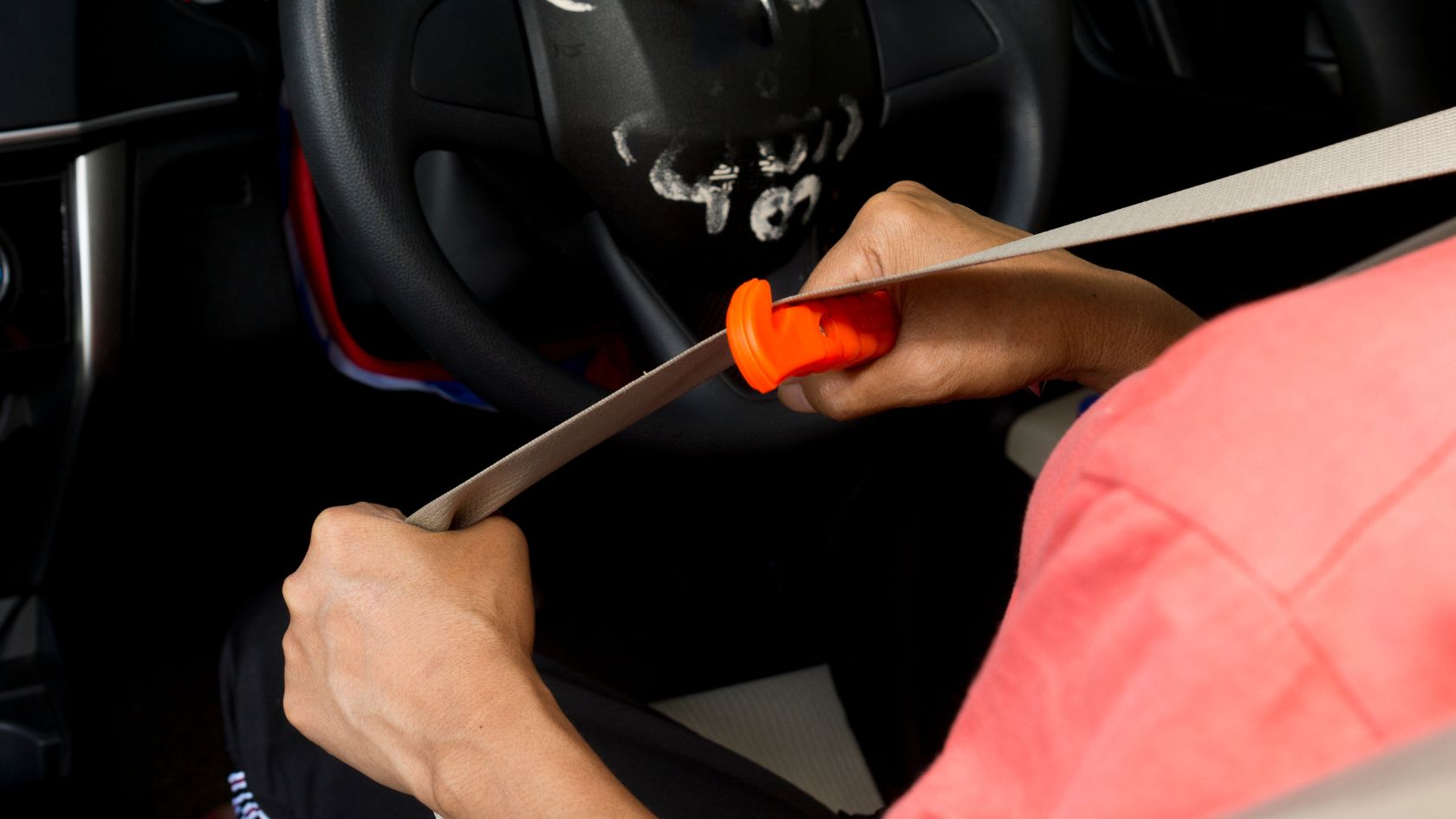
Best Car Emergency Escape Tools (2025): Importance and Buyer’s Guide
Car emergency escape tool is often underestimated because of their rare usage. The purpose of a car emergency escape tool is to help a vehicle owner come out from a difficult situation. While it may be a tool that you hope never to use, its importance cannot be devalued. Keeping a car emergency escape tool can be the difference between life and death in extreme conditions. To help you understand and learn more about an emergency escape tool this post will provide insights on the importance/benefits along with a buyer’s guide to make an informed buying decision. In addition, the post will also highlight the 3-best car emergency escape tools in the market with detailed reviews and pros and cons. A car emergency escape tool is a device that is designed to help people escape from a vehicle in case of an emergency. Such tools are also called car escape tool or life hammer which typically consists of a seat belt cutter and a window breaker. A car escape tool is a useful device to cut a seat belt and break the window to get away from an emergency car situation like a collision, fire, water submergence, etc. As an Amazon Associate, we may earn a small commission if you purchase any product by clicking the link without any additional cost to you. Lifehammer Emergency Escape and Rescue Tool Lifehammer is a reputed brand in the emergency escape tool category. This product has a double-sided hardened steel hammerhead to break the window effortlessly. The power behind the hammerhead is astonishingly strong enough to escape the vehicle quickly and avoid a potentially life-threatening situation. The hammer-like design provides a firm grip which will be helpful in putting full force to break the windows. On the other hand, the ultra-sharp seat belt cutter on the Lifehammer is truly remarkable. The cutter knife is surprisingly sharp that can slice through the seat belt swiftly. However, it’s worth noting that this knife/blade is not replaceable though, you can use it on multiple occasions. One of the standout additions to the Lifehammer package is the inclusion of a mounting bracket. This ensures that the Lifehammer can be attached to a convenient location and remain within arm’s reach in emergencies. On the flip side, the mounting bracket is criticized by users for its small and unreliable structure. Even the screws are not provided to fix the bracket. A better alternative would be to store the tool in the glove compartment or any other location in the car that is easily accessible. Lifehammer is GS certified by the German TUV which is a reputed automotive certificate. This certificate is a symbol of quality and reliability. The storage and portability shouldn’t be a problem as the Lifehammer weighs less than 5 ounces/0.3 pounds. Ztylus Stinger Car Emergency Tool Ztylus Stinger Car Emergency Tool is a multipurpose tool that offers both everyday convenience and life-saving capabilities. The spring-loaded design on Stinger can shatter the car glass efficiently with minimum effort. The other advantage of the structure is the gun-shaped design that makes gripping and handling easier. The razor-sharp blade is located on the top which is small yet effective in cutting the seat belt in quick time. Apart from the two basic features, Stinger also comes with a dual USB charger port which is always a handy and practical element. This additional feature is RoHS and CE certified ensuring protection from over-charging, over-heating, short circuits, etc. However, many users seemed unhappy with the charging speed of this tool which remains below standard compared to a conventional phone charger. Still, Stinger’s USB charging ports are something that will be most used if your car is not equipped with a wireless charging feature. Stinger is small in size and weighs less than 3 ounces which makes it easy to store or carry with you anywhere. The product package does offer a protective case to keep it safely stored. Resqme Emergency Car Escape Tool The Resqme Emergency Car Escape Tool is made to be a lifesaver. One of the main highlights of Resqme is its weight and size which makes it easy to access and use in an emergency situation. The diagonal cutting technique and a razor-sharp stainless steel blade make the effort of cutting the seat belt a breeze. Another impressive aspect of the Resqme tool is its heavy-duty spike made of steel that can shatter the corner of the windows with ease. Thanks to its spring-loaded mechanism resetting the tool for the next use is tension-free. The Resqme tool is designed to attach to a keychain so that you don’t have to worry about complicated installations or finding a suitable place to store it. The tool is extremely lightweight and small which means it can be carried without any effort. At the same time, the design could hinder the gripping aspect. Someone with beefy hands will find it difficult to hold the device properly in emergencies. Another drawback is the accessibility to seat belt cutters. People with finger problems may not be able to remove the clip and use the cutter effectively. All in all, Resqme is a basic yet effective tool to break windows and cut seat belts. However, it lacks the size required for a forceful punch and does not possess any additional features. Still, I would recommend this tool to anyone looking to own an escape tool not hoping to use it very often. Price is another factor that makes Resqme a worthy investment. Why should you have an emergency escape tool in a car? Here are the following important reasons: Life-saver – An emergency tool as the name suggests can be a life-saving equipment in critical situations like car accidents, fires, or submersion in water. In many instances, car occupants get trapped inside the vehicle due to malfunctioning doors and seat belts. Related Read: What can cause a parked car to catch fire This is where an emergency tool can be effectively used to break