






A travel neck pillow can make a long trip much more comfortable, especially when you spend several hours sitting. Be it a flight, train, bus, or car ride, it can be easier to relax and rest by supporting your head and neck.
However, simply placing a neck pillow around your neck doesn’t always provide the best results. How and where you sit, the degree of hardness you adopt, and where you sit can all influence whether you feel comfortable or not.
Travel pillows can also be shaped to fit your sleeping position. Other travellers would like to have this support behind the neck, although they can find it more helpful to have the pillow in front or to their side.
In this guide, you can look forward to some of the most effective tips to apply when using a travel neck pillow and maximize its comfort during your next trip.
1. Position the Pillow According to Your Sleeping Style
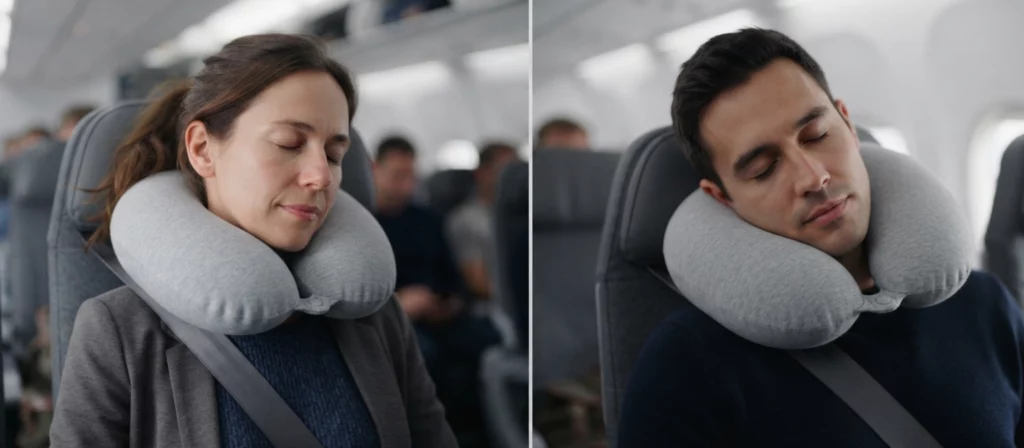
There is no best place to suit all travellers.
If your head tends to tilt forward, adjust the supportive part of the pillow in the front part of the neck or under the chin. This is able to offer a more stable resting position.
In case you tend to lean towards either side of your neck, place the plump sides of the pillow against the sides of your neck. This gives your head a comfortable place to rest as you fall asleep.
Practice as much as you can in various positions before the trip to identify what works best.
2. Try Wearing a U-Shaped Pillow in the Front
One of the most common errors is thinking the opening of a U-shaped travel pillow must rest under your chin.
For some people, you can reverse the pillow to make it more supportive. The thicker part should be at the front to support the chin and keep forward head movement to a minimum.
This could be particularly helpful in cases where your head is inclined to fall forward during flights when you are asleep.
The important thing is to choose the position that provides comfortable support without pushing your head into an unnatural angle.
3. Adjust the Fastener Properly
Many travel neck pillows include a button, clasp, or adjustable strap.
Use it to keep the pillow securely positioned, but don’t tighten it excessively.
A properly adjusted pillow should:
- Stay in place
- Support your neck
- Allow comfortable movement
- Avoid excessive pressure
If the pillow feels restrictive, loosen the fastening and reposition it.
4. Use It Against a Window
When you are sitting next to a plane, train, or automobile window, you can take the pillow to cushion your resting surface.
Place the pillow between your head and window/seat. This may allow some extra padding besides keeping your head off a hard surface.
It is quite effective with those travellers who are used to falling asleep on their side.
5. Combine It with the Headrest
The neck pillow does not necessarily need to substitute your existing headrest.
You can use both together for added support. Mount the seat with your headrest and afterwards the pillow should be placed around the neck.
This will assist in staying in a more comfortable position during rest.
Do not place too much cushions behind your head, as height can push your head forwards.
6. Choose the Right Firmness
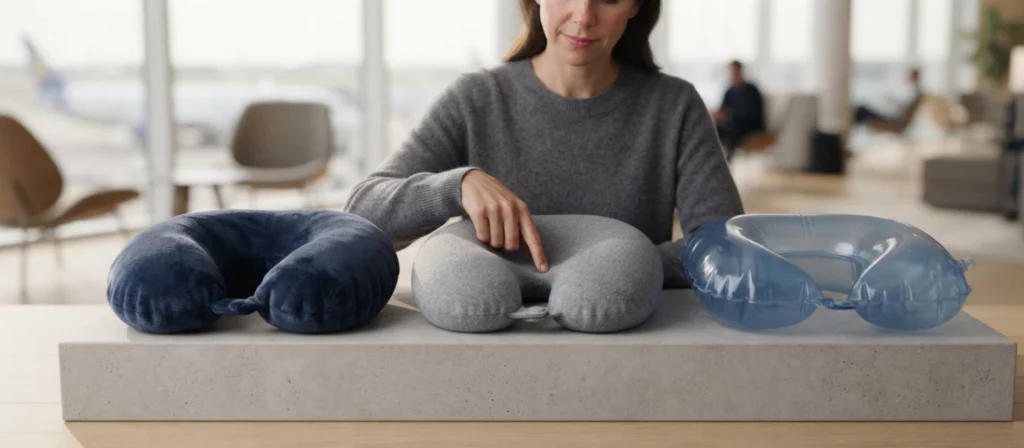
The best firmness depends on personal preference.
A soft pillow may feel comfortable if you prefer gentle cushioning, while a firmer memory foam model can provide more structured support.
Inflatable pillows allow you to adjust the firmness by controlling how much air you add.
Don’t automatically choose the firmest pillow available. Too much firmness can feel uncomfortable during long journeys.
7. Keep the Pillow Clean
Your neck pillow is regularly exposed to your skin and head, so it is best to keep the neck pillow clean.
Preferably, choose a model with a removable, washable cover.
You can also:
- Wash the cover regularly.
- Wipe the pillow according to its care instructions.
- Allow it to dry completely.
- Store it in a clean travel bag.
Regular cleaning keeps the pillow fresh and more pleasant to use.
8. Use the Pillow Before Your Trip
It can take some time to get used to a travel neck pillow, especially if you have never used one before. Instead of trying it for the first time during a long journey, use it at home for short periods.
Try sitting in your usual sleeping position and adjust the pillow until your neck feels properly supported. You can also test different positions, such as wearing it around the back of your neck, in front, or against your shoulder.
This helps you understand how the pillow feels and whether you need to adjust its position, firmness, or fastener. By the time you travel, you will already know how to use it comfortably.
FAQs
1. Is it good to sleep with a travel neck pillow?
You can also use a travel neck pillow while sitting, as it provides extra support for your head and neck. The trick is selecting the appropriate size and positioning it comfortably.
2. What are the disadvantages of using a cervical pillow?
A cervical pillow can also be uncomfortable if its shape or height doesn’t fit you. Others might consider a stiff pillow to be a constraint, with an improperly large or small pillow putting the neck in an uncomfortable position.
3. How to pick a travel neck pillow?
Choose one based on your sleeping position, preferred firmness, material, size, and portability. Consider memory foam if you prefer structured support, an inflatable model if luggage space is limited, or a flexible microbead pillow if you prefer softer cushioning.
4. Where to put a travel neck pillow when travelling?
Carry it somewhere close to you, to your backpack with a clip, your carry-on, or around your neck where it fits.
When you know how to position and properly adjust a travel neck pillow, it can prove of great use. Rather than just wearing it around your neck, try different positions depending on how you usually hold your head.
You may want to place it in front of your head (against the window), in front of your chin, or at the sides of your neck; what matters is the same: comfortable, natural support.
Long trips on airplanes, trains, buses, and road trips can be much more comfortable and easier with the right pillow and a slight movement.