




The demands on your eyes when driving during the day and driving after dark are very different. The bright daylight, glare and reflections as well as shifting light levels may render it uncomfortable to see during the day. The difficulty of night is different. The amount of light available is reduced and the Headlights, streetlights and reflections will suddenly seem a lot brighter.
Due to these variations, what makes perfect glasses in daytime driving not necessarily be the best glasses in driving at night. Prescription strength, frame design, lens tint, light transmission, anti-reflective coating, and lens tint can all have impacts on your behind-the-wheel comfort.
This guide explains the key differences between day and night driving glasses and what you should consider before choosing either.
Day Driving Glasses: What Makes Them Different?
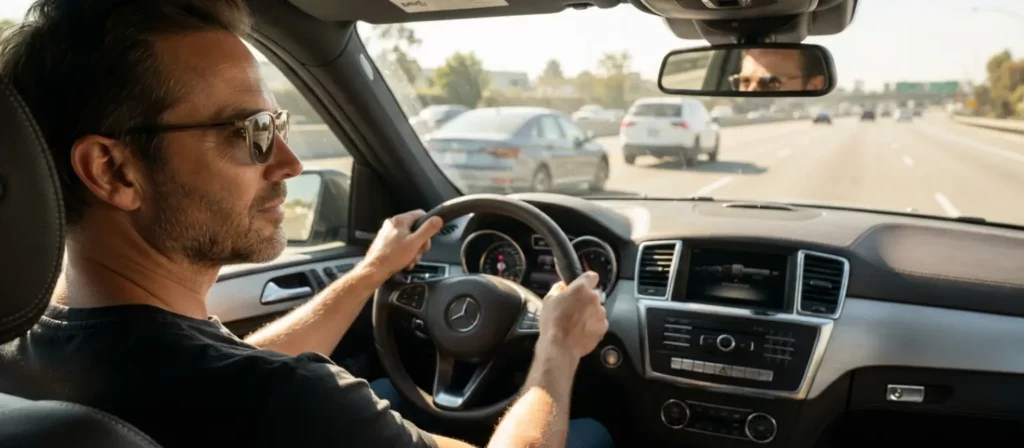
During daylight, your eyes receive significantly more light. Bright sunshine reflecting from roads, buildings, other vehicles, and wet surfaces can cause discomfort and glare.
Daytime driving glasses may therefore include:
- UV protection
- Tinted lenses
- Polarised lenses
- Anti-reflective coatings
- Prescription correction
- Photochromic technology
Polarised Lenses for Daytime Driving
Some of the reflected glare can be minimized by the use of polarised lenses, especially on wet road surfaces. This can help make driving during bright days more comfortable.
But it is not a universal solution, and polarisation is not the answer. Polarised lenses can see some vehicle displays or other screens as different and therefore drivers should ensure that they can see their dashboard clearly and other vital information.
Photochromic Lenses
Photochromic lenses automatically become darker when exposed to UV light. They could be convenient for individuals who frequently move between indoors and outdoors.
Their performance within a vehicle, though, may be restricted due to the presence of too many windshields that absorb too much of the UV light that is required to trigger the darkening effect. The Lensdy guide also adds that photochromic lenses might not shade completely within cars.
Night Driving Glasses: What Changes?
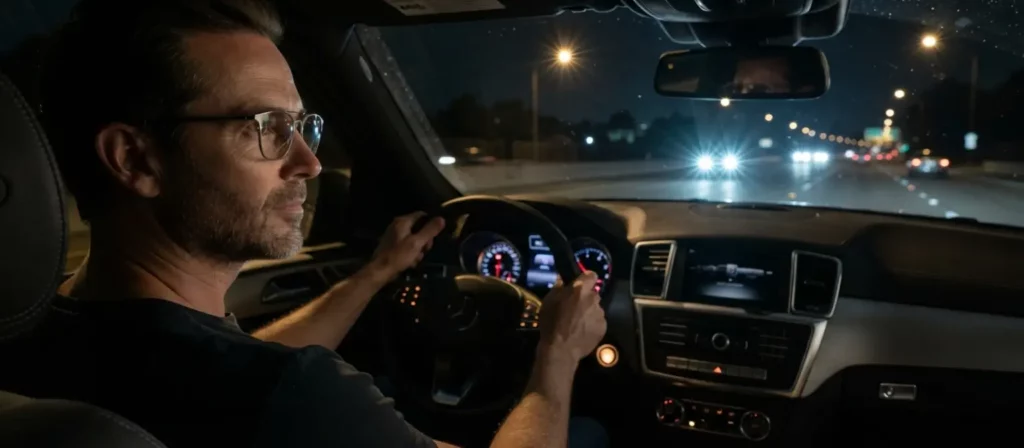
Nighttime driving is almost the opposite of daytime driving. Instead of trying to reduce excessive sunlight, your eyes need to work with a limited amount of available light.
At night, drivers commonly deal with:
- Oncoming headlights
- High beams
- Streetlights
- Windshield reflections
- Glare from wet roads
- Reduced contrast
- Dark areas outside illuminated sections of the road
For this reason, night-driving eyewear should generally allow sufficient light through the lenses.
Do You Need Special Glasses for Night Driving?
Night-driving glasses are not necessary for everyone.
Assuming that your vision is clear and you do not have difficulties when driving with no light, regular prescription glasses might be just ideal.
When wearing glasses, however, make sure your prescription is up to date. An expired prescription may cause poor visibility of signs and road markings and obscure objects that are far away, particularly when it is not bright during the night.
When you often find yourself with a halo, or glare, blurred vision, or not seeing with clarity at night, you should start with an eye check-up rather than just go out and get corrective glasses.
How to Reduce Glare While Driving at Night?
Glare cannot always be eliminated, but you can reduce unnecessary sources of it.
Keep Your Windshield Clean
Smudges and dirt can scatter light and make headlights appear more distracting. Clean both sides of the windshield regularly.
Clean Your Glasses
Even small fingerprints can create additional reflections around bright lights. Use an appropriate lens cloth and cleaning solution.
Check Your Headlights
If your headlights are incorrectly aimed, they may provide poor illumination or create unnecessary glare for other road users.
Avoid Looking Directly at High Beams
When an approaching vehicle has excessively bright headlights, avoid staring directly into them. Keep your attention on your lane and use the road markings as a visual guide where appropriate.
Adjust Your Speed
If visibility becomes poor because of rain, glare, fog, or darkness, reduce your speed accordingly. Glasses should never be treated as a substitute for safe driving.
How Age Can Affect Night Driving Vision
Night driving can become more challenging with age. As you get older, your eyes may take longer to adjust to changes in light, while bright headlights and streetlights may feel more uncomfortable. Some drivers may also notice reduced contrast, making it harder to distinguish road markings, pedestrians, or objects against a dark background.
These changes can make the difference between daytime and nighttime driving more noticeable. Regular eye examinations can help identify vision changes and ensure that your prescription is still suitable for driving. If you notice increasing glare, halos, blurred vision, or difficulty seeing clearly after dark, it is worth discussing these changes with an eye-care professional.
Related Read: Best Night Driving Glasses
FAQs
1. Are day-night glasses good for eyes?
Day-night glasses can be useful when they are appropriately designed for the lighting conditions and your vision needs. Clear prescription lenses with suitable coatings can work well for nighttime driving, while tinted lenses may be more appropriate for bright daytime conditions.
2. Do I need special glasses for night driving?
Not necessarily. Many drivers can use their regular clear prescription glasses at night. Specialised night-driving glasses are not required for everyone. If you’re experiencing glare, halos, blurred vision, or difficulty seeing road signs, have your vision checked first.
3. Why is my vision worse at night driving?
Night driving can feel more difficult because there is less available light and bright headlights create strong contrast. An outdated prescription, eye strain, dirty lenses, windshield reflections, dry eyes, or certain eye conditions can also contribute.
4. How do I stop glare at night driving?
Keep your windshield and glasses clean, ensure your headlights are properly aligned, and avoid looking directly into approaching high beams. Anti-reflective lens coatings may also help reduce reflections from glasses.
5. Why are my eyes so sensitive to light at night while driving?
Bright headlights can feel especially intense when your eyes are adapted to a darker environment. Light sensitivity may also be affected by eye fatigue, dry eyes, an incorrect prescription, or certain eye conditions.
Daytime and nighttime driving require different visual strategies. During the day, your priority is usually managing bright sunlight, UV exposure, and reflected glare. At night, your eyes need as much useful light as possible while dealing with intense headlights, reflections, and low contrast.
That is why the darkest or most heavily tinted glasses aren’t necessarily the best choice after sunset. For many drivers, clear lenses with the correct prescription and a suitable anti-reflective coating may be more appropriate for nighttime driving.