



Driving at night may not be easy, especially when you are faced with bright headlights, streetlights, reflections, or limited visibility. That is why special glasses sold as night driving glasses have become a trend among drivers looking for a more convenient way to drive.
These glasses normally have yellow or amber colored lenses and are promoted as having the ability to decrease glare, enhance contrast, and make objects easier to watch in low-light circumstances. But do they really provide these benefits?
The answer is more complicated than many advertisements suggest. Research has found that yellow-tinted lenses do not necessarily improve important aspects of night-driving performance.
That doesn’t mean every pair of glasses is useless. Lens quality, prescription accuracy, anti-reflective coatings, and your individual vision can all influence how comfortable you find driving at night.
What Are Night Driving Glasses?
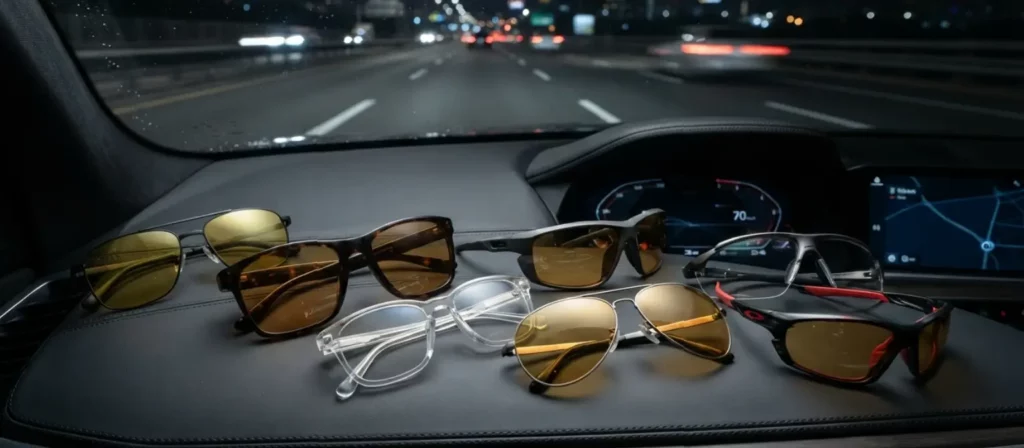
Night driving glasses are eyewear products made for people who want more comfort driving in the dark.
Many products use:
- Yellow or amber-tinted lenses
- Anti-reflective coatings
- Lightweight frames
- Prescription or non-prescription lenses
- Wraparound designs
The yellow tint is intended to change the amount and type of light reaching the eye. Some manufacturers claim this can reduce glare or improve contrast.
What About Anti-Reflective Coatings?
Anti-reflective coats and just adding yellow do not equate.
The headlights, streetlights, and illuminated signs’ projections may especially be distracting, or those signs, which in addition to the prescription glasses you carry. An effective anti-reflective finish can be used to minimize lens-surface reflections.
When you require prescription eyewear then it could be more beneficial to have your prescription checked and have your lenses cleaned and well maintained than buying generic yellow-tint glasses.
In the case of drivers who already possess clear prescription lenses, an eye-care professional can help identify the case of when there should be an anti-reflective coating.
How to Reduce Headlight Glare Without Relying on Tinted Glasses
There are several practical ways to make nighttime driving more comfortable.
Keep Your Windshield Clean
Glare may seem to be impaired by a dirty windshield. Factors such as dust, fingerprints, and interior residues have the potential to reflect the light emitted by the headlights above and cause distracting reflections.
Keep Your Glasses Clean
If your lenses are dirty, clean them and stay safe at night on the road. Fingerprints and smudges may cause more bright lights to have halo effects.
Use a proper lens-cleaning cloth instead of clothing or tissue, which can scratch your glasses.
Check Your Headlights
Properly aimed headlights can improve your own visibility while reducing unnecessary glare for other road users.
If your headlights appear unusually high, uneven, or misaligned, have them checked.
Slow Down When Visibility Is Poor
Glare, rain, fog, and darkness can make it harder to detect hazards. The special glasses only help in adjusting the speed to the real-life situation and do not compensate for the decreasing visibility.
Should You Wear Night Driving Glasses During the Day?
It depends on the lens design.
Prescription glasses can usually be used both in daytime and at nighttime when they are fitted to your eyesight requirements. The lenses, however, containing yellow or amber coloring, alter color perception and may not be applicable in all situations.
If you want to wear the same pair of glasses day and night, choose clear, optically corrected lenses rather than highly color-tinted ones.
Are There Downsides to Night Driving Glasses?
The primary issue with yellow-colored glasses is that they lower the quantity of light that gets to the eyes. At night, when available light is already limited, this isn’t necessarily desirable.
Other possible disadvantages are:
- Distorted colour perception
- Reduced available light
- Poor fit
- Reflections from low-quality lenses
- False confidence about improved night vision
A pair of glasses that makes the road appear more comfortable may still not improve your actual ability to detect hazards.
Common Mistakes to Avoid

Drivers sometimes make night-driving conditions worse without realising it.
Avoid:
- Buying glasses solely because they have yellow lenses
- Driving with scratched or dirty lenses
- Ignoring an outdated prescription
- Driving with a dirty windshield
- Relying on glasses to compensate for poor visibility
- Assuming reduced glare always means better vision
- Driving too fast for nighttime conditions
Good visibility is a combination of clear vision, vehicle maintenance, clean windows, and sensible driving behaviours.
Related Read: Best Night Driving Glasses
FAQs
1. Do nighttime driving glasses actually work?
Night-driving glasses, which are yellow-tinted, have not been found to enhance crucial night-driving activities like pedestrian detection.
2. What are the negative effects of night vision goggles?
In the case of colored glasses worn like a night-driving aid, darker or heavily coloured glasses might cut down the quantities of light coming into the eyes. This might not be desirable in truly dark conditions.
3. Can I wear night driving glasses during the day?
Some night-driving glasses can technically be worn during daylight, but yellow or amber lenses change how colours and brightness appear. They may not be ideal for every daytime situation.
4. Are night driving glasses good for night driving?
It depends on what you mean by “good.” Yellow-tinted glasses are marketed for glare reduction, but research has not demonstrated that they improve pedestrian detection or reduce the performance effects of oncoming headlights.
Night driving glasses can seem like a straightforward answer to headlight glare and low visibility, but the evidence is less convincing that yellow-tinted glasses instantly improve night vision.
If night-time driving has become challenging, you need to look at the bigger picture. Clean your windshield and glasses, maintain your headlights in good condition, and get your eyesight tested in case you are having ongoing trouble.
Most importantly, don’t let colored glasses give you a false sense of protection. Clearly seeing, an appropriate prescription, a well-kept car, and driving cautiously is a lot more important to be safe in the dark.