




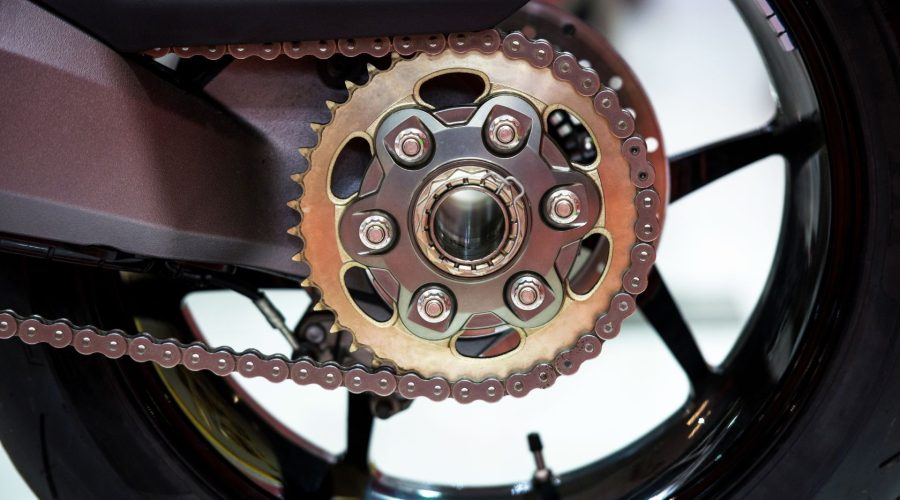
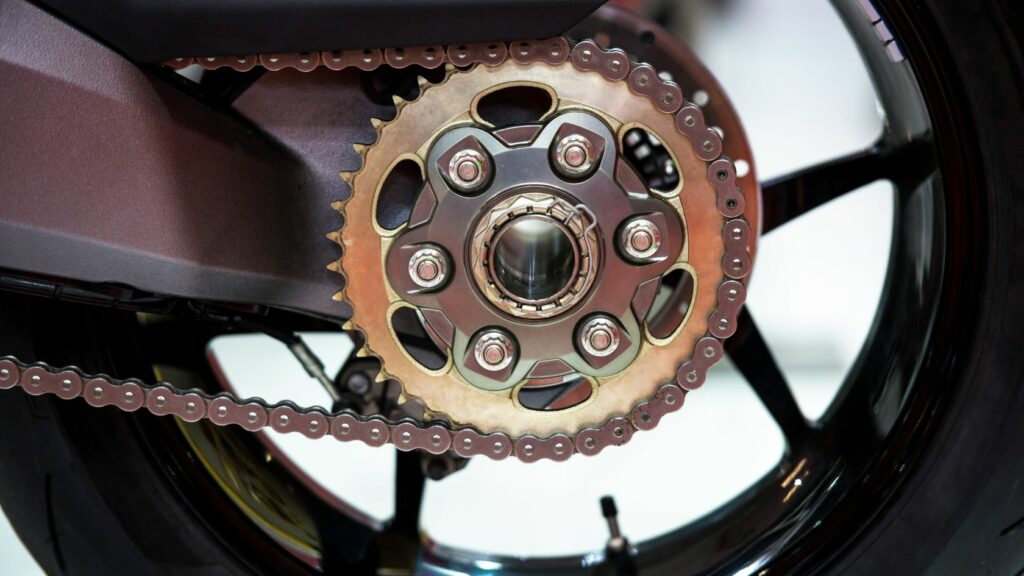
When it comes to motorcycle maintenance, one critical aspect that riders often overlook is the condition of the chain.
A loose motorcycle chain might not only affect the performance of your bike but can also lead to safety concerns. But can a loose motorcycle chain cause vibration too? If yes, what are the symptoms and causes of loose motorcycle chains? How to fix a loose motorcycle chain?
In this article, we’ll explore the answers to all the above questions in depth and shed light on the relationship between a loose motorcycle chain and vibrations.
Can a Loose Motorcycle Chain Cause Vibration?
Yes, it can. When a chain has excessive slack, it may wobble and vibrate as it moves over the sprockets. This vibration can be felt in the handlebars and foot pegs, affecting the overall riding experience.
Riding with a loose chain can impact acceleration, increase wear and tear, and eventually lead to the more serious situation of losing control and falling prey to accidents.
Lack of regular maintenance, incorrect chain tension, extreme riding conditions, damage or accidents, and aging are some of the causes that can make a motorcycle chain loose.
Learning about the loosening symptoms, identifying the causes, and taking preventive steps in a timely manner are crucial to keep your motorcycle chain in good shape and improve your riding experience.
What Happens When the Motorcycle Chain is Loose?
The motorcycle chain is an integral part of the drive train system that connects the motorcycle’s engine sprocket to the rear wheel sprocket. With this connection, a motorcycle gets rotational motion through the transfer of torque.
So, when a chain becomes loose, it can have a range of negative effects on your motorcycle’s performance:
First and foremost, if a chain is loose the transmission of torque is reduced. This means a lack of power to the engine directly impacts the rotational motion of the rear wheel. As a result, you will feel decreased acceleration and a loss of overall performance in your motorcycle.
Secondly, since the chain is responsible for connecting the sprockets and other drive train components there are extreme chances of wear and tear on these parts due to weak connection.
In the absence of timely action, accelerated wear and tear on the chain can lead to costly repairs and replacements.
At the same time, a loose chain can derail from the sprockets, posing a significant safety hazard. If the chain comes off while riding, it can cause a loss of control and potentially lead to an accident.
Symptoms of a Loose Motorcycle Chain
To determine if your motorcycle chain is loose, you can sense the following symptoms while riding:
Vibration – As mentioned earlier, one of the most noticeable signs of a loose chain while riding is increased vibration. You’ll feel this through the handlebars, foot pegs, and sometimes even the seat. This vibration can vary in intensity but tends to worsen as the chain becomes looser.
Sluggish Acceleration – A loose chain can result in sluggish or delayed acceleration. You might notice that your bike doesn’t respond as quickly or smoothly when you twist the throttle. It can feel like a loss of power.
Unusual Noise – A loose chain can produce a distinct clunking or slapping noise as it moves over the sprockets. This noise is often more pronounced at low speeds or when accelerating.
Jerky or Inconsistent Power – When the chain is loose, it may skip or jerk, causing inconsistent power delivery to the rear wheel. This can be unsettling, especially when trying to maintain a steady speed.
Wheel Wobble – An additional symptom of a loose chain causing vibrations is a wobbling rear wheel. If you observe lateral movement in the rear wheel as you ride, it’s a clear indication that the chain has excessive slack. This uneven movement contributes to the motorcycle’s vibration.
These are the prominent symptoms of a loose chain while riding however you can also identify symptoms of a loose chain when the bike is idle. Here are some of them:
Excessive Chain Slack – When the motorcycle is stationary, you can visually inspect the chain for excessive slack. A loose chain will hang down further than it should, and you may even be able to touch the bottom of the chain with your finger.
Visible Misalignment – It’s essential to check the alignment of the chain with the sprockets when the bike is stationary. If you observe that the chain appears off-center or not in a straight line with the sprockets, it could indicate a loose chain.
Chain Noise When Revving – While the bike is idle, you can rev the engine gently and listen for any abnormal sounds coming from the chain area. A loose chain may produce a rattling or slapping noise even when the bike is not in motion.
Difficulty Rolling the Bike – If you try to push the bike while it’s in neutral, a loose chain can make it feel resistant and less smooth to roll. It might feel like something is hindering the movement.
Causes of a Loose Motorcycle Chain
To address the issue of a loose motorcycle chain appropriately, it is essential to understand the causes in detail.
Here are the common reasons that can make a motorcycle chain loose:
Neglected Maintenance
Failure to perform routine chain maintenance, including cleaning and lubrication, can cause premature chain wear and, consequently, chain slack.
If the chain lubrication is insufficient or irregular, it can accelerate wear and increase friction between the chain links and sprockets. This can lead to faster stretching and, ultimately, a loose chain.
Normal Wear and Stretch
Over time, chains naturally undergo wear and stretch due to aging, high tension, and friction they endure during operation.
In terms of aging, chains have a limited lifespan, and older chains are more prone to stretching and becoming loose.
On the other hand, consistent wearing and damage on sprockets can accelerate chain wear. This may cause the chain to loosen prematurely.
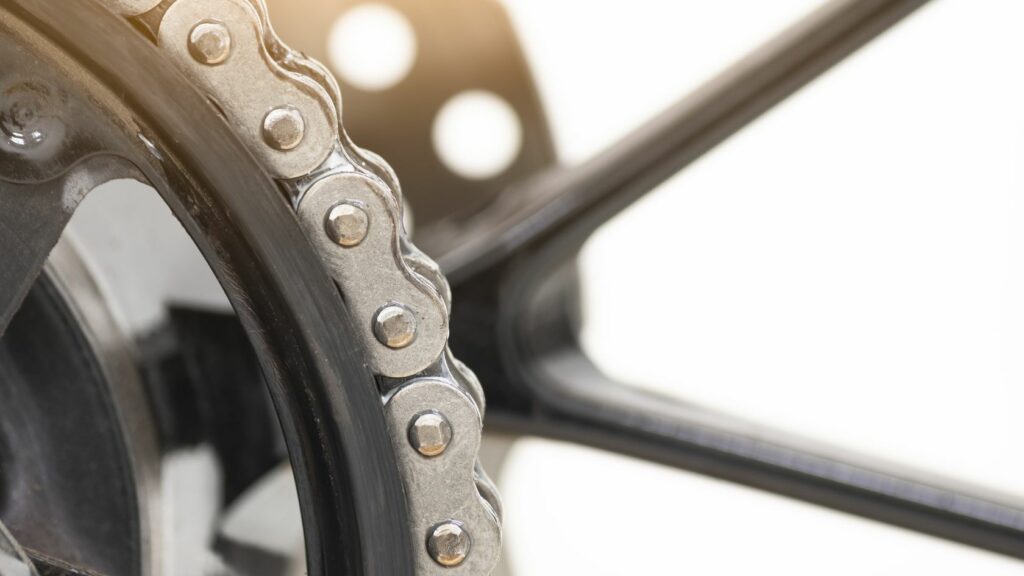
Improper Chain Installation
If the chain was not installed correctly or was not aligned with the sprockets during installation or replacement, it can lead to uneven tension and eventual chain loosening.
For instance, the rear wheel axle. If a rear wheel axle is not properly secured while installing a chain, it can affect chain tension.
Extreme Riding Conditions
Riding in extreme conditions, such as off-road or in harsh weather, can accelerate chain wear and contribute to chain looseness if not properly maintained.
Extreme conditions are also responsible for damaging the chain components leading to bents or broken links.
If the conditions are not conducive for riding, it can result in accidents impacting the chain or related components, leading to chain slack or misalignment.
Preventing and Fixing a Loose Motorcycle Chain
Regular chain maintenance is essential to prevent the chain from becoming loose and causing vibration. Here are some steps to keep your motorcycle chain in good condition:
Proper Inspection
The foremost step is to conduct regular and proper inspections. Examine the chain for signs of wear or damage such as severe rust, warps, bends, cracks, or complete breakage in the chain links.
If you notice any of these issues, it’s advisable to replace the entire chain. Broken chains are not worth salvaging and should be replaced entirely.
Cleaning
Regularly cleaning your motorcycle chain is instrumental in preventing dirt and debris build-up, which can lead to rust and permanent damage.
Aim to clean your motorcycle chain approximately every 600-700 miles or depending on the usage and riding conditions.
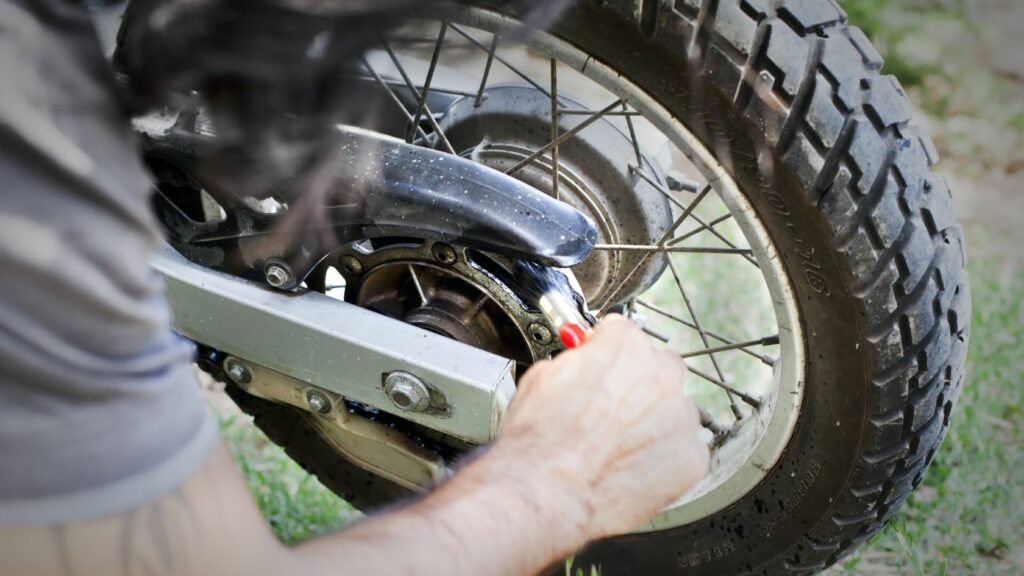
To clean the chain, place the motorcycle on the center stand, rotate the back wheel, and apply chain cleaner while ensuring the entire chain is coated.
Related Read: Cleaning your motorcycle chain with and without a stand
After a few minutes, use a sponge or soft bristle brush to remove debris and cleaner.
After cleaning the chain, lubricate it with motorcycle-specific chain lube. This helps reduce friction and wear.
Sprocket Inspection
The condition of your sprockets directly affects the chain’s health. It is recommended to inspect your sprockets for signs of wear, such as hooked or pointed teeth to avoid loosening over extended use.
Ensure the sprocket teeth are evenly spaced, have a consistent thickness, and have relatively flat tops. Worn-out sprockets will have sharper teeth and uneven spacing. To be on the safer side, replace them if needed.
Adjust Chain Tension
Similarly, chains should be tensioned according to the manufacturer’s specifications. Incorrect tension, either too tight or too loose, can cause problems. Over-tightening can strain the chain, while under-tightening allows excessive slack.
Also Read: Adjusting Motorcycle Chain Tension Correctly
Ensure to check the chain tension as per your motorcycle’s manufacturer’s recommendations. The ideal chain tension typically falls between 25-35mm of play when pressed at the midpoint of the chain. Adjust it if necessary to maintain the proper tension.
Chain Replacement
Chains do not live infinitely. If your chain is significantly aged or damaged, it may be time for replacement. Motorcycle chains are generally affordable and relatively easy to install.
If you find that your motorcycle chain is beyond repair, consider replacing it immediately. You can often replace it yourself or by taking it to a professional.
Final thoughts
A loose motorcycle chain can indeed cause vibrations, but this is just one of the many issues it can lead to. If neglected for a long time, a loose motorcycle chain could be hazardous while riding and can put your life in danger.
By taking care of your chain and drive train, you’ll not only prevent vibrations but also enhance the overall riding experience and extend the life of your bike.
Regular maintenance and proper tensioning are crucial for ensuring the safety and performance of your motorcycle.
If you’re unsure about how to adjust or maintain your motorcycle’s chain, be sure to follow the tips and guidelines from this post.
Moreover, from a technical aspect, it’s always a good idea to consult your motorcycle’s owner’s manual or seek the assistance of a qualified mechanic in case the loosening issue persists.