



Driving a long distance may strain your lower back particularly when you are sitting in the same position and several hours to drive. Although normal stops and an adequate posture behind the wheel are crucial, the seat can be made more comfortable with lumbar support.
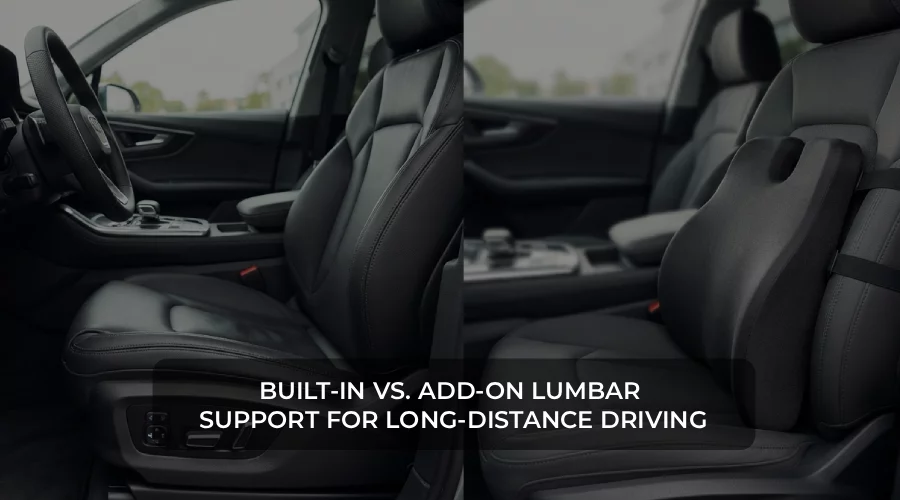
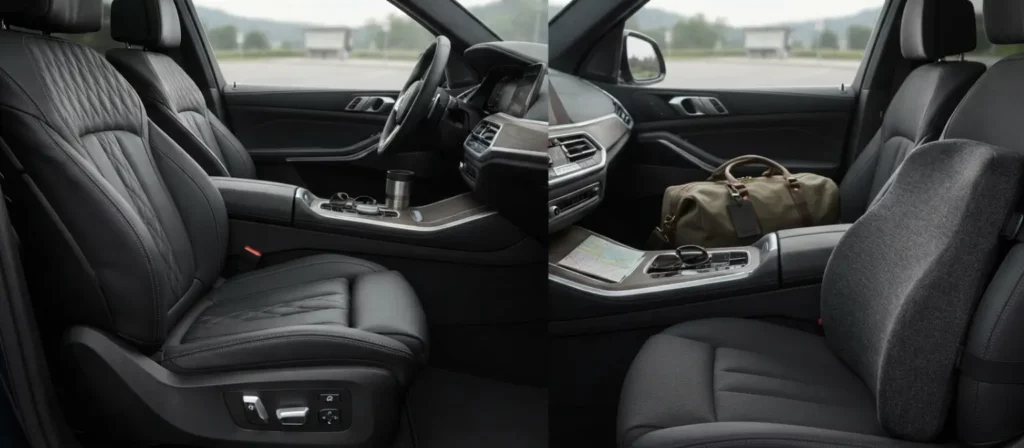
Ultimately, drivers either have built-in lumbar support (incorporated into the car seat) or they can use a lumbar cushion as an attachment to an existing seat. They both can support the lower back, but in different ways.
Which is the better choice between the two for long-distance driving? The solution varies depending on your car, the comfort you need, and the travel frequency.
What Is Built-In Lumbar Support?

A lumbar support is the component of a car seat that supports the lower part of your back, commonly referred to as the lumbar region. Spending a lot of time sitting, one can easily slouch the neck or lose the natural arch of the spine. An extended lumbar support fits the seatback with the help of a lumbar support that is placed where the back of the chair is lower.
Lumbar support may be built directly into the seat or added using a separate cushion. Depending on the vehicle, the support may be fixed in one position or adjustable according to the driver’s preference.
How Does Lumbar Support Work?
A car seat’s design includes some lumbar support. It can either be a permanent shape or a mechanical system that permits altering the degree or the location of support, again, depending on the vehicle.
More sophisticated seating systems let a driver adjust the depth or height of support. The primary benefit of an integrated system is that it is shaped to fit the seat. It also cannot move around during a drive, unlike a cushion, which may need to be repositioned now and then.
The comparison between a lumbar cushion and integrated support is useful because the two options serve different needs.
What Is an Add-On Lumbar Support?
An add-on lumbar support is a separate cushion placed between your lower back and the car seat. These cushions are commonly made from foam, memory foam or inflatable materials.
The biggest benefit is flexibility. You can add lumbar support to almost any vehicle, making it a practical option if your car does not have a built-in system.
Many cushions also come with adjustable straps to help keep them in place. They can be removed when not needed and transferred between different vehicles, making them useful for frequent travellers.
Built-In Lumbar Support: The Main Advantages
Built-in lumbar support is often the more convenient option when your car already has a well-designed adjustable system.
It Stays in Position
Because the support is part of the seat, it is less likely to move while you drive. This can be particularly useful on long journeys when frequent repositioning can become distracting.
It Works With the Seat Design
A built-in system is designed as part of the overall seating structure. Adjustable systems can allow drivers to find a setting that suits their body shape and preferred driving position.
Some integrated systems offer fixed, adjustable or responsive support designs, with adjustable options generally providing more flexibility for different users.
It Creates a Cleaner Setup
There are no additional straps, cushions or accessories attached to the seat. For drivers who prefer a simple and uncluttered cabin, built-in support can be the more convenient choice.
Add-On Lumbar Support: The Main Advantages
An add-on cushion can still be an excellent option, particularly if your car lacks suitable built-in support.
It Can Upgrade Almost Any Car Seat
You do not need to replace or modify your car seat to add extra support. A well-fitting cushion can provide additional lower-back contact in a vehicle with a relatively flat seatback.
It Is Portable
One of the biggest advantages of an add-on cushion is portability. You can move it between vehicles or use it in other seating environments when appropriate.
It Can Be More Affordable
Adding a lumbar cushion is usually more practical than replacing a car seat or upgrading to a vehicle with additional seat features.
Built-In vs. Add-On: Which Is Better for Road Trips?
There is no single answer for every driver. Built-in support is generally more convenient when it is adjustable and fits your body comfortably. It stays in place and works as part of the seat.
For a long road trip, consider these points:
- Choose built-in support if your vehicle has an adjustable system that feels comfortable.
- Choose an add-on cushion if your existing seat lacks lower-back support.
- Look for adjustability if more than one person regularly drives the vehicle.
- Consider portability if you use multiple cars or travel frequently.
- Avoid excessive thickness, as it may affect your driving position.
For more practical guidance, read our guide on how to choose a car lumbar support cushion for road trips.
FAQs
1. What is the best lumbar support for travel?
The best lumbar support for travel depends on where and how you plan to use it. An adjustable built-in system is convenient when travelling in your own car. A lightweight add-on cushion or inflatable support may be more practical if you use different vehicles.
2. Which type of lumbar support is best?
There is no single type that works best for everyone. Adjustable built-in lumbar support is often convenient because it stays in position and can be tailored to the user. Add-on cushions are useful when portability and flexibility are more important.
3. Can you add lumbar support to a car?
Yes, you can add lumbar support to many car seats using a separate lumbar cushion. Choose a cushion that fits securely and does not interfere with the seat belt, airbags, head restraint or vehicle controls. Test your seating position while safely parked before taking a long journey.
4. What can I sit on when I drive to avoid lower back pain?
A properly adjusted car seat should always be your starting point. If you need additional support, a suitable lumbar cushion may improve comfort by supporting the natural curve of your lower back.
Built-in and add-on lumbar support can both make long-distance driving more comfortable. Built-in support offers a clean and stable solution, particularly when it is adjustable. Add-on cushions provide flexibility and can improve the comfort of vehicles without integrated lumbar support.
The best choice ultimately depends on your car, body shape and personal comfort preferences. Start with a properly adjusted seat, use lumbar support moderately and take regular breaks on longer journeys.