



Being a motorcycle owner, is it important to know why are motorcycle tire treads opposite? I am sure a lot of us do.
The design pattern of tire treads does have a major role to play. Such pattern is not designed to attract more customers and increase sales as some people might think.
On the contrary, tire tread patterns have a lot to do with the traction and stability factors of a motorbike. These factors are directly linked to a motorcycle owner’s safety.
Not only this but knowing about tire tread patterns will also help you know about the difference and relevance between the front and rear tires.
Looking to learn more about it? Keep reading!
Why are motorcycle tire treads opposite?
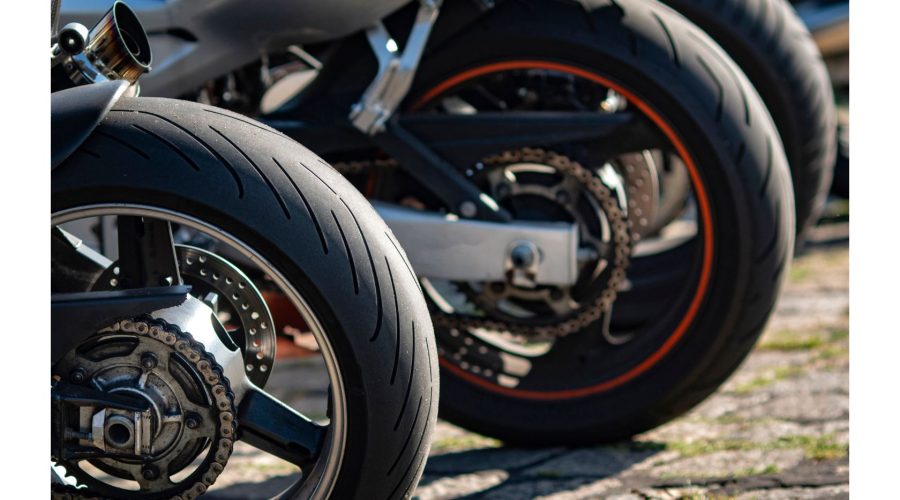
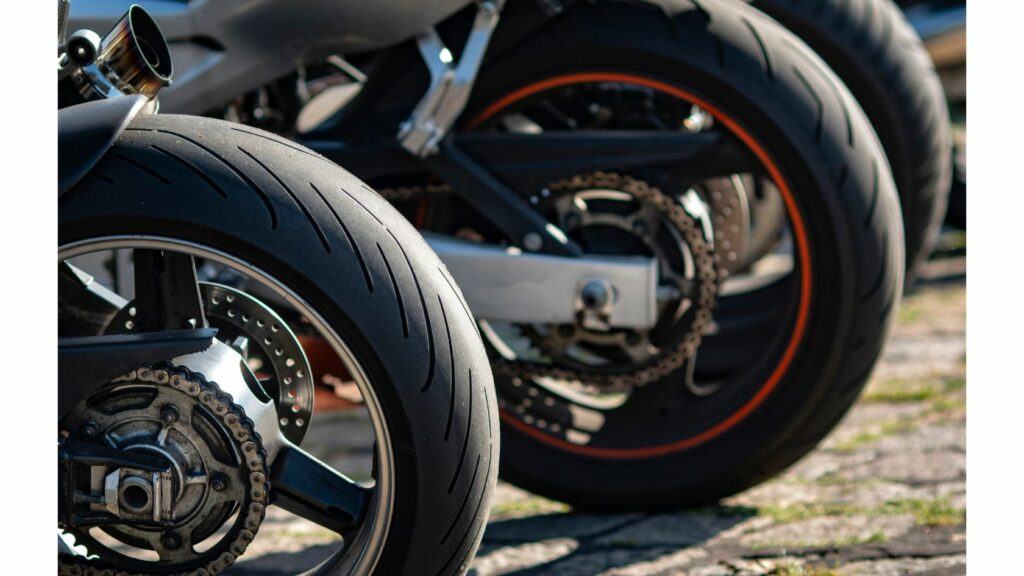
Motorcycle tire treads are designed in the opposite direction on front and rear tires to provide proper grip, stability, and better traction.
Normally, the front tires of a motorcycle are designed with inverted tread patterns. Such tread design is helpful in creating appropriate contact with the road surface.
Proper contact is helpful in scattering the debris, dirt, and water away in dry conditions and dispersing the rainwater from the contact patch in wet conditions.
Similarly, the rear tires of a motorcycle carry an outward tread pattern to improve the traction levels while accelerating, decelerating, and cornering.
The outward tread pattern also helps reduce the risk of hydroplaning by allowing to dissipate the water between the tire and the road.
Some of the other reasons for the opposite tread pattern are reduction of noise levels, durability, and minimum tire blowouts.
Let’s elaborate on these reasons further to understand the opposite treading patterns.
Better grip and stability
As we all know (assuming), motorcycle front tires are mainly responsible for braking and controlling the corners.
The tread patterns on front tires are designed keeping these aspects in mind. A majority of tires are stamped with V shape pattern with an incoming flow.
The design contains large grooves and channels so that it can throw away the on-road obstacles from sticking to the contact patch. This makes the grip of a tire more firmed and balanced with the road surface.
The effects of tread patterns are more beneficial in rainwater. When a motorcycle crosses through a road containing a bulk of water it leads to the building of a water layer between the wheels of the vehicle and the road surface. This is called Hydroplaning or Aquaplaning process.
Here is a small video that will help you understand the impacts of a tread pattern in rainwater. Although it is a bicycle it doesn’t change the direction and dissipation of water that takes place on motorcycle tires.
The aquaplaning process is responsible to create a gap between the tire and the road because of the thrust of water it generates below the leading edge of a tire.
This causes a loss of contact between the tire and the road making it skate with the flow of water rather than running.
If the tire has no contact with the road surface obviously a biker will not be able to control it even in the form of braking.
If the brakes are applied under these circumstances, in all likelihood a bike is bound to skid through instead of stopping because of the water layer.

This is where the grooves are designed on the front tires to dissipate the water away from the contact patch to keep the tires grounded and improve the grip and stability.
But then, why the rear tire treads are in the opposite direction? Are they protected from the hydroplaning or aquaplaning process? The answer is…
Better traction
Rear tires have an outward tread pattern that is helpful in improving the traction of a motorcycle.
The rear tires are obliged to accelerate the motorbike which keeps the wheels moving forward.
The shape of a motorcycle plays a prominent role here. The motorcycle is aerodynamically designed to absorb the airflow at higher speeds performed mainly by rear tires.
The force of air while speeding causes a motorcycle to feel the lift throughout its body and especially at the bottom. This is the reason when applying sudden brakes, you will see many bikers rising above the ground with rear wheels in the air.
Even if the brakes are not applied, the flow of air will be felt around the feet and waist on a moving motorcycle that forces the top clothing of a motorcyclist to come out.
Secondly, the rear tires of a motorcycle too keep the receding water at bay with the outward tread pattern. Here, the force of water is already dislodged by the front tires and whatever is left out is just pushed away by the rear tires.

The risk of hydroplaning is already taken care of by the inverted treading pattern of the front tires and so, the main act of the rear tires is to run through the half-dry corridor created by its front sibling.
If you have the same tread pattern as that of a front tire it will reduce the traction levels creating acceleration/deceleration issues resulting in limited airflow tolerance.
Reduced noise levels
The inverted tread pattern of the front tire is helpful in reducing unwanted noise generated by the spinning of wheels.
As we now know an inverted tread pattern is instrumental in dispersing water, dirt, and other obstacles it is also capable of dissipating the air efficiently when the motorcycle is in motion.
The excessive airflow dampens the sound waves produced by the wheels while running. Additionally, an inverted tread pattern creates a larger contact patch with the road for better grip and handling which also keeps the noise under control.
Minimum tire blowouts
Eliminated risk of aquaplaning/hydroplaning is equal to eliminating risks of tire blowouts.
In order to keep the blowouts away, a tire needs to be run on balanced air pressure. One of the main causes of tires losing air is improper friction created by the gap between the tire and the road surface.
Related Read: Why do car tires explode?
By keeping the on-road debris, and water away inverted tread patterns help the tire maintain balanced contact with the road. Another reason for tire blowouts is overheating.
Again, the larger grooves and channels of the inverted tread patterns disperse the heat that gets built up within the tire due to over-speeding and continuous friction.
Improved durability
When you have balanced air in the tires with proper friction/contact with the road there is no doubt your motorcycle tires have a longer life.
One of the other reasons tread patterns are created on tires is to offer proper cushioning and stability to protect the vehicle from running vibrations.
The reversible tread patterns offer a harder grip which makes the tire stronger to face roadside difficulties. Hence, opposite tread patterns are responsible for a longer lifespan of tires.
Final thoughts
We have seen the benefits of opposite tire treads and one cannot ignore the fact that tires with such patterns do look attractive.
Apart from the looks, opposite tread patterns give your motorcycle tires better grip, stability, performance, and more importantly increased durability.
If you are considering buying new tires for your motorcycle or are just curious to know about the tread patterns before buying then prefer the ones with opposite tread patterns.
I hope you have understood the concept of the opposite tread pattern of motorcycle tires by reading this post.
Keeping the concept in mind, never try to install the same tread pattern of tires to the front and rear side of your motorcycle as it may compromise the safety and security of your motorbike and your life.