
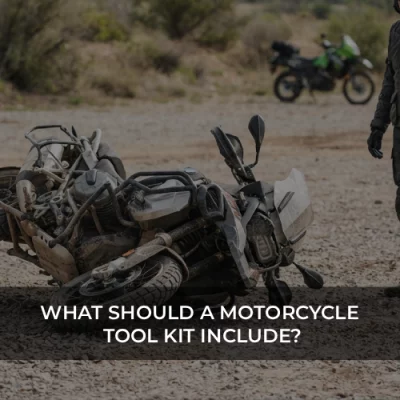
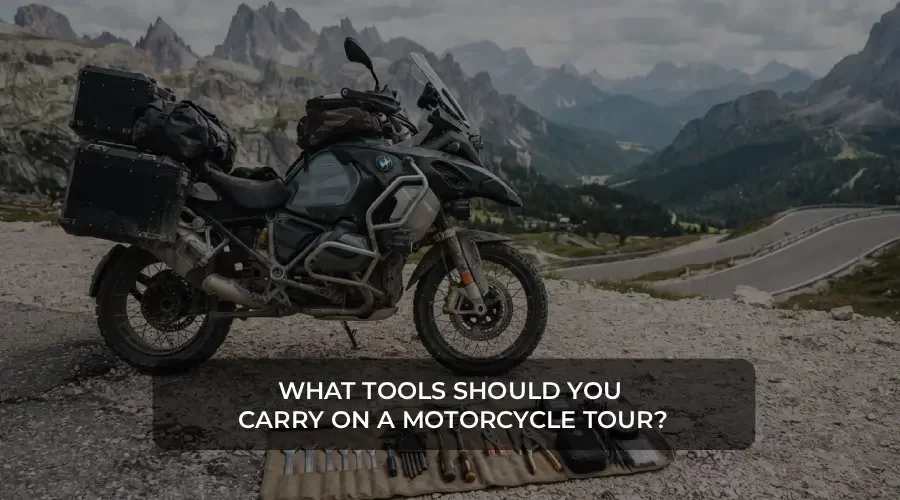
It is always easier to enjoy a long motorcycle tour when you are ready to deal with the little issues that may arise. A loose nut, low tyre, broken wiring, or simple readjustment can transform into a major problem when you are far away from a garage.
You do not have to figure on a fully equipped garage on your bike, however. The thing is to fit a small, motorcycle-sized tool pack with tools that will help in solving the issues most likely to arise before you.
Why Carry Tools on a Motorcycle Tour?
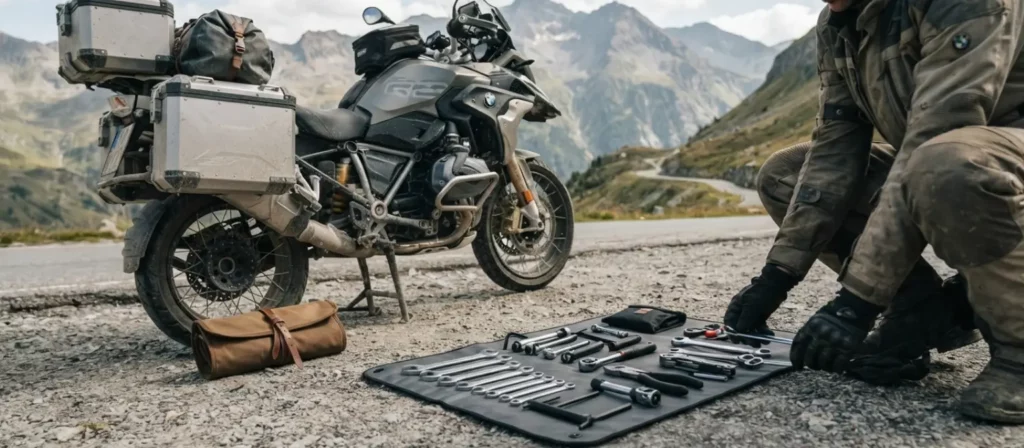
There is very limited storage on a motorcycle; thus, anything you put on your bike must work towards its purpose. Even a minimum size toolkit can prove handy when you are away in the country and roadside service, or a service station, is not necessarily right near you.
The idea is not to do some big mechanical work by the roadside. Your instruments ought to assist you in making fundamental modifications, provisional repairs, and emergency solutions to be safe or get professional help.
1. Motorcycle-Specific Wrenches
Most of the adjustments can be made with a few correctly sized combination wrenches. Instead of having a full-size set, have you checked which sizes of wrenches you actually use on your motorcycle?
Be especially careful with fasteners such as:
- Mirrors
- Levers
- Foot controls
- Battery
- Chain adjustment
- Luggage mounts
An adjustable wrench with a smaller size may be a convenient addition, but more important fasteners tend to be best done with appropriately sized fixed wrenches.
2. Allen Keys and Torx Bits
Most modern motorcycles employ Allen or Torx fasteners on body parts, controls, brackets, and other items.
Bring out the dimensions of what your motorbike fits as opposed to a big collection. Smaller folding sets also do not take much space, and bits can be stored in a small tool roll.
It is also advised to always have functional Allen keys or Torx fittings since they are becoming the new standard on motorcycles, and the tools do not require much storage space.
3. Multibit Screwdriver
A multibit screwdriver can substitute for a number of single screwdrivers. Select one of those with the Phillips, flat-head, or Torx tools that your motorcycle needs.
It comes in handy especially when it comes to getting rid of minor panels or minor adjustments. Storing the bits in a small case also helps to avoid the loss of the bits in your luggage.
4. Locking Pliers
Locking pliers may come in handy when you require more gripping power or when you have to detach a part temporarily.
They are able to assist with some loose or broken fasteners, and they can hold things in place whilst you make a temporary repair.
Do not replace the proper wrench with them in places where it is necessary to have specific tightening. They are primarily valuable on a tour as being versatile in unforeseen circumstances.
5. Puncture Repair Kit
One of the most frequent issues that a rider in touring mode can encounter is a puncture, and the equipment to repair the tyre becomes one of the most significant things to carry along.
In the case of a tubeless motorcycle tyre, a mere tyre may require a basic kit that includes:
- Reaming tool
- Plug insertion tool
- Several tyre plugs
- Rubber solution, if required by the kit
- Tyre-pressure gauge
- Compact inflator
When tube-type tyres are used on your motorcycle, you will require a different repair combination, which may involve tyre levers, patches and a spare tube.
Always ensure you look at what kind of tyre system your motorcycle has, as this will help you in purchasing a repair kit.
6. Portable Tyre Inflator
A puncture kit is much more useful when you can restore tyre pressure afterwards.
A small electric inflator can fit into a tank bag or luggage compartment and can also be useful when your tyre pressure simply drops below the recommended level.
Before leaving, fully charge a battery-powered inflator and test it. For longer trips, a compact manual pump can also provide backup if the electronic inflator runs out of power.
Correct tyre pressure is particularly important when you’re carrying luggage because the motorcycle’s total load changes.
FAQs
1. What should I bring on a 7-hour road trip?
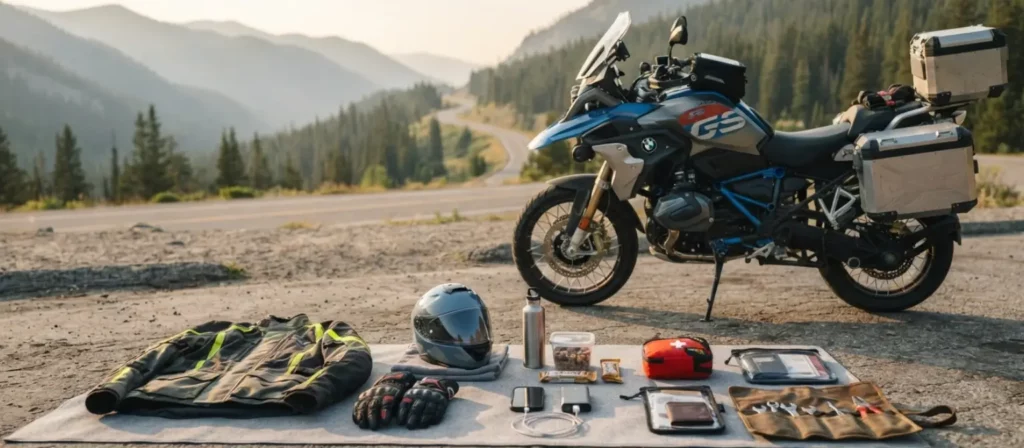
To take a seven-hour motorcycle ride, carry vital riding equipment, water, snacks, phone and charging devices, papers, basic first-aid kits and a portable toolkit.
2. What are the essentials for a long-distance motorcycle ride?
The essentials include a properly fitted helmet, protective jacket, gloves, trousers and riding boots, along with weather-appropriate gear.
3. What is Rule 5 for motorcycles?
If you’re referring to Rule 5 of the Motorcycle Safety Foundation’s group-riding principles or a specific motorcycle training course, the meaning can vary depending on the organisation and version of the rules being referenced.
4. What is the 12-second rule?
The 12-second rule is a visual scanning technique used in motorcycle and driver training. It encourages riders to look far enough ahead to identify potential hazards before they become immediate problems.
No huge toolbox is needed to do a motorcycle tour. It is about having the right tools for your motorcycle and the route you are taking.
Most common roadside issues can be addressed with a small tool kit that includes the proper wrenches and Allen or Torx keys, a multi-bit screwdriver, pliers, puncture tooling, tyre inflator, flashlight, electrical tape, zip ties and extra fuses.
Before your trip, test your tools and keep them in an accessible place, so you do not to lug along tools you do not know how to operate. Add your toolkit to the appropriate motorcycle preparation, safety riding gear, and the reasonable handling of luggage, and you will be much better equipped to handle any unforeseen issues on the road.