



Driving requires varying demands on your eyes, depending on the time of day and the weather. Bright daylight can cause intense reflections on the road, while low-light conditions can make headlights and streetlights feel much harsher. Rain, grime on windows, and eye fatigue can further complicate the situation.
Enter driving glasses. People choose driving glasses for different reasons, including road visibility, glare reduction, lens colour, and comfort. Like ordinary eyewear, they may also consider the appearance and readability of the glasses. However, driving glasses are not a magic solution. The correct prescription and safe driving habits are more important than any special lens feature.
What Are Driving Glasses?
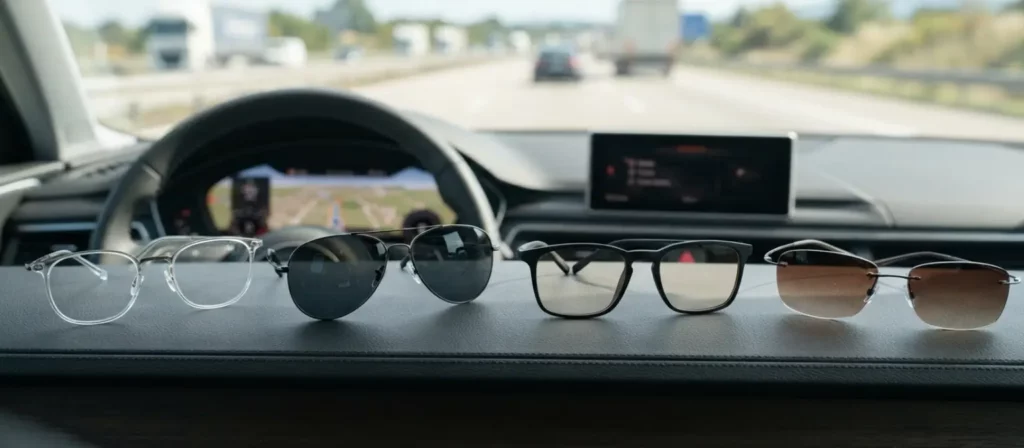
Driving glasses are glasses that have been selected or developed to make the eye view more comfortable while on the road. They are either prescription or non-prescription in accordance with the needs of the wearer.
Depending on circumstances, the good features could be:
- Accurate prescription correction
- UV protection
- Polarized lenses
- Anti-reflective coatings
- Suitable lens tint
- Lightweight frames
- Secure fit and good peripheral coverage
Why Glare Is a Problem While Driving
Glare is experienced when there is too much reflected sunlight on your eyes. It may be in the form of headlights, sunlight, wet roads, vehicle surfaces, or even the dashboard and windshield.
The glare might cause difficulty in differentiating details, especially in cases of bright light on a dark background. Modern high-intensity headlights are also very uncomfortable to some drivers.
Driving glasses may alleviate some types of glares, but not the source. It is also important to keep your windshield clean, keep your headlights in order, and make sure that your prescription is up-to-date.
Daytime Driving Glasses
Daytime driving generally calls for lenses that reduce excessive brightness while maintaining clear, natural-looking vision. Strong sunlight, reflections from the road, and glare from other vehicles can make it harder to see comfortably, especially during early mornings or late afternoons.
For this reason, daytime driving glasses may include features such as UV protection, polarisation, suitable tints, and anti-reflective coatings. The right choice depends on your eyesight and driving conditions. If you need prescription glasses, an accurate prescription should remain the priority.
Polarized Lenses
Polarized lenses are quite common in driving during daytime since they are capable of eliminating some of the reflection of horizontal surfaces like wet roads, car hoods, and water.
They may especially come in handy when:
- Sunny highway drives
- Early morning drives
- Late afternoon driving
- Trips near water
- Driving after rain
However, polarization isn’t necessary for everyone, and some vehicle screens may appear different through polarized lenses.
Gray and Brown Tints
Gray lenses are a popular choice for daytime driving because they reduce brightness while keeping colours relatively natural. They can be useful when driving in strong sunlight without making the surroundings appear significantly warmer or cooler.
Brown or copper tints can give the view a warmer appearance and may provide useful contrast in certain bright conditions. Some drivers find these tints more comfortable for extended daytime driving, although the experience varies from person to person. Whichever tint you choose, it should reduce discomfort without making road signs, traffic signals, or other important details difficult to distinguish.
Driving Glasses vs Regular Glasses
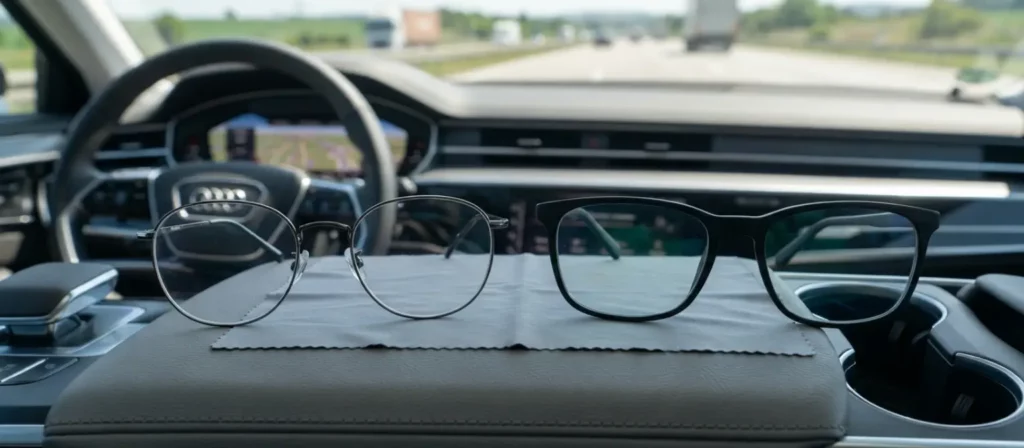
The difference isn’t necessarily that driving glasses are automatically “better.” Rather, they can be features that are chosen in specific driving conditions.
Driving may also be a good use of ordinary prescription glasses in case they can correct your vision and enable you to operate at the required distance.
Driving-focused eyewear may add features such as:
- Anti-reflective treatment
- Polarization for daytime use
- Appropriate tint
- Wider frame coverage
- Materials designed for comfort during extended wear
Your actual vision needs should come first.
Driving Glasses vs Reading Glasses
Glasses used to read are created mainly to aid you in visualizing the objects around you. However, driving takes evident distance vision and awareness of the road around.
This is a reason why normal reading glasses should not be considered as an alternative to driving eyewear, unless a lens design is prescribed by an eye-care expert.
In case you require various strengths of correction to the eyes to see distance and near vision, then you can use lenses like progressive lenses to see the road, dashboard, and other distances within the lens in different sections.
How to Improve Vision While Driving
Driving glasses are only one part of good visual preparation.
You should also:
- Keep the windshield clean.
- Clean your glasses regularly.
- Check that headlights are working correctly.
- Keep mirrors clean and properly adjusted.
- Reduce dashboard brightness at night where possible.
- Take breaks during long drives.
- Keep your prescription up to date.
If your vision has changed or nighttime driving suddenly feels much harder, arrange an eye examination.
Related Read: Best Night Driving Glasses
FAQs
1. Are driving glasses different to reading glasses?
Yes. Reading glasses are geared towards working on close tasks whereas driving needs one to have sharp distance vision and the ability to watch the road and other things on the road.
2. Are driving glasses better than regular glasses for driving?
Not necessarily. In the event that your normal vision short-distance prescription glasses are comfortable and give clear distance vision, then they might be ideal driving glasses.
3. What type of glasses are best for driving?
Bright sunglasses could be used to contain brightness during daytime driving with bright daytime driving sunglasses having a medium gray or brown tint, whereas polarized lenses can suppress some reflected glare.
4. What colour lens is best for night driving?
There isn’t a special lens colour proven to provide better night vision. Clear lenses are generally preferable because they allow more available light to reach the eyes. Yellow lenses are commonly marketed for night driving.
5. At what eyesight can you not drive?
There isn’t one universal eyesight number that applies everywhere. Driving eligibility depends on the licensing rules in your country and the vehicle category, and vision may sometimes be corrected with suitable glasses or contact lenses.
Driving glasses aren’t one-size-fits-all. The best choice depends on when you drive, how sensitive you are to glare, whether you need prescription correction, and the lighting conditions you encounter most often.
In bright daytime driving, the road would look more comfortable with proper sunglasses, usually grey or brown, which are also polarized (when necessary). However, when you are driving at night, your eyes require a lot of light, and thus clear lenses with proper prescription and with anti-reflective treatment would be more reasonable than dark or with a high tint.