
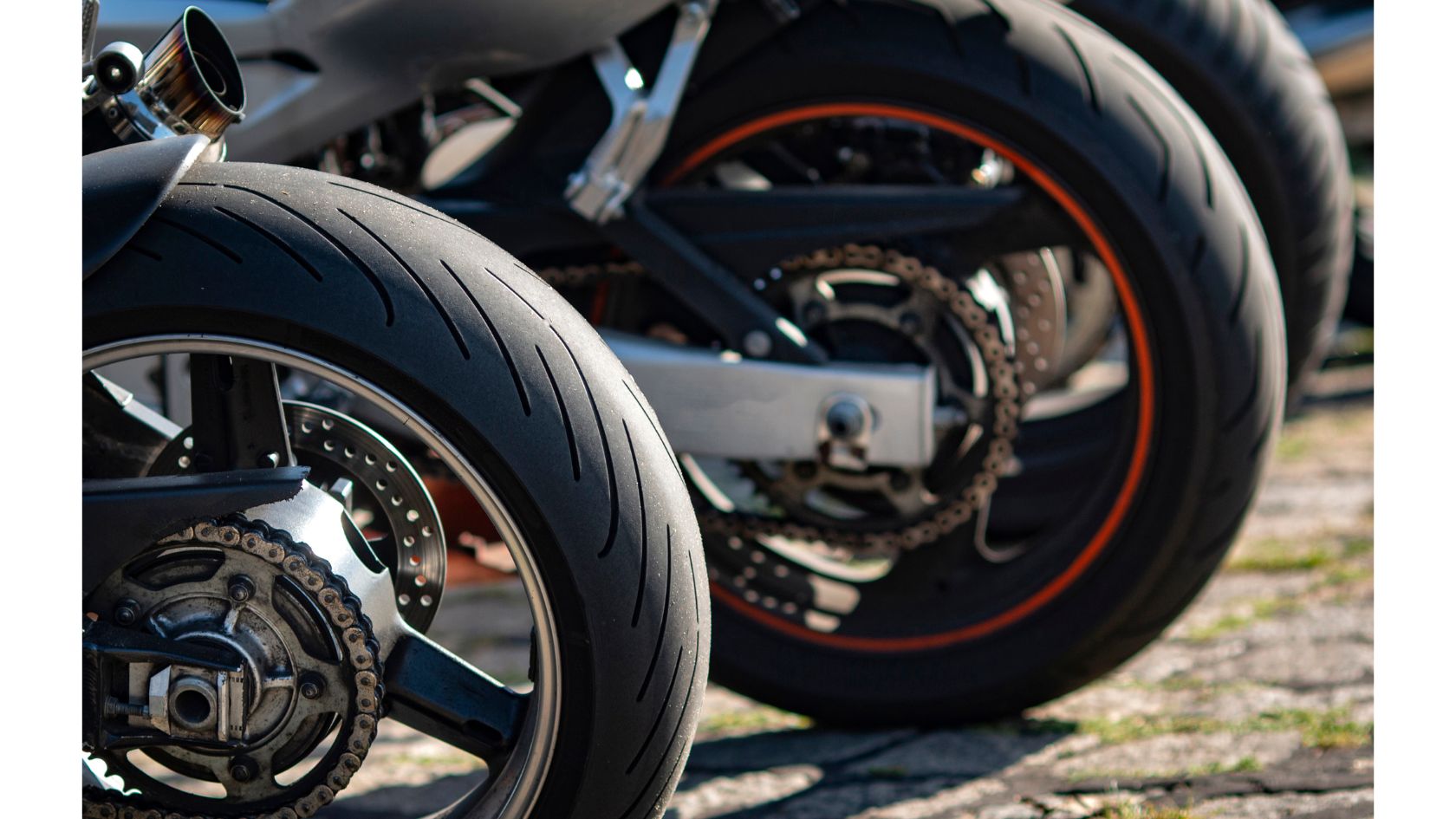
Being a motorcycle owner, is it important to know why are motorcycle tire treads opposite? I am sure a lot of us do. The design pattern of tire treads does have a major role to play. Such pattern is not designed to attract more customers and increase sales as some people might think. On the contrary, tire tread patterns have a lot to do with the traction and stability factors of a motorbike. These factors are directly linked to a motorcycle owner’s safety. Not only this but knowing about tire tread patterns will also help you know about the difference and relevance between the front and rear tires. Looking to learn more about it? Keep reading! Motorcycle tire treads are designed in the opposite direction on front and rear tires to provide proper grip, stability, and better traction. Normally, the front tires of a motorcycle are designed with inverted tread patterns. Such tread design is helpful in creating appropriate contact with the road surface. Proper contact is helpful in scattering the debris, dirt, and water away in dry conditions and dispersing the rainwater from the contact patch in wet conditions. Similarly, the rear tires of a motorcycle carry an outward tread pattern to improve the traction levels while accelerating, decelerating, and cornering. The outward tread pattern also helps reduce the risk of hydroplaning by allowing to dissipate the water between the tire and the road. Some of the other reasons for the opposite tread pattern are reduction of noise levels, durability, and minimum tire blowouts. Let’s elaborate on these reasons further to understand the opposite treading patterns. As we all know (assuming), motorcycle front tires are mainly responsible for braking and controlling the corners. The tread patterns on front tires are designed keeping these aspects in mind. A majority of tires are stamped with V shape pattern with an incoming flow. The design contains large grooves and channels so that it can throw away the on-road obstacles from sticking to the contact patch. This makes the grip of a tire more firmed and balanced with the road surface. The effects of tread patterns are more beneficial in rainwater. When a motorcycle crosses through a road containing a bulk of water it leads to the building of a water layer between the wheels of the vehicle and the road surface. This is called Hydroplaning or Aquaplaning process. Here is a small video that will help you understand the impacts of a tread pattern in rainwater. Although it is a bicycle it doesn’t change the direction and dissipation of water that takes place on motorcycle tires. The aquaplaning process is responsible to create a gap between the tire and the road because of the thrust of water it generates below the leading edge of a tire. This causes a loss of contact between the tire and the road making it skate with the flow of water rather than running. If the tire has no contact with the road surface obviously a biker will not be able to control it even in the form of braking. If the brakes are applied under these circumstances, in all likelihood a bike is bound to skid through instead of stopping because of the water layer. This is where the grooves are designed on the front tires to dissipate the water away from the contact patch to keep the tires grounded and improve the grip and stability. But then, why the rear tire treads are in the opposite direction? Are they protected from the hydroplaning or aquaplaning process? The answer is… Rear tires have an outward tread pattern that is helpful in improving the traction of a motorcycle. The rear tires are obliged to accelerate the motorbike which keeps the wheels moving forward. The shape of a motorcycle plays a prominent role here. The motorcycle is aerodynamically designed to absorb the airflow at higher speeds performed mainly by rear tires. The force of air while speeding causes a motorcycle to feel the lift throughout its body and especially at the bottom. This is the reason when applying sudden brakes, you will see many bikers rising above the ground with rear wheels in the air. Even if the brakes are not applied, the flow of air will be felt around the feet and waist on a moving motorcycle that forces the top clothing of a motorcyclist to come out. Secondly, the rear tires of a motorcycle too keep the receding water at bay with the outward tread pattern. Here, the force of water is already dislodged by the front tires and whatever is left out is just pushed away by the rear tires. The risk of hydroplaning is already taken care of by the inverted treading pattern of the front tires and so, the main act of the rear tires is to run through the half-dry corridor created by its front sibling. If you have the same tread pattern as that of a front tire it will reduce the traction levels creating acceleration/deceleration issues resulting in limited airflow tolerance. The inverted tread pattern of the front tire is helpful in reducing unwanted noise generated by the spinning of wheels. As we now know an inverted tread pattern is instrumental in dispersing water, dirt, and other obstacles it is also capable of dissipating the air efficiently when the motorcycle is in motion. The excessive airflow dampens the sound waves produced by the wheels while running. Additionally, an inverted tread pattern creates a larger contact patch with the road for better grip and handling which also keeps the noise under control. Eliminated risk of aquaplaning/hydroplaning is equal to eliminating risks of tire blowouts. In order to keep the blowouts away, a tire needs to be run on balanced air pressure. One of the main causes of tires losing air is improper friction created by the gap between the tire and the road surface. Related Read: Why do car tires explode? By keeping the on-road debris, and water away inverted
Is The Tire Repair Kit a Permanent Fix? Truth Revealed With Best Tire Repair Kits
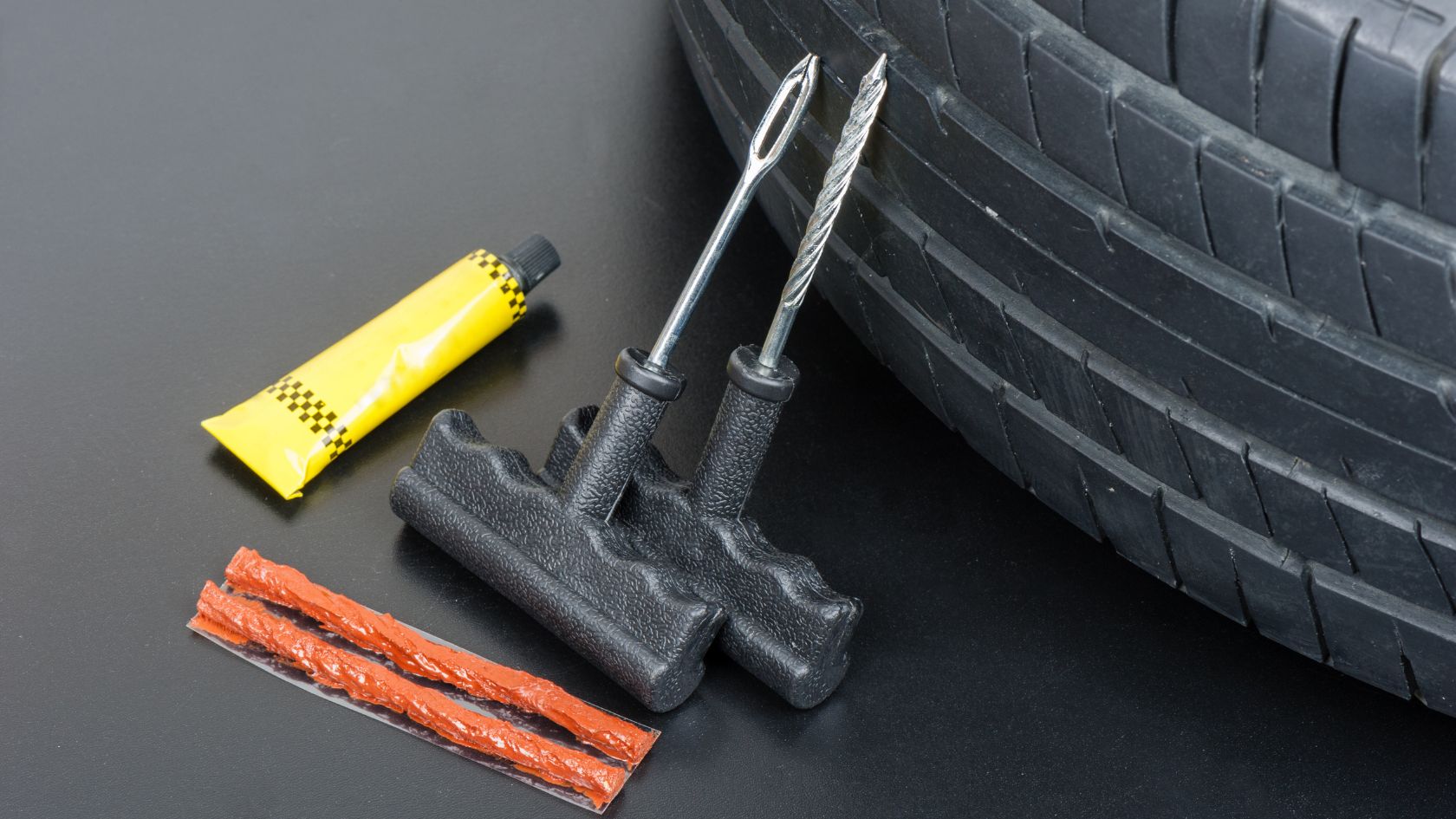
A tire repair kit is a very popular, easy, cheap, and effective way to fix tire punctures. But is the tire repair kit a permanent fix to drive on for a long time? Having a tire repair kit will help you get back on the road in a quick time. It is also one of the easiest ways to repair small to moderate punctures on your own. However, how long does a tire repair kit last? Is tire repair kits helpful in saving costs on tire replacements and professional services? what are the best tire repair kits one should have? What are the factors when choosing a tire repair kit? These are some of the questions you will find answers to in this post. Moreover, we will also look at how to use a tire repair kit accurately to keep the tires in good shape. No. A tire repair kit is not a permanent fix. It is a temporary solution to get your car wheels moving to some extent. Using a tire repair kit will help you get to a nearby service station to have the tire properly fixed. In some cases, you may go further depending on the quality of repairs done. The effects of tire repair kits also depend on the size of the puncture and the type of fix applied. Tire repair kits come with accessories that help you fix tires from the inside and outside. A fix done to the internal portion of tires is called patching which is long-lasting but not permanent. Plugging is another method to fix a tire on the outer part of the tires and this is surely a short-term solution to help your vehicle tires run. Tire repair kits are long-lasting. Some companies sell these units with a lifetime warranty. The kit is equipped with metal tools and sealants. A good-quality tire repair kit can last for several years with proper maintenance. Some factors like the type, usage, and quality are instrumental in judging the durability of a tire repair kit. Make sure to properly store, and maintain the tire repair kits for long-time usage. Generally speaking, tire plugging or patching can last from a few months to several years. It normally depends on the type of plug or patch repair and the environment in which the tire is used. Tire repair experts claim that a properly applied patch can last from 5 to 10 years and an appropriately plugged tire has the capacity to run for 25K miles. Having said that, any fixes done through tire repair kits should be re-inspected by professional tire mechanics. If the tire is punctured repeatedly on the same spot or used in a harsh environment a tire replacement is recommended. Keep you moving – A tire repair kit will help you keep moving on the road. Unexpected tire punctures are not very often but when they occur a tire repair is a much better choice than standing helpless on the road, waiting for someone to help you fix the tire, or finding a tire repair service. With a tire repair kit, you can use the elements with the help of instructions and fix the small punctures on the go. Saves time and effort – By learning and getting used to the process of utilizing a tire repair kit, you can easily fix the punctures in less time. It won’t take more than half an hour to get your car wheels moving. Secondly, in the absence of a tire repair kit, you may have to mess with the jack and wheel brace to replace the tire with a spare one. Fitting a spare tire is more tedious, and demands lots of hard work, and time which can be saved by having a tire repair kit. Cost-efficient – A single tire repair kit is capable of fixing at least 40 to 50 punctures (depending on the sealant strips). A one-time spend on a tire repair kit will help you save money on the expensive service charges taken by professionals. It will also prevent costs on towing services that may be required to tow your vehicle to the nearest service station. Portable–The average tire repair kit bag does not weigh more than 2 pounds which makes it lighter and smaller than a spare tire. It can be easily carried and kept in the car trunk, and in some cases below the seats making it highly portable. There are 100s of tire repair kits that can make buying decisions very confusing. But no worries! I have made your job easier by listing the 3 best tire repair kits to help you make an informed decision: As an Amazon Associate, we may earn a small commission if you purchase any product by clicking the link without any additional cost to you. Boulder Tools – heavy-duty tire repair kit Boulder is a reputed name in the world of tire repair kits. There are a variety of kits offered by Boulder but this specific product (BT4001) is designed for heavy-duty usage. The kit is highly compatible and versatile to fix punctures (small to moderate) for cars, trucks, SUVs, ATVs, tractors, trailers, and even Motorcycles. There are a total of 56 high-quality and ergonomically-designed tools consisting of pliers, T-handles, lubricants, cords/strings, valve accessories, screws, and a couple of storage cases. The kit has a perfect combination of all the must-have instruments a tire repair kit should have. More importantly, it weighs just 2.6 pounds making it highly portable. Boulder offers a lifetime warranty on this product that you can utilize to maintain or replace the tools. The best part is it is easy to use and comes with color pictures that show the step-by-step process of applying the repair on tires so anyone can use it. ARB 10000011 Speedy Seal ARB has been a trusted and reliable name in the automobile industry since 1975. Their Speedy Seal tire repair kit has come a long way since its inception. This tire repair

Are car tires considered insulators or conductors? Confusion resolved
Car tires are made to withstand the difficulties of electrical shocks as well as roadside damage. Taking this as a fact, are car tires considered insulators or conductors? The importance of car tires is indisputable. As a matter of fact, the material used to manufacture tires is finalized after considering the obstacles it has to go through on the road and outside atmosphere. In that sense, if you are looking forward to knowing more about the ethnicity and authenticity of tires then this is the post to read. Primarily, car tires are considered insulators because of the rubber material. Rubber is highly-resistant to electrical current and does not allow electricity or heat to pass through it. However, modern car tires are not fully compliant with rubber. There is some sort of chemical mix-up in the form of synthetic, nylon, carbon, and even steel which makes the insulator theory debatable. In case a car tire is fully exposed, it can conduct electricity to some extent because of the availability of carbon and steel material. An insulator is made of materials such as glass, plastic, rubber, ceramic, wool, etc. that absorb the electrical current and heat with their excellent resistant capabilities. The insulators are useful in protecting electronic components from damage due to electric shocks. A conductor on the other hand is the opposite of an insulator. These are made of materials that can easily allow current to flow through. Some of the common conductor materials including copper, silver, aluminum, water, and air that possesses a high number of free electrons that allow the current to move freely. Rubber is considered an insulator simply because it cannot conduct electricity or heat. The upfront reason for rubber being non-conductive is the absence of free electrons that are responsible for conduction. Scientifically, insulating materials such as rubber have a wide gap between the valence and conduction band which does not allow the free electrons to move freely. Moreover, rubber is highly elastic, and can resist water efficiently. These properties of rubber reduce its conducting ability to permit the atomic molecules to survive for a long time. Having said that, an insulating rubber can also work as a conductor when it comes in contact with a very high intensity of heat and electrical voltages such as lightning. In terms of auto vehicles, the insulator theory is surrounded by the myth of car tires being the protector when lightning strikes. Yes, it is well-recommended to stay inside of your vehicle while facing a lightning storm however, it is not the car tires/rubber that protect you from the impact of lightning. According to the experts, it is the metal frame of cars that redirects the electrical current making them pass through the side of the vehicle and into the ground without impacting the interiors. Car tires can be conductive to a certain extent. With the inclusivity of materials such as carbon black, steel, and some metal compounds car tires can help dissipate the static electricity build up during the running. The usage of these materials is helpful in preventing the formation of sparks generated when the tires come into contact with the ground. A car is a combination of properties and materials that make it a conductor and an insulator. Rubber tires, interior plastics, and overall metal structure make the car a strong example of an insulator. At the same time, the engine of a car is powered by electricity. There are other vital parts such as a battery, spark plugs, alternator, etc. that rely heavily on the powerful electric system which makes a car an equal conductor. Car tires are better insulators than a conductor. Nonetheless, one cannot deny the fact that some of the components mixed with rubber are capable of conducting some sort of electricity. Both factors are beneficial for car owners. With car tires, you can expect to prevent and absorb the transfer of heat enhancing their ability to withstand unexpected atmospheric temperatures. This can help to protect the car’s internal components and electrical systems from overheating. Conductive materials in car tires are beneficial from safety and performance perspectives. It helps reduce the risk of static electricity building up preventing sparks and electrical fires. Conducting materials also helps dissipate heat generated while running on the road. Whatever reason you want to drive with, car tires have a big role to play with their material when it comes to providing safety, and long-lasting performance for a better-quality ride.
Can a patched tire blowout? 2 reasons identified
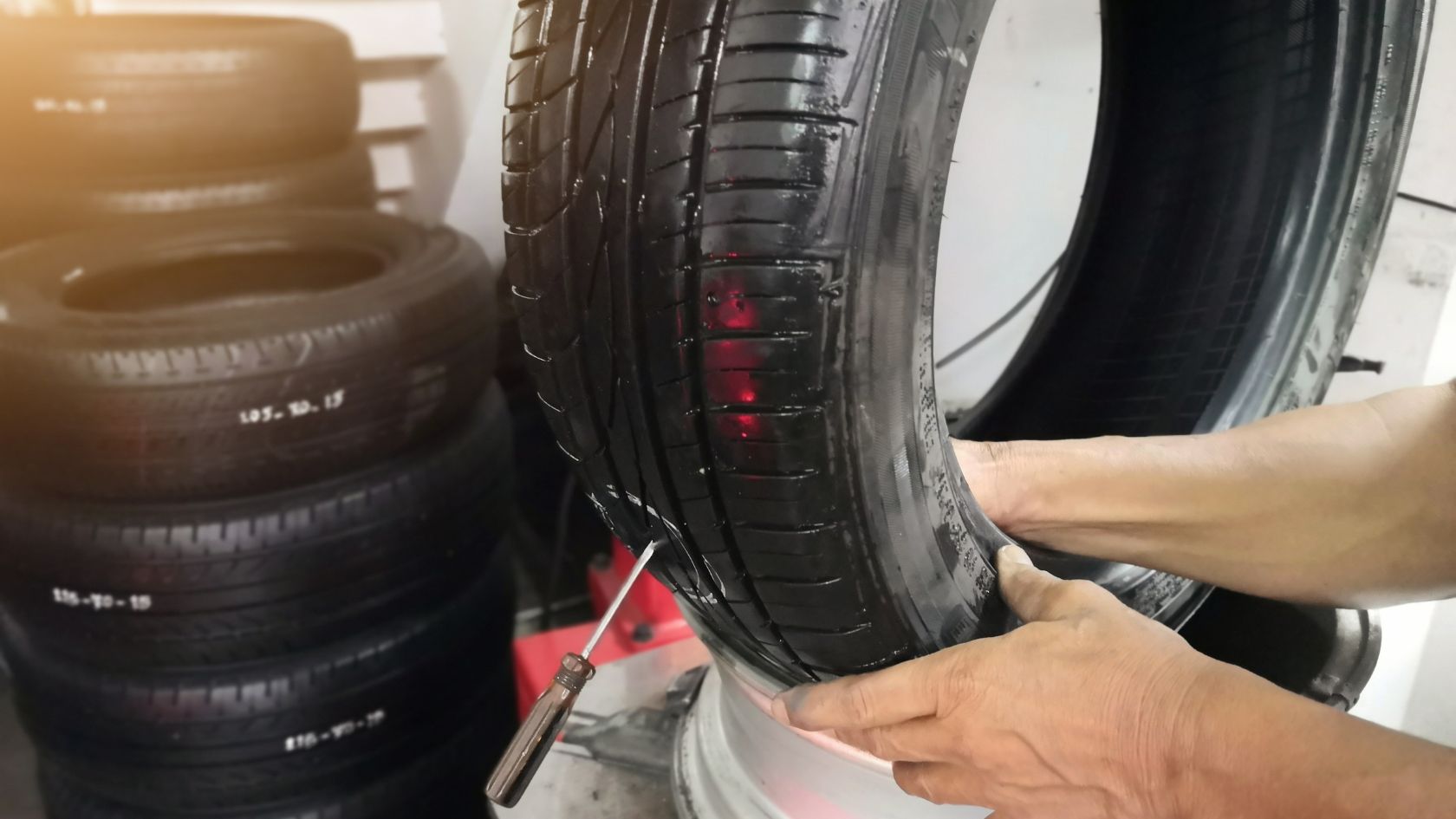
Patching a tire is very common in a puncture or air leakage. But how long can you run on a patched tire? Can a patched tire blow out? Is it safe to drive with a patched tire? These are some of the questions that need answers before you start playing with the patched tires. In this post, you will find answers to all the above questions and many others related to patched tires. I will also cover some information about plugged tires and if they are safe to drive with. By all means yes, a patched tire can blow out. The blow out does not happen immediately or on its own. It is a result of a combination of several factors that lead a patched tire to blow out. Some of the factors include the age of the tire, size of the patch, and the speed and conditions of the road a patched tire is driven on. More importantly the quality of the patch and the knowledge and experience of the patch repairer could play the spoilsport. Whatever the reason, a patched tire needs to be used with caution and care to avoid re-patching and blow outs. Before we deep dive into the causes, it is important to know… Simply put, tire patching is tire repairing process to make the tires work again. Tire patching is better performed by professional tire repairers as it involves lots of hard work and ethical knowledge of the tire structure. When the tire is punctured or leaking air through slits/cuts tire patching is performed to address the puncture or seal the gaps. The patch is applied to the inside of tires including parts related to inner liner, tread walls, etc. The process begins by finding the affected spots and then applying the patch. The patch consists water-tight sealant or rubber cements that are placed on the affected areas and then covered with an adhesive tape to secure the repair. Once the patch is completed, tires are filled up with air to check if there are any leakages left out. If nothing is found, tire is fixed to the car for rerun. Tire patching is one of the cost-effective ways to extend the life of existing tires and avoid replacements. Another useful way to temporarily fix the tires is the plugging method. Under the plugging method, small to moderate air leakages or holes can be fixed by plugging rubber material on the outside of tires. After inserting the rubber plug, the left-out portion is trimmed out to balance the tire surface. Plugging method is another cost-effective way to fix tires. The main difference between patching and plugging is the tire location. Patching is mainly performed inside of tire as a long-lasting solution and plugging is performed on the outside of tires as a temporary fix which further needs thorough inspection by a tire professional. On the positive side, tire plugging can be performed much quickly and easily compared to tire patching. On the flip side, both tire patching and plugging cannot be applied on the damages found on the side walls of tires. Tire plugging is conducive only for small cuts/holes or punctures whereas patching is helpful in countering bigger punctures/air leakages. Both the methods result in fixing of tires to continue the journey however, tire patching is a much better solution than tire pluggingto avoid blow outs. Patching or plugging an aged tire is possible but not fully recommended. In such cases, the condition of tires plays an important role in deciding the fix. If the tire has reached its maximum age or running limit, temporary fixes may not bring it back to life. Aged tires are prone to damages appearing in tread walls in the form of cracks, bulges, wear and tear. You can also notice exposed fabrics on the side walls which cannot be fixed under patching or plugging. Even if the fixing is done without any choice, age old tires can suffer blow outs and it is best to consult a tire technician or replace the tires with new ones asap. Patching is work of an expert. If the patching is faulty the condition of tire may worsen after a few miles drive. If the tires begin to leak air, and appears bulgy it means the patching was not done correctly. As mentioned earlier, the process of patching involves removal of tires from the rim, full inspection to detect the faults/leakages, application of patch with some glue cover and refixing the tires to the rim. If the patcher or tire repairer performs patch on the sidewall of tires or to a puncture that has damaged more than ¼ of the tire it means you have given the job into the wrong hands. Make sure the technician or patch repairer is well-experienced and trustworthy. More than the local garages/service stations it is better to get the patch done from recognized tire dealers/technicians to get the patching right. Appropriate patching takes longer and may charge a few more dollars than plugging but the end result is security and durability of tires that keep the blow outs away. Assuming all the above factors were taken into consideration while patching and if actual patching work is done correctly, you can run the tire for as long as the patch exists. For example, a tire expected to run 40000 miles in its lifespan before getting damaged can complete the milestone if properly patched. As a precautionary measure, you must intend to replace tires that are frequently damaged and patched on the same area repeatedly (more than 3 times to be precise). Such instances make the patch area vulnerable to early wear and tear reducing its lifespan. Yes, it is absolutely safe to drive with a patched tire provided the patch is not affected by the on-road obstacles. Perfect patching is completely safe and secure for the driving and tires. As long as you drive within the speed limits and keep the tires well-maintained there is

Why put a bottle on a car tire? Here are the 2 interesting reasons
So, why put a bottle on a car tire? Maybe because your car tire is thirsty. Or, maybe someone’s too busy to find a dustbin and to save time and effort placed the bottle on a car tire. Is the act funny or interesting? I am sure not. So, what happens when you put a bottle on a car tire? Does it explode or make the rubber better? I found some interesting facts based on my research and this is what I am sharing in this post. There are two reasons to find a bottle on a car tire: Interestingly, the car and bottle combination work in great tandem to help you find leakages and punctures too. Let’s elaborate further on these points and find out if placing or finding a bottle on a car tire is a boon or a curse. Carjacking is an act of robbery performed with the mindset to rob motor vehicles. Performing this act in the presence and knowledge of the victim is the main difference between car theft and carjacking. Carjackers keep coming up with innovative methods to ploy car owners. In many instances, it has been found that carjackers distract the driver or car owners who leave their cars in a vulnerable position and become a victim of their trap. Putting a bottle on a car tire is one such ploy. Any kind of noise or sound coming from the vehicle is distracting. As a reactive step, most of us stop the car and look for the place from where the sound is coming. Since the situation is unexpected and demands quick action, the driver tends to leave the car door open with the keys inside to look around. The window for carjacking is wide open and this is where culprits enter the car and take it away. Such a ploy is very effective when a car is left in the parking for a long time. Suppose your car was standing idle in a parking lot or out-of-the-way street. You follow your routine of coming to your car and straightaway enter inside to drive ahead. You don’t notice the bottle sitting between the front tire and the wheel well on the passenger side. When the wheel starts to circle, the jammed bottle also moves with the wheel creating a large cracking sound as if something is getting crushed badly. Your immediate reaction would be to pull over the car aside and come out to see what exactly is happening. In the process, you leave the door open. The sound is also a sign of alertness for the perpetrators who seeing that their trap is successful can now easily enter the car and drive away. So, you see how a few dollars empty water bottle is instrumental in stealing valuable assets without too much effort. Although the trick seems very interesting it does leave a few opportunities open for car owners to perform before getting trapped. I have a habit of glancing through my car all around especially the tires when I want to start/re-start my journey. I do this to check the tire pressure preferably but it also exposes any object kept or stuffed around the tires. I urge you to do the same. If you don’t like doing this then let the bottling process begin. When you want to come out of the car make sure to stop completely, remove the keys, and lock the doors to avoid carjacking. If the incident took you by surprise, take the stock of your surroundings and alert the police with your details and location to protect yourself and others. Carjacking is not new to the world in fact this act of crime occurs very often in some American, South African, Australian, and Asian cities. However, none of the carjacking incidents are reported or proven to be successful using the bottle method so, better to remain alert than worry. Do you have a habit of clicking every link/ad that comes your way? If yes, then beware. Because you may be served with under-valued content than what is actually promised. One of the tricks under such a method is the usage of sensationalized headlines which prompts anyone to click the link. This is called Clickbait. Clickbait has been proven behind the title ‘always put a plastic bottle on your car tire when parked’. Clickbait is usually performed through thumbnail links or ads on different online resources. When the users click on the link or ads they are taken to content or data that is misleading or deceptive. You get to see and learn everything other than what the headline said. For example, if I want you to read my content, I can do so by posting an online ad with a headline that says ‘Keep a bottle on a car tire to improve air pressure’. I am sure many car drivers and automobile enthusiasts will click the ad to know more. However, when you enter the ad what you get to see is a ton of information on various topics other than what the headline actually mentioned. Such deceptive technique helps the ad owners to earn some revenue when more and more users click through the links. Clickbait has been misrepresented and mis-conceptualized since there are thousands of ads running on websites, social media channels, etc. Not all of them could be part of Clickbait however, one needs to perform caution and apply basic instincts when clicking these ads. Not everything about a car tire and bottle is deceptive or misleading. Do you know that using a bottle of water on a tire can actually help you identify a puncture? I am sure many of us do. People who drive regularly and often witness tire punctures must have noticed this act performed by tire repairers. It is not specific to any specialist but can be performed under DIY (do it yourself). But it needs some hands-on experience and knowledge. If you fill a bottle with water

Why don’t car tires have inner tubes? Know the 5 reasons
Did cars ever run on tires with tubes in them? If yes, then why don’t car tires have inner tubes now? With the invention and dominance of tubeless tires, the tubes have taken a backseat. However, tube-based tires have not completely disappeared. Bicycles, heavy trucks, and some off-road vehicles do run on tires with tubes. In this post, you will learn why tube-based tires are overshadowed by tubeless ones. I will also tell you about the advantages and disadvantages of having tires with inner tubes and if you can use the tubes inside of a tubeless tire. In modern times, most car manufacturing companies rely on tubeless tires. This is because tires with inner tubes are often prone to punctures and lack effectiveness in handling on-road pressures. Simply put, inner tubes that are made of softer inflatable rubber are vulnerable to catching punctures and going flat very quickly especially, on rough and edgy roads. As a result of punctures, tires with inner tubes lose the air completely making them useless for a further run. Some of the other reasons that make tube-based tires a no-no are their inability to withstand heat, higher deflation rate, cumbersome puncture repairing process, and lack of durability. It is not a big matter of concern however, if you prefer tube-based tires over tubeless ones then you should know the reasons for such tires getting flat and also the steps to prevent them. First of all, it is important to know… The material used to manufacture inner tubes is made of thin, air-tight rubber which remains relatively soft to hold the air. It is similar to a filled-up balloon with soft outlining rubber. This material also plays an important part to provide a reliable seal between the tire and the wheel. Its flexibility is instrumental in keeping and maintaining the shape of tires. To protect the inner tubes, the outer part is made of a hard shell of rubber. Regardless of the flexibility, the softness of inner tubes lacks stability and strength to fight the outer obstacles. On the other hand, tubeless tires are made of thick rubber and other synthetic materials including nylon, and polyester. The thick rubber itself provides a flexible and air-tight seal to hold the air together. The combination of other materials ensures greater strength and durability compared to a tube-based tire. Hence, many vehicle companies are favoring tubeless units to sell their cars. If you are still running your vehicle on tires with inner tubes make sure to observe serious caution while driving on rough roads because of the soft material inside. Secondly, avoid going too far continuously in hot weather conditions to prevent overheating of tires which can blow out the tubes. Talking of overheating, all types of tires are prone to getting flat with long running in the hot sun. In some cases, you may witness tires blowing out and exploding with a large sound. While it may take some extra running and really exaggerated temperatures for tubeless tires to go flat, tube-based tires surrender prematurely. Overheating conditions increase the friction levels between the tube and the tire. The softness of tube material is unable to withstand the heat generated by this friction causing them to go flatter in no time. As advised earlier, it is better to avoid driving in overheating conditions, especially with tube-based tires. In case, you don’t have any choice but to drive, do it with limited speed on better roads. With inner tubes, the deflation rate is much higher and faster compared to a tubeless tire. Soften tube when punctured releases the whole air completely. This creates a dangerous situation on the road as the deflation doesn’t provide ample time to control the vehicle. Faster deflation also doesn’t permit the vehicle to go too far which can make repairs difficult. The only solution to keep moving in such a situation is to replace the tires with spare ones. To do this make sure you know the replacement process to avoid leaving any loose ends. The process of repairing tube-mated tires is more-lengthy as well as tedious. While a tubeless tire can be repaired by just finding the puncture and using a repair kit to fix it, a tube-based tire has multiple steps involved in repairing. You need to displace the whole tire, remove the tube, find the puncture, repair it, and then put all the parts together which is very demanding, and grueling. The repair is performed by professionals which means you will have to take the tire to a tire specialist. Periodic maintenance, cleaning, and proper inflation are some of the steps you must perform to avoid frequent punctures. Tubes are the main culprit to reduce the durability of a tire. Tube-based tires have a tendency to lose air early compared to tubeless tires which means attracting more trouble on the road. Because of the tube, there are increased chances of air leakage and punctures. The sad part is tubed tires cannot be filled with sealant to quickly seal any small punctures which is very common with tubeless tires. Since the tube is the only barrier between the tire and the outside environment, maneuvering at high speeds on the road is a big problem to transfer proper weight across the tire. This results in im-balancing of a vehicle which in turn increases the probability of punctures. Fragile tubes, repeated punctures, and constant repairing on tires make them wear out early reducing their age and durability. As a word of caution, ensure to monitor the condition of tubed tires very often. Check the signs of wearing on tires especially returning from a long journey. In case of any abnormalities, take the vehicle for tire repair and ensure they are completely fixed and properly inflated. Tubeless tires are progressive advancements to tubed tires. Compared to tires with inner tubes, tubeless versions are better equipped with air protection features, strong material, adequate capabilities to counter on-road hurdles, and more importantly fewer amounts of punctures and